Canada-U.S. trade talks ‘moving quickly’ at political level ahead of midterms: sources – National

The once-stalled trade talks between the U.S. and Canada are now “moving quickly” at the political level, multiple sources with direct knowledge of the negotiations have told Global News.
But despite talks moving forward after almost two months of stalemate, the sources expressed skepticism that a deal can get done before the American midterm elections on Nov. 3. Others noted that U.S. President Donald Trump routinely says deals have been struck, only to blow them up again — such as during the last round of U.S. trade talks in August.
The most recent discussions have stayed at the political level,with Canada-U.S. Trade Minister Dominic Leblanc leading the Canadian side, the sources said. More formal negotiations between trade representatives have not yet taken place, according to comments from Canada’s lead negotiator Janice Charette last week.
Sources told Global News that the Canadian side views this as a window to reach a deal with Trump’s administration ahead of the Nov. 3 midterm elections.
Meanwhile Reuters, citing four Canadian and two U.S. sources, said the two countries are working on a deal to ease Trump’s tariffs on Canadian steel and autos ahead of those elections.
“Canada is ready to sign an agreement that is in the interest of Canadians, all Canadians. We have very clear bottom lines, red lines, which meant that we were not willing to sign what was offered in August,” said Prime Minister Mark Carney in a press conference Monday.
“To the extent to which the U.S. is moving towards accepting those aspects, then there’s a greater prospect of a deal. But if there is (a deal offered), we’ll judge it as a whole.”
Get daily National news
Get daily Canada news delivered to your inbox so you’ll never miss the day’s top stories.
Asked how he knows that Trump will sign the next agreement “in pen” — meaning standing by whatever agreement is reached by the two countries — Carney responded simply “I don’t.”
Trump’s tariff war has become a political issue for Republicans, particularly in key Senate races in Michigan and Maine, as the GOP braces for what looks like a drubbing in the midterms.
Global News granted the sources anonymity to speak openly about the politically sensitive negotiations.
If a deal were to be struck over the coming week, two sources said the Americans would need to make multiple concessions on issues that led to talks breaking down on Aug. 21. Those issues included Canada’s freedom to strike trade deals with other countries, and what U.S. tariffs on auto, steel and aluminum would apply to under a new deal.
Whether all the various players in the Trump administration would agree to those concessions is an open question.
Last week, Carney signaled the Trump administration has already shown some flexibility on their previous demands.
“They’ve already moved on several (of Canada’s red lines), by the way, since we rightly walked away from a deal that wasn’t in Canada’s interest,” Carney said on the Real Talk with Ryan Jespersen podcast.
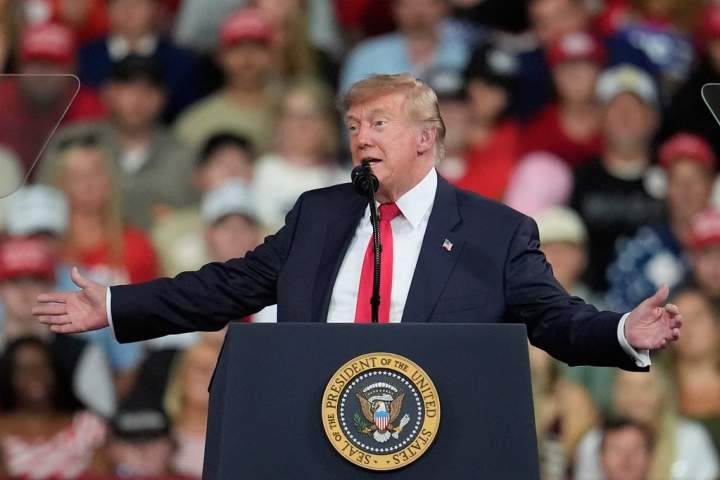
Trump, for his part, told supporters on Sunday that he expects his trade war with Canada to end “pretty soon.”
As the sources noted, there’s no indication Canada will take the U.S. president at his word on that. During the same speech to supporters, in Port Huron, Michigan, Trump launched into his usual invective against Canada, suggesting the country has been “ripping off” the U.S. for years. But as the midterms approach, it suggests that Canada-U.S. trade is rattling around somewhere in Trump’s mind.
Trade talks between the two counties have been off since Canada walked away from negotiations in late August. After the talks collapsed, Carney said the U.S. made a last-minute push for language that would limit Canada’s ability to enter into trade deals with other countries, water down French language requirements, and hurt the country’s struggling auto industry.
The Trump administration responded with additional tariffs on billions of dollars’ worth of Canadian goods, and Ottawa responded in kind with dollar-for-dollar retaliatory tariffs.
On Friday, U.S. Sen. Susan Collins — in a tough fight to hold her seat in Maine — revealed that Trump agreed to lift tariffs on Canadian corrugated paper, plastic boxes and several types of agricultural machinery important to her state.
“Many of our farmers and growers rely on specialized equipment, packaging materials, and other products from Canada that are either unavailable from American suppliers or cannot be replaced without incurring significant expense,” Collins said in a statement.
But while Trump lifted some tariffs, he imposed new ones on Canadian goods like cocoa powder, paints and varnishes, shampoos, vinyl flooring, archery equipment and carpets. The Americans will now apply 50 per cent tariffs on sewage sludge and some types of municipal waste.
The trash issue appeared to seemed to strike a chord with Republican Senate candidate Mike Rogers, who appeared at the Port Huron rally with Trump.
“Those Canadians send truck after truck loaded with their trash into our state,” Rogers, in a competitive race with Democratic candidate Abdul El-Sayed, said to boos from the crowd.
“The president, just this week, announced he’s going to tariff those trash trucks.”
With files from the Canadian Press and Reuters.
© 2026 Global News, a division of Corus Entertainment Inc.