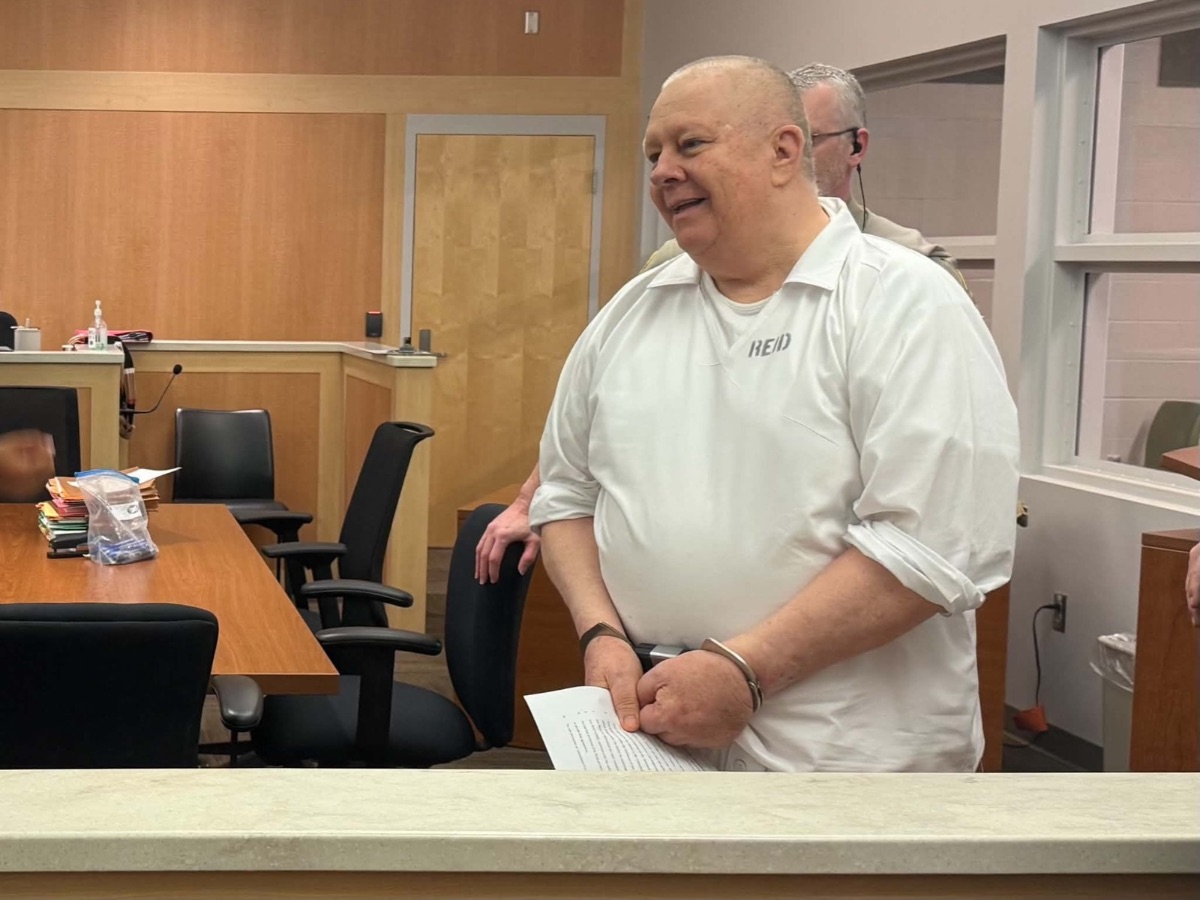
Death row inmate who shot and killed wife and daughter receives life sentence instead
As the United States government prepares to execute Fort Hood shooter Nidal Hasan, bringing the death penalty debate back into the national limelight, the state of Arkansas announced Monday that one of its own death row inmates will instead receive a life sentence.
Eric Reid, 66, was sentenced to death in March 2018 for shooting and killing his wife, Laura Reid, 57, and daughter, Mary Ann Reid, 32, at their home in Hot Springs in October 2015. On Monday, Eric Reid signed an agreement in Garland County Circuit Court replacing his death sentence with a life sentence, according to a press release from the Execution Intervention Project.
The Rev. Jeff Hood, founder of the Execution Intervention Project, worked with Reid’s lawyers to secure the deal, according to the release. Hood, who lives in North Little Rock, is a prominent anti-death penalty activist, and has been a spiritual advisor to 14 people who have been executed, as well as Reid. (Hood is also an occasional contributor to the Arkansas Times.)
“I will not pretend Eric comes to this day with clean hands. He shot his wife. He shot his daughter. Laura is not coming back. Mary Ann is not coming back. Northing the state could have done to Eric in a chamber would have opened the ground to give them back. The state has never been able to raise the dead. All it can do is add to them. Today it decided not to add Eric to the count,” Hood said in the release.
The news of Reid’s changed sentences comes as death penalty opponents and proponents grapple with plans for Hasan, who shot and killed 13 people and injured 32 more at the Fort Hood military base in Texas in 2009. His will be the first military execution since 1961, and is scheduled for December. Reid’s change of circumstances follows the botched execution of convicted murderer Christa Pike in Tennessee earlier this month. So the decision not to pursue capital punishment for Eric Reid is notable. It also saves money.
It’s been repeatedly proven that life-without-parole sentences are significantly cheaper for taxpayers than state-sanctioned executions, to the tune of millions of dollars per inmate. In an interview with The Sun, Stacy Rector, executive director of the nonprofit Tennesseans for Alternatives to the Death Penalty, estimated that Pike’s case cost Tennessee taxpayers more than $3 million before they attempted to execute her. Since Pike’s botched execution, she’s been in intensive care, with taxpayers footing the bill.
The complex legal process of sentencing a person to death takes longer and costs more than a typical murder trial. There’s also the appeal process, which can take more than a decade, and further drives up the cost of putting a person to death. Death row inmates are also typically housed in maximum security units, which require more resources per prisoner to maintain than medium or minimum security prisons.
Source link