France’s ‘rioters pay’ bill explained

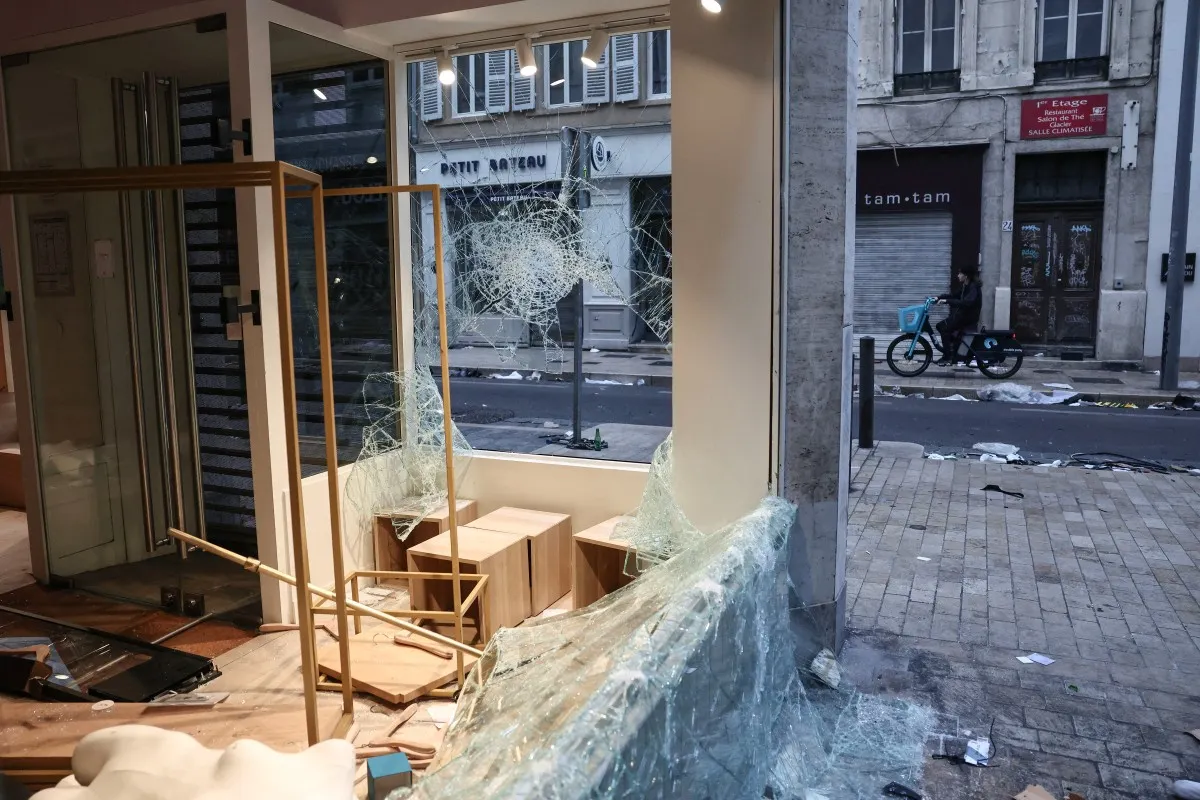
Following a series of recent protests in France that have seen public buildings damaged and clashes with police, the government is pushing ahead with a controversial bill aimed at making people pay for damage caused during public gatherings.
The proposed legislation, known as the casseurs-payeurs (breakers/rioters pay) bill, was initially introduced following violence and damage after Paris Saint-Germain’s Champions League victory last May.
It has since gained renewed attention following damage linked to recent social protests, including the October 17th demonstrations. An arson attack on the Limoges town hall on the same day also highlighted the potential cost of such incidents.
The bill was approved by the Senate’s Law Commission on October 21st, ahead of debate in the Senate chamber on October 27th.
The government has also proposed an unexpected amendment that would give authorities new powers to restrict social media platforms if they fail to remove content encouraging violence or destruction.
What would the bill change?
The government says the aim is to make those responsible for damage pay for repairs, rather than leaving taxpayers to foot the bill.
Under the proposed law, people who knowingly remain in a group committing violence or damage after police have ordered its disperse could be held financially responsible for damage caused by other members of the group. The maximum liability would be €10,000 per person, with parents potentially held responsible when the person involved is a minor.
The bill would also make it possible to seize certain social benefits, including family allowances and housing assistance, from people who fail to pay compensation.
The government argues that the legislation would strengthen existing measures, which it says have proved difficult to enforce because those responsible for damage are often hard to identify.
READ ALSO: ANALYSIS: Who are France’s ‘casseurs’ and why can’t police stop their violence?
Why is it controversial?
The bill has drawn criticism from rights organisations including Amnesty International and legal experts, who warn that it could undermine the principle of individual responsibility and the right to protest.
Under French law, people are generally held responsible for their own actions. Critics argue that making someone pay for damage they did not personally cause could also undermine the presumption of innocence and threaten the right to protest.
Some legal experts have also questioned how the law would work in practice, particularly when police struggle to identify individuals in large crowds, where people may be masked or dressed similarly. The government in turn, said people would be able to prove they were not responsible for the damage.
It’s also unclear how tightly a ‘group’ would be defined and whether it could potentially include people who had attended a march or demo where violence occurs.
“The government must abandon this new repressive bill, which poses a serious threat to the right to protest by exposing all protesters to the risk of financial penalties,” Nathalie Godard, director of the Action department at Amnesty International France, said in a statement.
Could social media platforms be blocked?
A government amendment, submitted on October 26th, would allow authorities to seek restrictions against social media platforms that fail to remove content linked to violence and destruction.
Two scenarios would be possible. Platforms would have 24 hours to remove content considered likely to cause serious public disorder, such as calls to organise looting. If they failed to comply, the government could seek to block the platform and remove it from search results, making it inaccessible.
For content calling for an attack or an insurrection, platforms would have just one hour to remove it before facing the same potential sanctions.
The proposal has already attracted criticism. Socialist MP Arthur Delaporte warned that it threatened freedom of expression, arguing that an entire social network should not be shut down because a single video had not been removed. He also questioned whether the measure would withstand scrutiny by France’s Constitutional Council.
Could the bill go further?
The Senate’s Law Commission has already approved amendments that would broaden the range of social benefits that could be seized. Other proposed measures include possible bans on French territory for foreign nationals convicted of certain serious offences linked to urban violence.
The bill could be further amended during parliamentary debate. It builds on a 2019 law that already allows the state to seek compensation from those responsible for damage caused during public gatherings – which has been criticised as difficult to apply.
The outcome of the Senate debate will determine the next stage of the legislation.
Before becoming law, the bill would also have to be approved by the Constitutional Council, which would have to weigh it against the right to protest, which is enshrined in the French constitution.