Zambia Neighbourhood Explained: Borders, Trade, Rivers 2026
ZAMBIA · SOUTHERN AFRICA
Key Facts
- —The country Landlocked copper producer, 19.7 million people at the 2022 census.
- —The neighbours Eight: DR Congo, Tanzania, Malawi, Mozambique, Zimbabwe, Botswana, Namibia, Angola.
- —Who leads President Hakainde Hichilema, re-elected 13 August 2026, sworn in 1 September.
- —What happened SADC, the regional bloc, elected Zambia’s president incoming chair, 17 August 2026.
- —The bottleneck Road carried 95.8% of export value, January to July 2026.
- —Still open No public completion date for Zambia’s 550 km Lobito rail link.
Eight borders, a shared Zambezi dam, rival railways to the sea and high copper prices shape Zambia’s ties with its region.
Understanding the Zambia neighbourhood starts with a map: eight countries border this landlocked copper producer at the centre of Southern Africa. Its copper reaches the sea only through neighbours’ roads, railways and ports.
That makes the neighbours central to Zambia’s economy, its electricity and its foreign policy. For US readers, the region is also where American-backed and Chinese-backed routes for critical minerals now compete.
Mapping the Zambia Neighbourhood, Eight Borders and No Coast
Zambia covers 752,612 square kilometres, a little larger than Texas, and counted 19,693,423 people at its 2022 census. The Zambia Statistics Agency (ZamStats), the national statistics office, calls it a land linked country rather than landlocked.
According to the census report, the Democratic Republic of the Congo lies to the north and Tanzania to the north-east. Malawi lies to the east; Mozambique, Zimbabwe, Botswana and Namibia to the south; and Angola to the west.
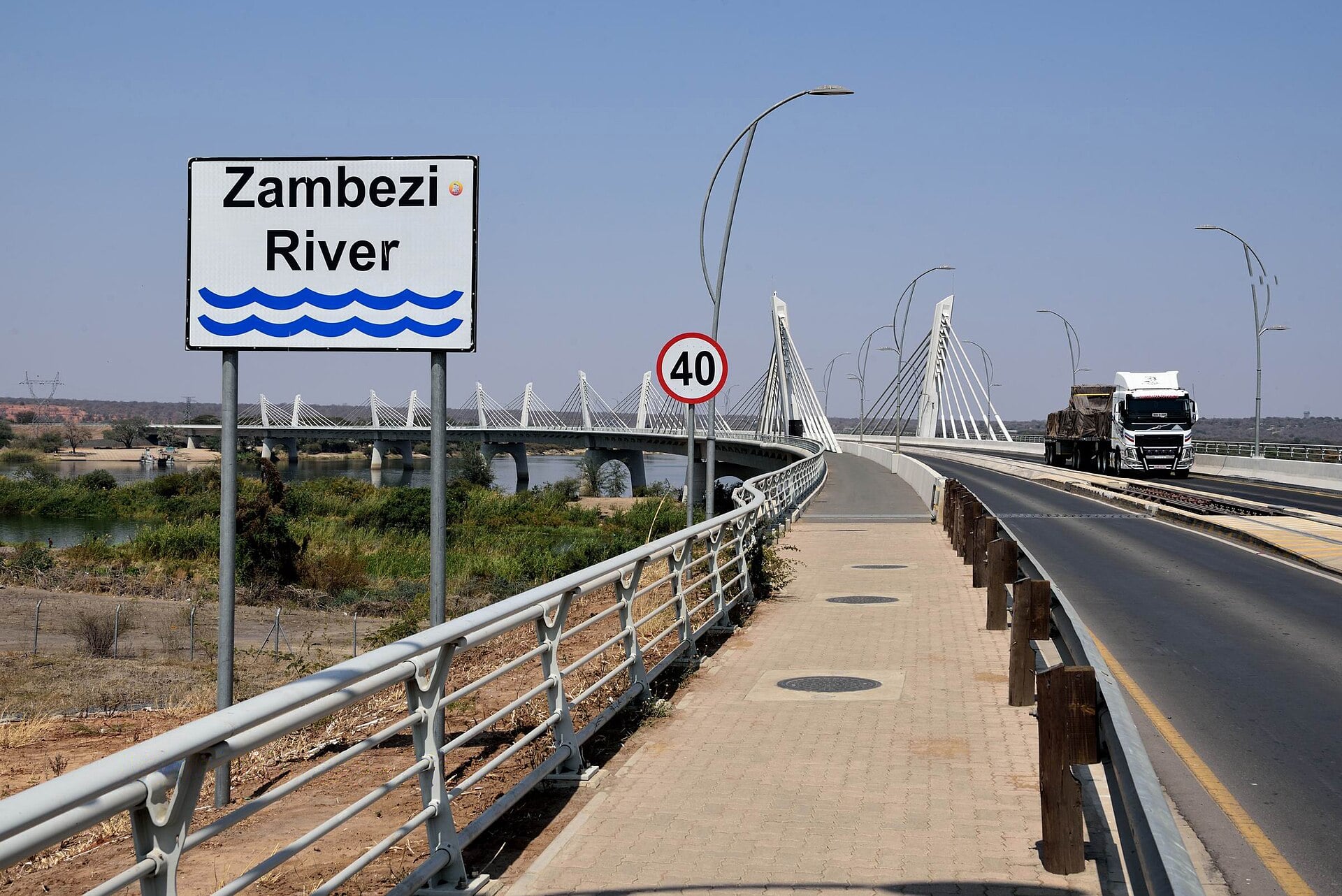
Zambia and Botswana meet on the Zambezi River at Kazungula. The Southern African Development Community (SADC), the 16-member regional bloc, calls it the point where Botswana and Zambia meet Namibia and Zimbabwe.
Five of these countries also share wildlife country. The Kavango Zambezi conservation area, known as KAZA, spans Angola, Botswana, Namibia, Zambia and Zimbabwe, according to Zambia’s Department of Immigration.
Rio Times explainers cover Congo, Angola, Zimbabwe and Tanzania, and daily news is on the Rio Times Zambia page.
Friends, Rivals and the Frontline Legacy
Many of Zambia’s regional friendships were formed in the liberation wars after its independence from Britain in 1964. Rhodesia, today’s Zimbabwe, declared independence unilaterally under white-minority rule on 11 November 1965.
Zambia then backed the liberation struggle as a frontline state, according to the official history of TAZARA, the Tanzania-Zambia Railway Authority. That history says Rhodesia tried to pressure Zambia by cutting its road and rail routes to South African ports.
Tanzania offered the alternative outlet, and China financed a railway between the two after Western lenders and the World Bank declined. Two jointly owned links, the TAZARA railway and the TAZAMA pipeline, still bind Tanzania and Zambia.
Zambia’s top diplomat in October 2026 was Foreign Affairs Minister Mulambo Haimbe, serving under President Hakainde Hichilema. Hichilema leads the governing United Party for National Development (UPND) and first won power in 2021.
Relations with Zimbabwe mix deep interdependence with occasional friction. The two countries run the Kariba Dam together, yet Zambian voices have also judged Zimbabwe’s politics in public.
In August 2023, while Hichilema chaired SADC’s security organ, a SADC observer mission led by Nevers Mumba watched Zimbabwe’s elections. Mumba is a former Zambian vice-president.
The mission’s preliminary statement of 25 August 2023 said some aspects fell short of Zimbabwe’s constitution, its electoral law and SADC guidelines.
Congo was Zambia’s biggest African customer in August 2026 and is also a rival for mining investment. It mined about 3.2 million tonnes of copper in 2025, against Zambia’s 940,000, according to US Geological Survey estimates.
Trade With the Neighbours, and Where the Copper Goes
In August 2026, refined copper earned US$1,098.2 million of Zambia’s US$1,748.4 million in exports, about 63 percent, ZamStats reports.
Imports that month came to US$1,396.4 million, leaving a surplus of US$352.0 million. From January to August 2026, the surplus totalled US$1,948.8 million.
The largest single buyer in August 2026 was Canada, with 32.0 percent of export earnings, mainly copper anodes sent for refining. Congo came second at 12.2 percent, ahead of China at 12.0 percent, Switzerland at 11.7 percent and Singapore at 10.6 percent.
On the import side, China supplied 25.5 percent and South Africa 25.3 percent of the bill. Congo, at 6.2 percent, was the only neighbour among Zambia’s five largest suppliers.
SADC members bought about 24 percent of Zambia’s exports in August 2026. They supplied about 37 percent of its imports, mostly from South Africa.
Neighbours matter most for non-traditional exports, the ZamStats category for goods beyond the traditional copper trade. Congo took 37.2 percent of these in August 2026, Malawi 8.6 percent and Zimbabwe 6.4 percent.
Refined copper exports reached 608,100 tonnes from January to August 2026, up 9.0 percent on a year earlier. The London Metal Exchange price averaged US$14,353.4 a tonne in August.
Ask Rio Times
17 years of Latin America reporting, on demand.
Answers are generated from Rio Times reporting only — every claim links to its source article.
Migration and Refugees Across Zambia’s Borders
Zambia is overwhelmingly a country of its own citizens. At the 2022 census, 99.3 percent of residents were Zambian and 0.4 percent were foreign nationals.
Among those foreigners, 26.5 percent were Congolese and 13.0 percent Malawian, followed by Indians at 10.9 percent. Family was the most common reason for living in Zambia, at 37.5 percent, while 31.4 percent were refugees.
Families straddle the borders as well. Zambians holding a second citizenship most often also hold Congolese (15.2 percent) or Zimbabwean (14.9 percent) nationality, the census found.
The UN refugee agency, UNHCR, counted 83,225 refugees and 12,906 asylum seekers in Zambia at the end of 2025. Of the refugees, 64,792 came from Congo, with Burundi and Somalia next.
Entry rules for foreigners are set out in the Rio Times guide to Zambia visas, work permits and residency.
Shared Rivers, Kariba and the Zambezi River Authority
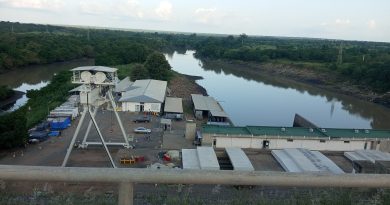
The Zambezi River carries much of the relationship with Zimbabwe. The Zambezi River Authority (ZRA), set up on 1 October 1987 by parallel laws in both parliaments, operates the Kariba Dam.
Zambia and Zimbabwe own the authority jointly and equally. Each runs its own power station at the dam: 1,080 megawatts on Zambia’s north bank and 1,050 megawatts on Zimbabwe’s south bank.
Full, the reservoir behind the dam holds about 185 billion cubic metres and stretches 280 kilometres. On 5 October 2026 its usable storage stood at 38.04 percent, against 14.30 percent a year earlier, ZRA data show.
Better 2025/26 rains allowed a 2026 allocation of 36 billion cubic metres for power, split equally between the two utilities. Because both draw on the same water, a dry year hits Zambian and Zimbabwean supplies together.
The next shared project is the 2,400-megawatt Batoka Gorge scheme, 47 kilometres downstream of Victoria Falls. First conceived in 1972, it was still at feasibility review and financing as of October 2026, according to ZRA.
Bridges, Railways and Pipelines to the Sea
Zambia’s trade still moves overwhelmingly by truck. Road carried 95.8 percent of export value from January to July 2026, while rail carried just 0.9 percent, ZamStats reports.
The Kazungula Bridge, a US$259 million crossing to Botswana, opened on Monday, 10 May 2021, with a one-stop border post. SADC says the 929-metre bridge replaced a pontoon ferry and should link Congo and Tanzania to the South African port of Durban.
TAZARA, the 1,860-kilometre railway from Dar es Salaam to New Kapiri Mposhi, began full operations on 14 July 1976. China built it with an interest-free loan, and Tanzania and Zambia own it jointly and equally.
On 29 September 2025, TAZARA signed a freight concession with China Civil Engineering Construction Corporation (CCECC), a Chinese contractor. TAZARA says the deal covers rehabilitation, new locomotives and wagons, and more than US$1.4 billion of investment.
A second link, the TAZAMA pipeline, runs 1,710 kilometres from Dar es Salaam to Ndola in the Copperbelt. It has carried finished diesel instead of crude oil since 16 March 2023, according to the company.
At Nakonde, on the Tanzanian frontier, the Zambia Revenue Authority already works with US scanner maker Astrophysics. The US Embassy says Hichilema commissioned that border post in June 2026, and a contract for Livingstone followed on 24 August 2026.
The newest route runs west, through the Lobito Corridor to Angola’s Atlantic port of Lobito.
Financial close on its Angolan rail leg, a 1,300-kilometre line to the Congolese border, was announced on 3 July 2026. The US$753 million package included US$553 million from the US International Development Finance Corporation (DFC), Washington’s development bank.
The Development Bank of Southern Africa added US$200 million, according to the Africa Finance Corporation, an adviser on the deal.
For Zambia’s own link, the African Development Bank approved a US$255 million loan and a US$10 million grant on 6 August 2026. The project covers about 550 kilometres of new railway towards Angola and upgrades to 105 kilometres of the Mwinilunga-Jimbe road.
In early October, Finance Minister Situmbeko Musokotwane said financing for the corridor’s road links was sealed, the Lusaka paper News Diggers reported. The Rio Times covered the announcement in Zambia Says Lobito Corridor Road Financing Is Secured.
Regional Bodies, SADC, COMESA and the Free Trade Area
SADC, headquartered in Gaborone, Botswana, counts all eight of Zambia’s neighbours among its 16 members. At its summit in Durban on Monday, 17 August 2026, it elected South Africa’s Cyril Ramaphosa as chair.
The same summit elected Zambia’s president as incoming chair and noted that the next summit will be held in Zambia. Hichilema already chaired SADC’s Organ on Politics, Defence and Security Cooperation, its security arm, in 2023.
The Common Market for Eastern and Southern Africa (COMESA), a 21-member trade bloc, has its secretariat in Lusaka, the capital. Its 25th summit is due in Harare, Zimbabwe, from Monday, 19 October to Thursday, 22 October 2026.
Three neighbours, Congo, Malawi and Zimbabwe, belong to both blocs, and ZamStats tracks that overlap separately. Angola, Tanzania, Botswana, Namibia and Mozambique are SADC members outside COMESA.
Zambia ratified the African Continental Free Trade Area (AfCFTA) agreement on 28 January 2021, African Union records show. By the AU’s list of 22 May 2026, all eight neighbours had ratified too, among 49 countries in total.
Where Zambia Leads and Where It Follows
Zambia punches above its weight in regional diplomacy: it hosts COMESA and will chair SADC next. It also had about 1,000 peacekeepers with the UN mission in the Central African Republic in June 2026, the US Embassy said.
Its elections have produced change at the top. In 2021, Hichilema defeated sitting President Edgar Lungu with 57.51 percent, Electoral Commission of Zambia results show.
He won a second term on Thursday, 13 August 2026, and took the oath at Lusaka’s National Heroes Stadium on 1 September. Times of Zambia, a Lusaka daily, reported the ceremony and a margin of over 1.1 million votes against opposition runner-up Brian Mundubile.
The Rio Times covered the vote in its Zambia election result report. The wider country picture is in Zambia Explained.
In copper, Zambia follows Congo, which mined more than three times as much in 2025 by USGS estimates. In trade, it depends on South African suppliers and on ports in other countries, from Dar es Salaam to Durban.
In power, it shares Kariba’s water with Zimbabwe under a joint authority. Lusaka can lead debates in SADC, but it cannot manage the Zambezi or reach the sea alone.
What It Means for US Readers
For investors, Zambia is a copper supplier whose metal reaches the world through other countries. Border queues, port capacity and railway deals therefore matter as much as mine output.
Washington has a direct stake in that geography through the DFC loan for Lobito. The Millennium Challenge Corporation, a US aid agency, also signed a US$491 million compact with Zambia on 17 October 2024.
On Thursday, 8 October 2026, the two governments signed a five-year health memorandum worth US$2.49 billion, the US Embassy said. Washington intends to provide more than US$1.5 billion, and Zambia pledged US$975 million more in its own health spending.
The Rio Times has covered the earlier health negotiations and Zambia’s talks with the IMF on a new loan.
US citizens do not need a visa to enter Zambia, according to its Department of Immigration. The State Department rates Zambia Level 1, exercise normal precautions, in an advisory last reissued on 31 July 2023.
A KAZA UniVisa, valid for up to 30 days in Zambia and Zimbabwe, costs US$50. The kwacha traded at about K19.90 per US dollar on 8 October 2026, the Bank of Zambia’s mid-rate.
What Is Not Known
The African Development Bank’s approval notice gives no completion date or full cost for Zambia’s 550-kilometre Lobito rail link. It describes the US$255 million loan as a first tranche.
It is not known how much the road financing Musokotwane described is worth, or when construction will start. It is also unclear when the revitalised TAZARA will carry more freight.
The Batoka Gorge scheme has no announced construction start, and ZRA says its financing is still being secured. How the 2026/27 rainy season will affect Lake Kariba is not yet known.
No recent official count of Zambians living in neighbouring countries was found. The census counts residents of Zambia, not emigrants.
Official 2026 vote shares were not on the Electoral Commission of Zambia’s website as of 8 October 2026. State House could not be reached to confirm the inauguration details.
Frequently Asked Questions
How many countries border Zambia?
Eight: the Democratic Republic of the Congo, Tanzania, Malawi, Mozambique, Zimbabwe, Botswana, Namibia and Angola. Zambia has no coastline, so all its sea trade crosses at least one of them.
Who is the president of Zambia in October 2026?
Hakainde Hichilema of the United Party for National Development. He won a second term in the election of 13 August 2026 and was sworn in on 1 September 2026.
Is Zambia a member of SADC or COMESA?
It belongs to both. COMESA’s secretariat is in Lusaka, and SADC elected Zambia’s president its incoming chair in August 2026.
How does Zambia get its copper to the sea?
Mostly by truck through neighbouring countries: road carried 95.8 percent of all export value from January to July 2026. Rail links run to Dar es Salaam via TAZARA, and a new line towards Angola’s port of Lobito is planned.
Who controls Lake Kariba?
The Zambezi River Authority, which Zambia and Zimbabwe own jointly and equally. In 2026 it allocated 36 billion cubic metres of water for power, split equally between the two countries’ power utilities.
Do Americans need a visa for Zambia?
No, US citizens are on Zambia’s list of nationals who do not need a visa. A KAZA UniVisa for US$50 covers visits to both Zambia and Zimbabwe for up to 30 days.
Sources: ZamStats, 2022 Census National Analytical Report; ZamStats, 2022 Census key highlights; ZamStats, The Monthly, Vol. 282 (September 2026); ZamStats, trade by mode of transport; Bank of Zambia, daily exchange rates; Electoral Commission of Zambia; ECZ, 2021 presidential results; Zambezi River Authority, lake levels; ZRA, hydrological outlook, 21 July 2026; ZRA, Kariba technical data; ZRA, Batoka Gorge project; TAZARA, history; TAZARA, revitalisation; TAZAMA Pipelines; SADC, 46th Summit communique; SADC, member states; SADC, Kazungula Bridge; SADC observer mission, Zimbabwe 2023; SADC Organ chair statement, 2023; COMESA, 25th Summit briefing; African Union, AfCFTA status list; UNHCR population statistics; USGS, Mineral Commodity Summaries 2026, copper; African Development Bank; Africa Finance Corporation; Millennium Challenge Corporation; US Embassy Lusaka, health MOU; US Embassy Lusaka, border scanners; US Embassy Lusaka, peacekeeping; US Embassy Lusaka, re-election congratulations; US Embassy Lusaka, inauguration visit; Zambia Department of Immigration; Zambia Department of Immigration, KAZA UniVisa; US State Department, Zambia travel advisory; Times of Zambia; Times of Zambia, swearing-in report; News Diggers (all accessed 8 October 2026).