Madre Director Eugenio Viola Believes a Museum Must Never Stand Still
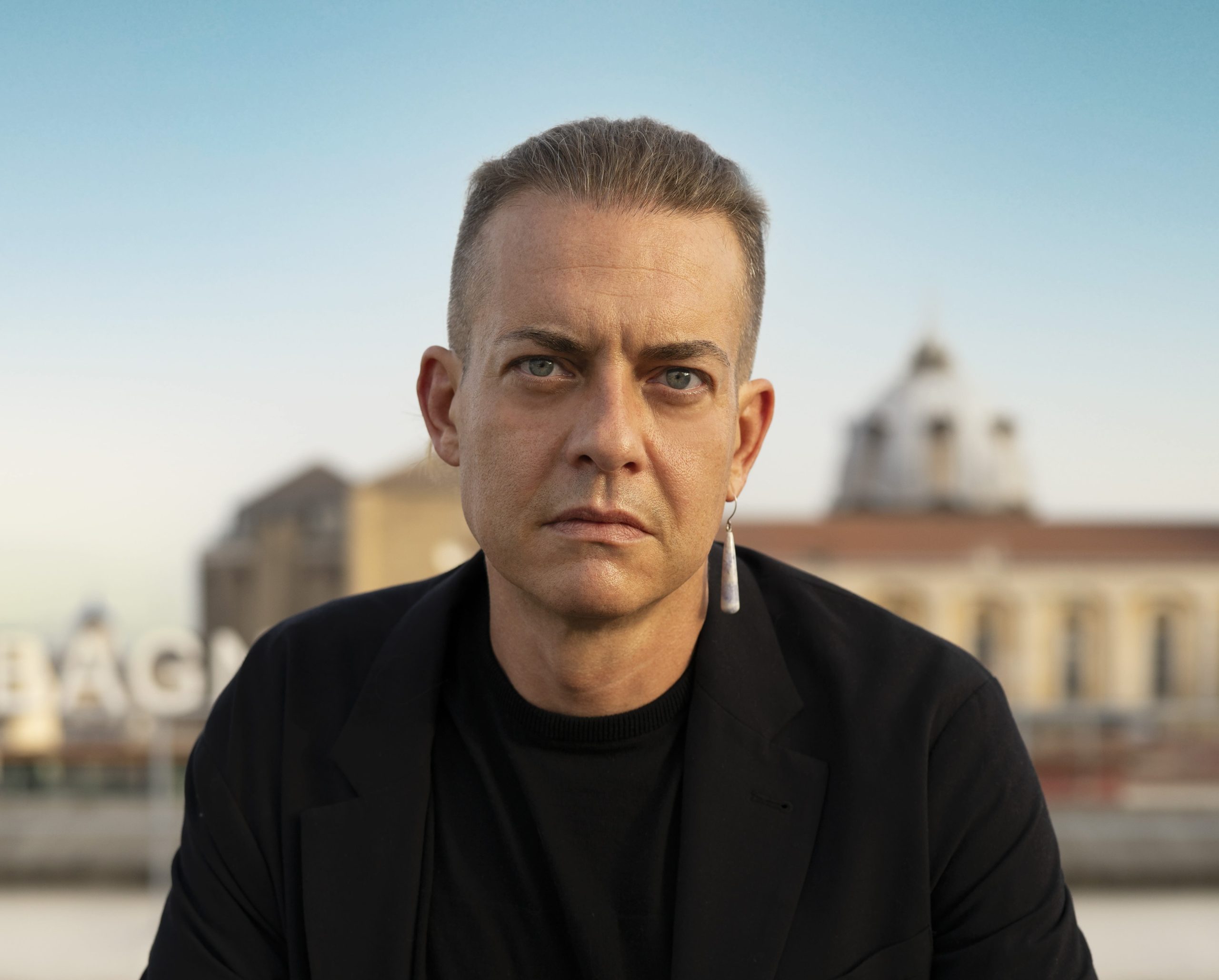
Last month, the Madre Museum in Naples named Eugenio Viola its new director. Viola, a Naples native, was chosen from a field of 33 candidates and returns to the museum where he served as curator at large from 2009 to 2016. Housed in the Palazzo Donnaregina, the institution holds a collection of works conceived specifically for the building, tying it to the city since it opened. We caught up with the director to hear about his plans for the collection, why the Mediterranean will anchor his program and where he eats in Naples.
Congratulations on the new job! You were curator at large at the Madre from 2009 to 2016, and you’ve said your institutional career took its first steps there. What does walking back into that building feel like after a decade abroad?
It carries a particular emotional weight. Madre is where a fundamental part of my professional identity took shape, and where I learned to see a museum not simply as an exhibition space, but as a living structure of ideas, relationships and conversations.
I am returning to a place I know intimately, but inevitably with different eyes after a decade spent working across Australia and Latin America. I do not see it as closing a circle. Quite the opposite: it is the beginning of another trajectory.
After so many years abroad, I felt a desire to bring what I had learned back into dialogue with the city that shaped me. There is an element of giving something back, certainly, but I am not interested in nostalgia. I am interested in what can happen next.
What are the main differences between working with institutions in Latin America and Italy?
I would resist a simple binary. Institutions are shaped by the societies in which they operate, and their priorities emerge from those conditions.
In many Latin American contexts, museums are asked to fill gaps elsewhere in the public sphere. They become spaces of encounter, listening and coexistence, often responding directly to moments of social or political crisis. They also tend to work with very limited resources. That scarcity can generate extraordinary inventiveness, but also a necessary culture of solidarity: institutions share knowledge, networks, infrastructure and responsibilities.
Italy has a much denser institutional history, a strong public cultural infrastructure and an extraordinary concentration of heritage and expertise. This provides continuity, institutional memory and access to highly specialized professional networks, although established administrative structures can sometimes make institutions less agile.
What interests me is bringing these strengths into dialogue with the flexibility, inventiveness and collaborative culture I experienced in Latin America. That experience taught me, above all, that the social function of a museum is never abstract. It must be continuously negotiated with the society it serves.
Your relaunch plan puts the permanent collection at the center of the museum’s identity. What are the unique strengths you see in Madre’s collection?
One of Madre’s greatest strengths is that many works were conceived specifically for Palazzo Donnaregina. They do not simply occupy the building; they embody a history of relationships between artists, the institution and Naples. That specificity is an extraordinary asset. But a collection should never become a static backdrop. It is a living archive that every generation must be able to revisit and reinterpret.
I want to work through changing displays, unexpected juxtapositions, focused research and new commissions that allow contemporary artists to enter into dialogue with works already in the collection. Temporary exhibitions should also, whenever possible, leave something behind: new works, archives, research, knowledge. A collection is truly public when it does more than preserve the museum’s past. It must continue to produce meaning in the present.
Writing in ArtReview, you called for museums to move past singular authoritative narratives toward “spaces of listening, representation and symbolic negotiation.” What would that look like at Madre?
It begins by putting Naples firmly back at the center of Madre’s project, not as a backdrop, but as both a horizon and a method. Naples is radically stratified. Different histories, cultures, migrations, conflicts and forms of belonging coexist here without necessarily resolving their contradictions. A museum in this city should not simplify that complexity; it should work through it.
This is also why the Mediterranean will be central to my program. Not as a closed geographical or identity-based category, but as a space of circulation, friction and interdependence, where Europe, Africa and the Middle East intersect and where some of the defining questions of our time are being played out.
For me, listening does not simply mean bringing more voices into an existing institutional structure. It means allowing those voices to change the questions the museum asks, and, ultimately, the way the museum itself works.
Your Artforum Best of 2025 list included the Tomaso Binga retrospective at the Madre, curated by Eva Fabbris with Daria Khan. What did that show get right?
It did something more important than simply recovering an artist who had been unjustly overlooked: it exposed the mechanisms through which art history itself produces visibility and invisibility.
Binga belongs to a generation of extraordinarily radical women whose contributions to experimental art, language, performance and feminist practice were recognized far too late. In Italy, I think of Mirella Bentivoglio and Ketty La Rocca. But the phenomenon is certainly not confined to Italy. Across Latin America, we have seen comparable reassessments, from Olga de Amaral in Colombia and Cecilia Vicuña in Chile to Margarita Azurdia in Guatemala and Letícia Parente in Brazil.
The point is not simply to insert neglected women retrospectively into an existing canon. The more important task is to acknowledge that the canon was never neutral in the first place. Museums should not only preserve art history. They should question how it was written, what it excluded and by whom.
You’ve spent your career on performance and what you call “body poetics.” What does that term mean to you?
I use “body poetics” to describe a broad constellation of practices in which the body becomes a site of meaning, conflict and transformation.
Historically, this begins with Body Art and the radical performance practices of the 1960s and 1970s, but I am equally interested in their mutations and afterlives, particularly those that emerged around the turn of the millennium.
The body can be medium, image, archive, battlefield, interface. Questions of gender, sexuality, race, vulnerability, desire, technology and power become material through it. So I do not see “body poetics” as a style, or even as a medium. It is a lens through which I have approached art for many years.
What continues to fascinate me is that the body remains central even when it appears to be absent, displaced into images, technologies, prostheses or digital identities.
Your 2022 Italian Pavilion in Venice, Gian Maria Tosatti’s Storia della Notte e Destino delle Comete, was made in partnership with Valentino, and Tosatti has described Pierpaolo Piccioli as a collaborator rather than a sponsor. Your plan for the Madre calls for new and atypical funding streams. Fashion and art have moved ever closer since then. Are you excited about potential fashion collaborations in Naples?
Valentino was one of the main sponsors of the Italian Pavilion, and its support was crucial in allowing us to realize a project of that scale and ambition. I remain deeply grateful to the maison and to Pierpaolo Piccioli for that commitment. From an institutional perspective, however, I think it is important to distinguish financial support from artistic authorship. Valentino helped make possible a work of unusual scale and complexity, while the artistic and curatorial decisions remained entirely independent. That distinction matters to me.
The broader issue is sustainability. Economic sustainability is a condition of institutional autonomy, not its opposite. At Madre, public funding will remain fundamental, but I believe it should be complemented by a greater capacity to generate income independently through philanthropy, partnerships, co-productions, memberships and other forms of support.
Fashion can certainly be part of that ecosystem, especially in Naples, where fashion, craftsmanship and design have deep cultural roots. But I would not privilege fashion over other sectors simply because art-fashion partnerships have become increasingly ubiquitous.
The test is very simple: does the partnership make possible something culturally significant that would otherwise not happen? And can it do so without compromising the museum’s intellectual and curatorial independence? If the answer is yes, I am interested. If it is merely branding, I am not.
Where do you like to eat in Naples?
My choices are quite personal. I like places with a strong identity, where you encounter a particular idea of Naples rather than a polished version of “Neapolitan cuisine.”
L’Europeo di Mattozzi is one of those places for me: deeply Neapolitan, unpretentious and rooted in a tradition that feels completely authentic rather than staged. I like its continuity, the sense that you are entering a place that belongs to the city’s everyday history as much as to its culinary one.
Then there is Leon d’Oro in Piazza Dante: completely different, old-school, almost outside time. It is one of those places that still carries traces of the Naples I grew up with. For me, it belongs to that older Neapolitan tradition of cafés and restaurants as places of encounter, where conversation matters almost as much as the meal. I am very attached to that atmosphere.
And when I want fish, I like the old institutions around Borgo Marinari, La Bersagliera or Ciro, for example. There, the setting is inseparable from the experience: Castel dell’Ovo, the harbor, the sea, the particular geography of Santa Lucia.
But I distrust definitive restaurant lists in Naples. One of the city’s great pleasures is still discovering a place by accident and realizing that it is the one you end up remembering.