What officials know so far about flood impacts in Colorado
SOUTH FORK — The floodwaters are beginning to recede in parts of southwestern Colorado, but the dangers haven’t washed away. Crews are just beginning to assess the damage from days of heavy rain and severe flooding, while officials warn of uncertain road conditions, potentially unsafe drinking water and overwhelmed sewage systems.
In Rio Grande County, one of at least a dozen counties hit by the flooding, some sheriff’s deputies are being pulled off helping those impacted by the flooding for search and rescue efforts in the high country to help hunters stuck in the mud.
“We don’t know the condition of all the roads. We have hundreds and hundreds of miles out there,” Patrick Moran, a district ranger with the Forest Service, told about 130 residents inside a South Fork church hall Monday night, with another 200 tuned in online.
“We have people getting stuck and needing rescue and it is pulling resources out from the local effort here because the sheriff and her team are having to break off to assist with that,” he said.
He urged residents to stay put until crews can assess the conditions and determine whether they are safe for travel. The process, for some areas, could stretch into the spring, he said, with snow already blanketing higher elevations.
“Our high country is locked out now because of snow and with more snow in the forecast, we’re not going to get to see a good chunk of the forest until after spring runoff,” Moran said.
Southwestern Colorado, plus much of the Four Corners region, was able to take a breather Monday as blue skies returned — temporarily — after days of torrential rain. Another storm is expected to pass through the region starting Friday.
The storm carried tropical moisture from the Pacific Ocean and dropped about 2 to 5 inches of water onto most of the San Juan Mountains, with some areas potentially receiving over 6 inches of rain.
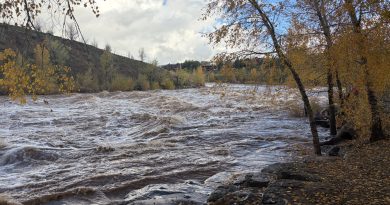
Bloated streams surged into rivers, like the San Juan River in Pagosa Springs, which rose to about 15 feet from about 5 feet within two days. That’s the second highest crest since the record in 1911, according to National Weather Service data.
“Record precipitation, probably in quite a few areas, has fallen in the Four Corners,” said Dennis Phillips, a NWS meteorologist in Grand Junction.
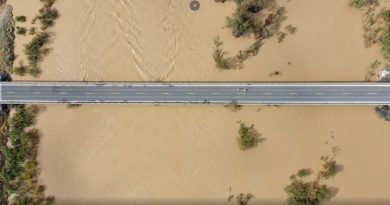
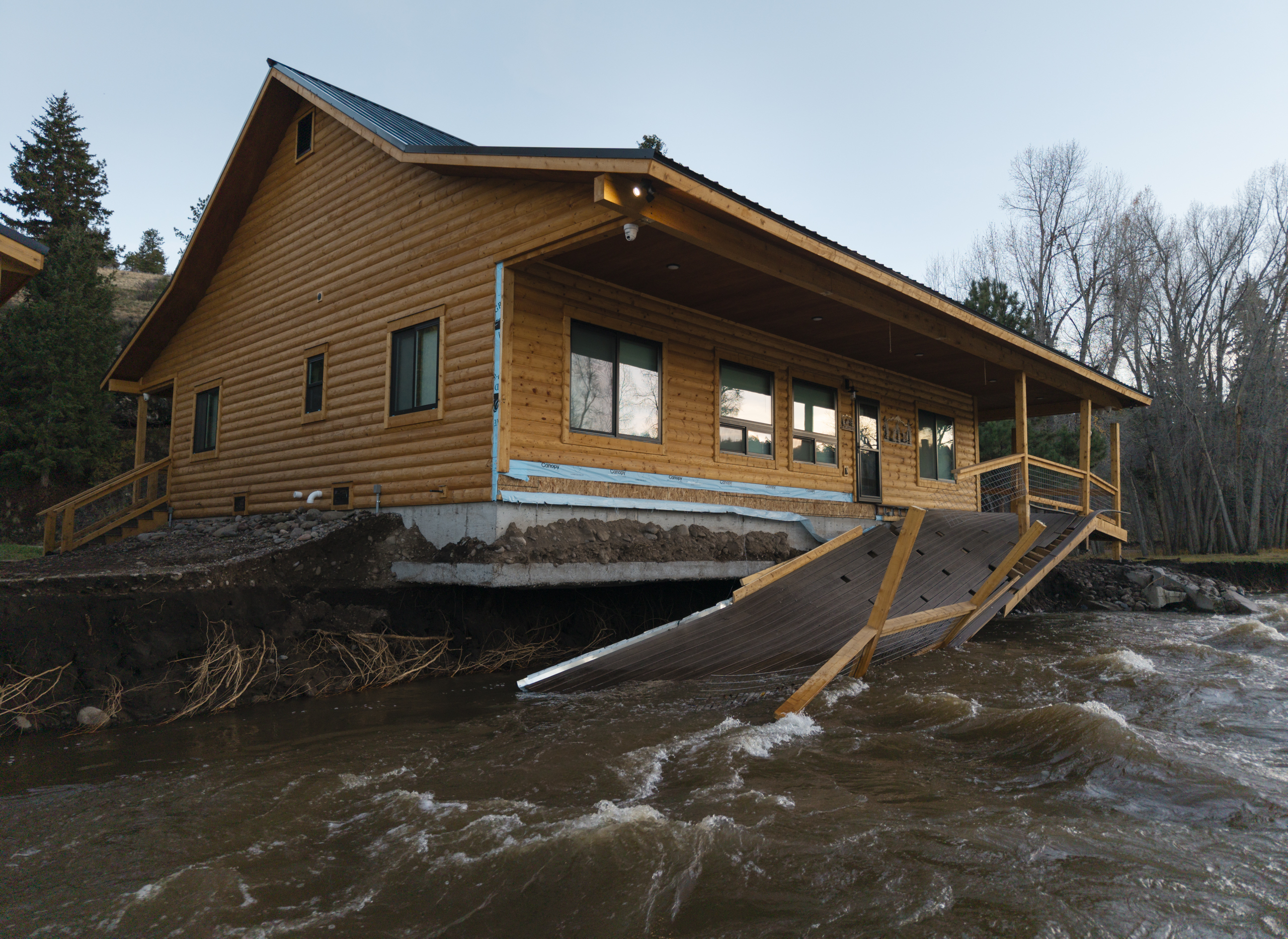
Gov. Jared Polis verbally declared a disaster emergency for 12 counties. In Rio Grande County, dozens of homes remained under evacuation orders Monday. The flooding washed away a bridge, shut down roads and knocked radio stations off the air. Officials issued a boil water advisory for residents after a sewage system became overwhelmed.
In Archuleta County, responders focused Monday on evacuating residents to safer areas ahead of another storm next weekend. Some residents were stranded by destroyed roads, school bus routes were blocked, and in some places, roads were replaced by channels of rushing water.
“We are looking at another storm coming in later towards the end of this week that could possibly bring more rain. It’s not supposed to be as bad, but the ground is pretty saturated,” said Vicki Shaffer, a public information officer for the emergency response in both Montezuma and Archuleta counties. “It can’t hold more.”
La Plata County residents saw the Animas Valley north of Durango flood while officials extended the local disaster declaration. Durango broke its all-time precipitation record for October, Phillips said.
The Colorado Sun checked in with emergency managers and first responders across the region for updates on how communities are doing after the storm.
Alamosa County
A levee system that spans approximately 6.4 miles along both banks of the Rio Grande, protecting the city of Alamosa and other parts of the county, contained most of the water from the flooding, Eric Treinen, emergency manager for Alamosa County told The Sun on Monday afternoon.
The last time the area saw flooding comparable to this year’s deluge was in spring 2019, when the river was flowing at about 2,600 cubic feet per second, Treinen said.
“We pushed 3,500 this morning, and no ill effects,” he said.
Staff with the city and county of Alamosa worked together to monitor the forecast and inform residents, he said, adding that no residents were under mandatory evacuations.
Some parts of the county, where culverts failed, flooded intermittently, “but for the most part, we did really well holding all of that water,” he said.
The Mosca-Hooper Volunteer Fire Department placed sandbags and heavy-duty pumps designed to move large amounts of water and debris Sunday night to divert floodwaters from two homes, though Treinen was not sure if the effort succeeded.
Archuleta County
Safety was the top priority in Archuleta County, said Shaffer, spokesperson for the county sheriff’s office.
Responders were going door to door on some of the more affected roads, like County Road 500, County Road 339 and Colorado 151. Teams are checking on residents to see if they need services or supplies and sharing evacuation instructions.
“I just talked to one of the team leaders who told me that his team had been to over 100 homes today,” she said.
In some cases, the gravel and parts of the base of the road have been washed away. In others, the road is completely gone, she said. Officials from the national guard and search and rescue are asking people living on the opposite side of blocked areas to evacuate now.
Many people are going to stay with family and friends or make their own arrangements, but there is an evacuation center at the Pagosa Lakes Property Owners Association Clubhouse.
The damaged and destroyed roads will take time to repair. This affects everything from access to homes to school bus routes while school is in session.
“It’s not a matter of ‘OK, we’ve got enough supplies to wait for a week,’” she said. “That’s now how it’s going to work.”
No deaths or injuries were reported as of Monday. Septic tanks were flooded, and there are areas where the power grid was damaged and transformers were under water. Water has receded from some flooded areas, and the evacuation order for downtown Pagosa Springs was lifted.
“This incident has a huge footprint. There are areas that are still under water,” Shaffer said. “There are areas that are still under mud and debris.”
Conejos County
The National Guard is assisting Conejos County sheriff’s deputies as crews begin assessing flood damage and determining when residents can return home, Sheriff Garth Crowther said in a recorded update shared Monday afternoon on social media.
Floodwaters are starting to recede, but some roads remain barricaded until crews can determine whether they are safe for travel. Crowther urged residents to respect the closures.
“We are starting to get back to normal as the water levels drop and the assessments are done,” Crowther said. “We will get you back in your home as soon as you possibly can.”
Crowther also urged residents not to be alarmed if National Guard members knock on their doors.
“We’ll be back to normal soon. Our community will take care of each other,” he said. “I know that, I’ve seen it.”
Dolores County
Dolores County on the Colorado-Utah border was marginally impacted by the flooding, officials said.
No deaths, injuries or damage to homes, drinking water or sewer systems had been reported as of Monday, and no community members had to evacuate.
The largest impact was to dirt roads, remote areas and public lands, Keith Keesling, the county’s emergency manager, said.
“That much rain — doesn’t matter how much road base you put down — they become impassable,” Keesling said. “Minor washouts compared to what everyone else had.”
The floods were not affecting people in Dolores County as much as in other areas, he said.
“In our area, it’s not a big deal, but then you get closer to the San Juan, and you’ve got Durango, La Plata County, Archuleta County, Conejos all the way over to the San Luis Valley,” Keesling said. “They’re just under water. It’s crazy.”
La Plata County
La Plata County extended its local disaster declaration Monday to continue through the weekend, when another storm is expected to pass through the region.
Parts of the Animas Valley north of Durango were covered in water. Some roads in the area were fully or partially closed because of flood damage. County roads 334 and 520 were closed, while sections of county roads 319 and 314 had one lane open.
“Slick mud may lie beneath shallow water, and multiple vehicles have become stranded,” a La Plata County news release said Monday. “Wildlife may also be more active during flooding. Stay out of floodwater, which can conceal hazards such as downed power lines, human or animal waste, logs, submerged vehicles, and other large debris.”
The Animas River, which was temporarily closed to recreational boating because of high water levels, reopened after flows remained consistently below 5,000 cubic feet per second.
The river peaked at over 11,000 cfs during the flood. Its annual peak during spring snowmelt in May reached nearly 1,500 cfs, according to U.S. Geological Survey data.
Officials encouraged residents to report damage to structures, roads, utilities, or other infrastructure by calling 970-382-6275 or emailing oemecc@lpcgov.org. Residents facing unsafe or unlivable conditions who need temporary housing or food assistance should call 2-1-1.
Mineral County
Heavy rains have forced Mineral County to indefinitely close its community center and mining museum, where water has damaged the building’s electrical system, county administrator Janelle Kukuk told The Sun.
The museum, built into a rock cliff, has been hit by rainstorms lasting three to four days at a time since September. The latest flooding was “the straw that broke the camel’s back,” Kukuk said.
Opened about 30 years ago, the museum features displays of mining equipment that show visitors what mining was like in Mineral County. Some pieces are irreplaceable, one-of-a-kind items. The center also houses a gift shop, artwork and exhibits on loan.
The county is assessing the damage and determining what repairs are needed before it can reopen, Kukuk said.
“We’re just waiting to see how much more damage the sheetrock can take before it starts to collapse,” she said.
Officials are closely watching the forecast, hoping colder temperatures will freeze the saturated ground and help stabilize hillsides. Without a hard freeze, more rain could trigger additional landslides and send rocks tumbling down, she said.
“We’re watching the forecast with maybe a little bit of a jaded eye at this point,” she said, knowing the area could end up in the same situation as this weekend or face a new challenge if the moisture arrives as snow.
Aside from the museum, reopening Wolf Creek Pass is the county’s biggest concern, she said.
About eight people living in a housing development near the river at the base of Wolf Creek Pass returned to their home Sunday night after they were forced to evacuate. The road is heavily damaged between South Fork and their neighborhood, but is “passable,” Kukuk said.
County crews are working to assess the damage, clean up small rock slides near Creede and help the Forest Service with road work.
While Mineral County has sustained damage, neighboring counties have fared far worse, Kukuk said. She said she feels fortunate that her county has avoided more widespread destruction.
“This is not a whole lot worse, with the exception of the mining museum, of what we dealt with a year ago,” she said, “and so we feel very fortunate … that we’re not dealing with just really terrible things that we can’t rise above and put back together again.”
Montezuma County
In Montezuma County, the corner of southwestern Colorado, officials said there were no deaths, injuries or evacuations reported because of the flooding.
While no homes were flooded, falling rocks severely damaged a camper and a workshop outside of Dolores, Shaffer, the county’s public information officer, said.
Floodwaters also created small sinkholes on Road J in the southern part of the county, and repairs had begun on Monday. Shaffer had not heard reports of any damage to drinking water, irrigation or sewer systems.
Some commuters were delayed by the 18-mile road closure on U.S. 160 around the San Juan River Bridge near the Four Corners and the Colorado-New Mexico border, she said.
Ouray County
In Ouray County, the temporary closure of U.S. 550 over Red Mountain Pass was the major impact from the flooding.
The highway is the primary link between the remote towns including Silverton, Ouray and Ridgway. The drive from Silverton to Ouray takes about 45 minutes over the pass. When it was temporarily closed, the travelers needed to take a massive detour through Durango, Cortez, Dolores and Telluride — a four-hour drive.
“Luckily, we have not been impacted by the most recent floods which have devastated counties south of us,” Jennifer Peterson, the county’s communications administrator, said in an email to The Colorado Sun. “The only real issue we had was the closure of Red Mountain Pass.”
Rio Grande County
At lower elevations, crews began assessing damage Monday and will begin sampling water Tuesday. Most low-lying areas of the county still have standing water, said Brian Burrell, the county’s emergency management director.
A boil water advisory is in effect for residents who rely on private wells throughout Rio Grande County, as well as those in Mineral County along the South Fork of the Rio Grande whose wells may have been affected by flooding.
“We have a lot of testing that we’re going to be doing and the labs are going to be overwhelmed,” he said.
About 80 homes were still under evacuation orders as of Monday afternoon, Linette Nye Schmidt, a spokesperson for South Fork Fire Rescue, told The Sun. Some evacuations were lifted Monday evening, but there is no estimated timeline for when others may be allowed to re-enter.
No injuries or deaths have been reported in Rio Grande County, but the severe flooding washed away a bridge and shut down several roads, including U.S. 160 over Wolf Creek Pass, which remained closed Monday night.
After the sewage system became overwhelmed, officials shut it off in several subdivisions. The county is asking residents to stay out of the area until service is resumed.
In Monte Vista, the public radio stations were temporarily knocked offline because their antennas were underwater, she said.
As floodwaters recede, officials may get a clearer picture of the damage. In some cases, the water helps hold infrastructure in place, and additional damage could occur as it recedes.
“So we can’t really predict that until the water continues to go down,” Nye Schmidt said.
Plummeting nighttime temperatures are also creating logistical challenges for recovery efforts. During warmer months, volunteers might leave pallets of clean water outside the disaster assistance center for residents.
“But we couldn’t do that here unless we wanted to deliver ice packs,” Nye Schmidt said, explaining that crews instead cleared space inside the fire department to keep the water from freezing overnight.
The low temperatures also create obstacles for cleanup efforts and damage assessments. If water is frozen, it’s going to be harder to pump out. Snow is expected by the end of the week, but for now, the forecast for the next few days looks clear.
“It’s supposed to be, thankfully, blue skies for a couple of days,” she said.
San Miguel County
Officials from San Miguel County, which extends from Telluride to the Colorado-Utah border, reported no deaths, injuries, evacuations or flooded homes as of Monday.
More information was still coming into the local sheriff’s department, spokesperson Susan Lilly said. The Colorado State Patrol was investigating a flood-related motor vehicle accident on Colorado 62 and responded to a Jeep that rolled over Sunday morning near Gray Head Peak, she said.
The county’s biggest challenge was rockfall in the region’s steep, mountainous terrain, which temporarily closed Colorado 145 over the weekend. In some areas, plows had to move large boulders, while in others, deputies moved microwave-sized rocks, Lilly said.
“We always have our antennae up when we have big storms because of the nature of our topography,” she said. “We have our 145 corridor that gets hit on a pretty regular basis with mudslides and rockfall. … When it does, public safety is the focus.”
The Sun did not receive updates by Monday evening from spokespeople in Hinsdale and San Juan counties.
This is a developing story that may be updated.