Interview: Karim Crippa On His Vision for Art Basel Paris 2026
Since its launch in 2022 as Paris+ par Art Basel, Art Basel Paris has become one of the most successful events in the organization’s global portfolio, drawing collectors and professionals from around the world to the French capital each fall. Yet Art Basel Paris is hardly the easiest fair to manage. First, there is the location. The Grand Palais’s iconic architecture can easily turn labyrinthine once tens of thousands of visitors begin circulating through it. Then there is the more delicate question of identity. As an international fair, Art Basel Paris must retain its global reach while remaining anchored in the Parisian and French art scene—particularly as its arrival displaced the now-defunct FIAC, the historic French fair that occupied the fall slot in Paris for decades.
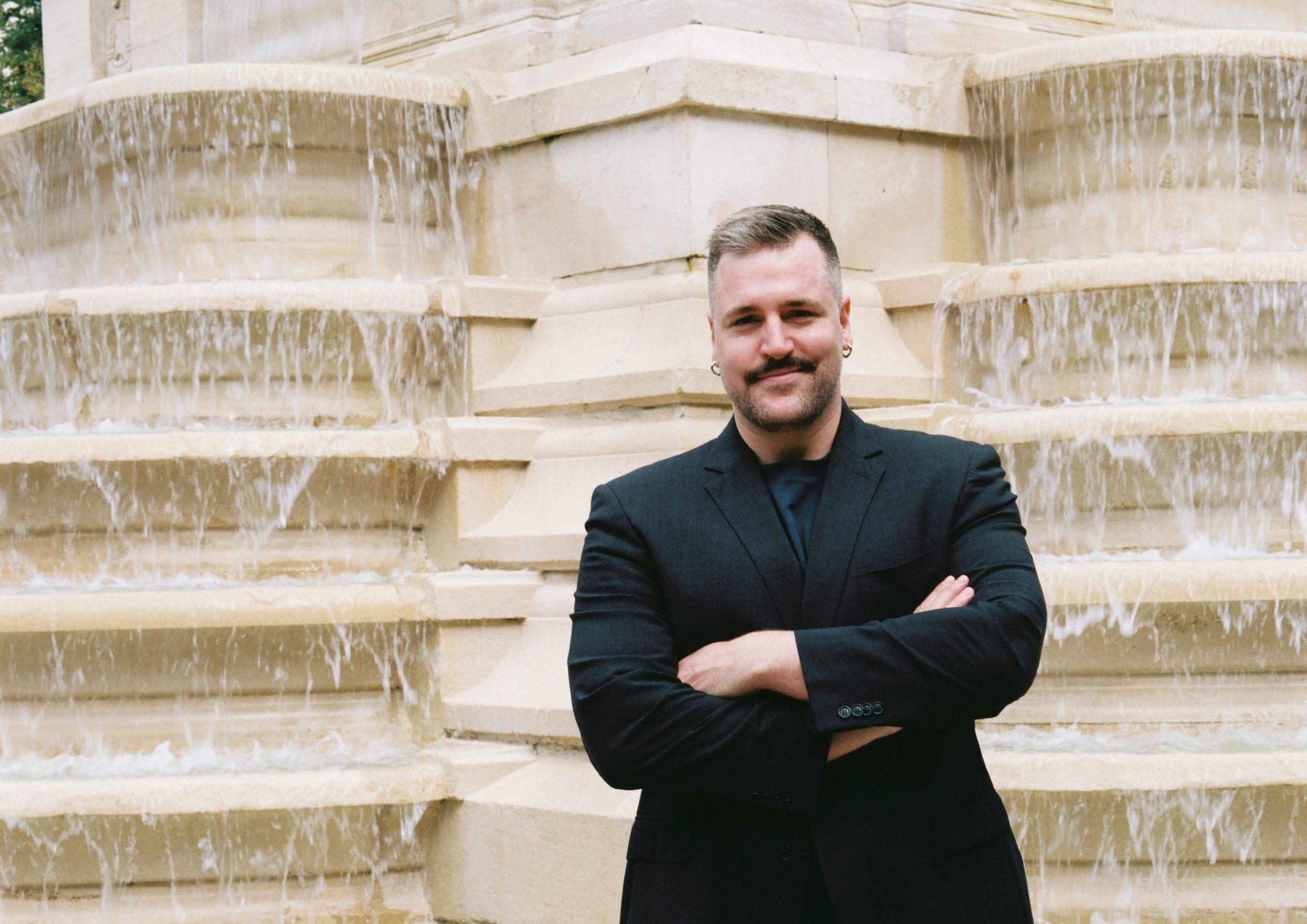
That balancing act is something new director Karim Crippa knows particularly well, having worked at Art Basel across communications and editorial for several years, ultimately becoming head of communications for Art Basel Paris and senior editor for Art Basel globally. Born in Zurich and raised in Lausanne, Crippa built a career across communications, content production, digital culture and the visual arts before joining Art Basel in 2018, with roles at Thyssen-Bornemisza Art Contemporary in Vienna, Haus der Kunst in Munich and Duve in Berlin, among other organizations and institutions.
Art Basel announced Crippa’s appointment in October 2025; he succeeded Clément Delépine, who went on to become director of Lafayette Anticipations. Crippa was already closely involved with the Paris fair prior to stepping into his new role, particularly in defining its communications strategy and distinctive identity. “I was happy and lucky to be able to participate in shaping what Art Basel Paris would be from 2022 onward,” he told Observer ahead of the fair, recounting how he was among the first to join the team in Paris. “I was also lucky enough to be involved in defining what the fair would look like and what its spirit would be.”
Crippa reaffirmed that one of Art Basel Paris’s central ambitions is to reflect the culture of the city: “Art Basel fairs are always shaped by their host cities. Art Basel Paris is grounded in its cultural authority, its institutional depth and its historic role as a center of artistic and intellectual exchange.”
It’s a vision that influences how galleries are selected and placed in the Grand Palais; the goal is to make every area of the fair equally engaging. For its fifth edition, Art Basel Paris brings together 211 galleries from 41 countries and territories: 183 in Galeries, 16 solo presentations in Emergence and 12 historically focused projects in Premise, which this year expands into the 900-square-meter Salon Seine, providing more space and visibility for research-led historical presentations.
Importantly, 64 of the participating galleries operate spaces in France, as Art Basel Paris seeks to spotlight the depth of the French gallery scene while bringing it into dialogue with an international field. Long-established Paris galleries on this year’s roster include TEMPLON, Chantal Crousel, Galerie Lelong, Perrotin, Almine Rech, Art: Concept, Mennour, Applicat-Prazan, Galerie Nathalie Obadia, Crèvecœur, Mor Charpentier, Galerie Frank Elbaz, Galerie Jocelyn Wolff and Galerie Christophe Gaillard. There are also international galleries that have established a Paris presence—many expanding in the city amid the post-Brexit and post-pandemic reshuffling of the European art market—including Gagosian, Hauser & Wirth, David Zwirner, White Cube, Thaddaeus Ropac, Marian Goodman Gallery, Esther Schipper, Skarstedt, Massimodecarlo, Galleria Continua, Peter Freeman, Inc., Tornabuoni Art and Galerie Karsten Greve.
Notably, 12 presentations are joint booths, marking a record for a collaborative format that brings together spaces from different regions as costs rise and galleries shoulder more risk. A substantial majority of participating galleries—173 of the 211—are returning exhibitors. Thirty-two are first-timers, while six galleries have advanced from Emergence to Galeries, including two with spaces in France: Petrine, based in Paris and Düsseldorf, and The Pill, based in Istanbul and Paris.
Art Basel Paris remains acutely aware of the city’s singular cultural and artistic ecosystem, and since its beginnings, the fair has sought to expand its Public Program beyond the Grand Palais, into the surrounding streets, gardens and institutions. Public commissions and institutional collaborations this year include Kennedy Yanko at the Cité de l’architecture et du patrimoine (curated by Matthieu Poirier); Kutluğ Ataman’s 40-screen Küba (2004) at the Chapelle des Petits-Augustins at Beaux-Arts de Paris; Cosima von Bonin at the Petit Palais; Boz Deseo Garden at the Jardin de la Nouvelle-France; Lionel Sabatté at Square Jean Perrin; and Robert Indiana’s LOVE Wall (1966-2006) at Place Clemenceau.
There’s also a series of public sculptures along Avenue Winston-Churchill, with works by Alicja Kwade, Carmen Herrera, Keita Miyazaki, Manfred Pernice, Marcello Maloberti, Niki de Saint Phalle, Simone Fattal and Yinka Shonibare. And Miu Miu continues its collaboration with the fair, presenting Alice Diop’s Geste de Consolation at the Palais d’Iéna, marking the French filmmaker’s first foray into exhibition-making and extending her cinematic vision beyond the screen into a narrativized space.
Crippa sees these projects as embodying the fair’s broader approach: “We aim to bring the Art Basel brand—and art, of course—closer to as many people as we can, while also deepening Art Basel’s relationship with the city of Paris in a very concrete way,” he said. Yet he is also aware of the need to keep visitors returning to the fair itself; there must be a balance between its offerings and the endless flâneries offered by Paris during the art week. The fair’s extensive Conversations program begins on Thursday, followed by Oh La La! on Friday. Together, Crippa said, these initiatives help establish a rhythm that extends beyond the intensity of the VIP previews and gives visitors reasons to return on successive days.
Adding a layer of flair—and a dose of contemporary mythology—the two-day rehang of Oh La La! returns under the artistic direction of celebrated French actress Philippine Leroy-Beaulieu. A leading figure in French film and television for four decades, Leroy-Beaulieu became internationally recognized for her role as Sylvie Grateau in Emily in Paris. (Last year, Oh La La! was art-directed by Loïc Prigent, the influential French fashion journalist and television personality.) This year’s choice of Leroy-Beaulieu extends Art Basel’s cross-disciplinary logic from fashion into film and television, while reinforcing what Crippa sees as a particularly Parisian porosity between art and adjacent creative fields.
Meanwhile, the Conversations series brings together Simon Njami, Christophe Leribault, Laurent Le Bon, Stanislava Kovalcikova, Eva Jospin and collector Laurent Dumas, who is also a member of Art Basel’s Global Patrons Council and will inaugurate a new art center, Le Large, during the fair. Notably, Conversations has moved into the Grand Palais Auditorium, now accessible through the fair’s new entrance at Square Jean Perrin. The change is intended not only to create a more fluid visitor experience but also to give greater visibility to curated sectors such as Premise, which in previous editions felt positioned at the margins.
“Each day and each type of access to the fair is crucial in its own way to giving it rhythm, substance and beauty,” Crippa explained. Avant-Première, the special Tuesday preview, was also designed with that in mind. Created in response to gallery feedback, it offers dealers a period in which to spend meaningful time with especially important clients. “We know that time is one of the main topics when it comes to the art market nowadays,” he added. “It’s what galleries are looking for more of, and it’s what collectors are looking for a bit more of as well. Time has become a real luxury item. Taking the time to discover something is incredibly important and incredibly positive.” At the same time, he believes the sense of urgency characteristic of an art fair can itself be energizing and that these slower and faster rhythms can coexist.
Discussing the state of the art market—and the French market in particular—Crippa was optimistic about the context surrounding this edition. Art Basel Paris arrives at a moment of positive momentum for France, despite broader headwinds affecting the global art market and the recent protests. The French market reached $4.5 billion last year, a 9 percent increase, and represents more than 50 percent of the European Union’s art market. “Art Basel Paris has become a driver for this environment,” he asserted.
Throughout the year, Art Basel Paris has nurtured a French collector base beyond the compressed fair-week calendar, according to Crippa. These efforts include VIP cultivation events, speaking engagements and other initiatives designed to engage people interested in understanding what Art Basel Paris can offer—not only during the fair itself but throughout the year, within and beyond its main offering. “The beauty of a fair like Art Basel Paris is that you don’t need to choose between quality and quantity, because everything that is on view is extraordinary,” he concluded. “And if, on top of that, what is extraordinary rotates every day and then accompanies you through time, then you can be the happiest person when you visit.”