MOM haze guidelines for outdoor work and PM2.5 readings
SINGAPORE – Employers should adjust outdoor work activities throughout the day based on the hourly PM2.5 air quality readings to better protect workers from haze exposure.
For instance, they should progressively reduce outdoor work as hourly PM2.5 readings rise under new guidelines announced by the Ministry of Manpower (MOM) on Oct 20.
These new guidelines complement existing guidance based on the Pollutant Standards Index (PSI) forecast.
Employers are advised to refer to the PSI forecast to plan outdoor work for the next day, including identifying activities to reduce or reschedule.
The hourly PM2.5 readings, meanwhile, should be used by employers during the day to adjust outdoor work activities as air quality changes.
The PSI reading is a 24-hour rolling average of six key air pollutants, including fine particulate matter (PM2.5). PM2.5 is the dominant pollutant during periods of transboundary haze and has the most influence over the PSI readings.
PM2.5 readings track real-time air quality in micrograms per cubic metre. Levels up to 55 are considered normal, while those between 56 and 150 indicate an elevated concentration of fine particles. Readings between 151 and 250 are considered high, with levels above 250 classified as very high.
Shorter outdoor hours, indoor breaks when PM2.5 rises
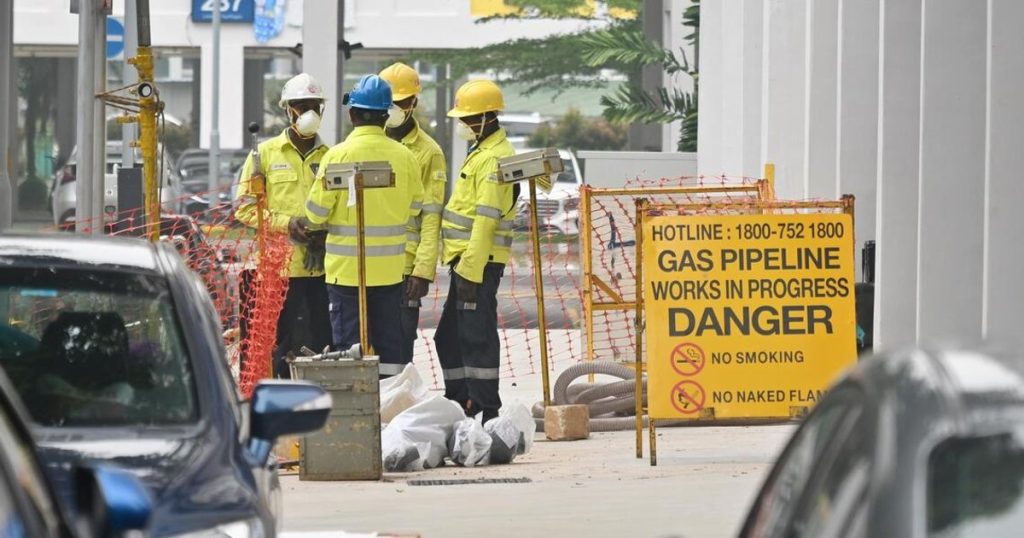
Under the new guidelines, employers should avoid assigning vulnerable workers – including the elderly, pregnant women and those with chronic heart or lung diseases – strenuous outdoor work when PM2.5 readings are elevated.
These workers should avoid outdoor work when the PM2.5 readings are high, MOM said. Outdoor work should be prohibited for them when readings are very high.
The guidelines for employers with healthy employees are to reduce strenuous outdoor work when PM2.5 readings are elevated and avoid such tasks when the readings are high, said MOM.
Minimise all outdoor work for healthy employees when PM2.5 readings reach very high levels, the ministry said.
When PM2.5 readings are elevated, employers should also mitigate risks to their workers via measures such as deploying mechanical aids, job rotation schedules, providing indoor rest breaks and ensuring that workers get enough hydration, MOM said.
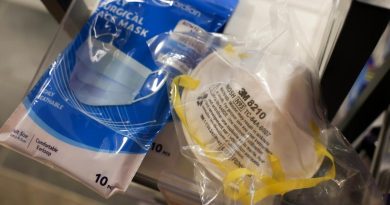
Where strenuous outdoor work cannot be avoided when PM2.5 readings are high, N95 or equivalent masks should be provided, the ministry said.
KN95, FFP2 and KF94 masks are effective in reducing exposure to haze particles, according to the Ministry of Health.
When PM2.5 readings are very high and outdoor work cannot be avoided, masks or appropriate respirators should be provided, and workers given indoor hourly rest breaks, MOM said.
During such periods, employers should defer non-essential jobs or reduce the intensity and duration of outdoor work.
Additionally, employers should review safety risks when visibility is affected, particularly for tower and mobile crane lifting work.
Employers who fail to protect their workers from haze may be penalised with fines and stop-work orders, MOM warned on its website.
‘Health and safety of workers must remain a priority’
MOM on Oct 20 also reminded employers to review their haze management plans, including:
-
Identifying workers who are more susceptible to the effects of haze;
-
Determining which outdoor work activities should be reduced or rescheduled;
-
Setting criteria for restricting outdoor work as haze conditions worsen; and
-
Maintaining at least a one-week supply of masks as part of their haze-related business continuity plans if they have employees who are required to work outdoors.
“The health and safety of our workers must always remain a priority, especially during periods of haze,” said Minister of State for Manpower Dinesh Vasu Dash.
“The additional guidance will help employers respond promptly to changing air quality and make informed decisions on outdoor work arrangements.”
Urging management to pay close attention to vulnerable staff, he added: “With timely adjustments to work arrangements and the right protective measures, we can better safeguard workers while supporting business continuity.”
The new guidelines issued on Oct 20 build on earlier MOM advice for employers to plan changes to work arrangements and protect staff amid the ongoing haze.
The update comes as Singapore endures its 16th straight day of unhealthy air, surpassing the 14-day record set during the 2015 haze crisis.