Bernardo Paz’s New Brazil Museum Builds on the Legacy of Inhotim
There are arguably very few projects that have attempted to integrate art and nature as radically as Instituto Inhotim in Brumadinho, Minas Gerais, about 60 kilometers from Belo Horizonte in southeastern Brazil. It is a singularly lush cultural and botanical landscape at the meeting point of the Atlantic Forest and Cerrado biomes, but also an area scarred by a long history of mineral extraction. Behind it is Brazilian art collector and philanthropist Bernardo Paz, who made his fortune in mining before investing it in the creation of a vast sanctuary for art and biodiversity. He created and financed Instituto Inhotim, which opened to the public in 2006 and now hosts roughly two dozen galleries and hundreds of artworks across 346 acres, including major installations by Brazilian and international artists.
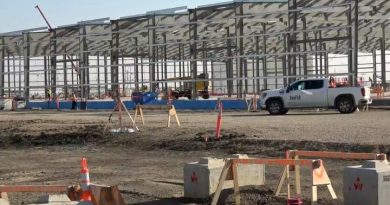
Earlier this month, Paz announced an even more ambitious expansion with the creation of Museu Bernardo Paz, which will transform an additional 311 acres of the Minas Gerais countryside into an expansive new landscape dedicated to contemporary art, nature and community. Currently under construction, the new museum will unveil its first pavilions and installations in September 2027. Following the announcement, Observer spoke with chief curatorial advisor Allan Schwartzman and artistic director Paulo Miyada to learn about the history of this visionary project and what to expect from its next chapter.
Inhotim grew organically from Paz’s farm in Brumadinho, according to Schwartzman. At the time, Paz lived in a country house near a mine he owned and, while developing the landscape around the property, became increasingly involved with contemporary art. When Paz began collecting decades ago, he initially focused on Brazilian artists of his generation, with Tunga, Cildo Meireles and Miguel Rio Branco among his early acquisitions. But as the project evolved, Paz eventually built what is likely one of the country’s most internationally oriented art collections, despite Brazil’s well-known tax and transportation challenges.
Paz wanted to create a museum that would outlive him and, in his words, “serve the people.” “He was as interested in creating a unique place that could serve a very broad audience built on the local population,” Schwartzman recalled. “His interest in what he seeks to protect goes into culture, into the region and into the country, but those urges come out of a very personal connection to these places.”
“Bernardo’s connection to the art and the landscape is very personal, and it grows out of his own experience. This is his land. This is the land that he knows and wants to protect,” he added. “In the process of that garden being developed, he found within himself a creativity that was linked to the combination of those two things, and the place naturally grew out of that.”
The landscape of the new Museu Bernardo Paz, personally shaped by Paz and informed by his longstanding engagement with landscape design, unfolds across hills and valleys bordering the Inhotim Private Natural Heritage Reserve (RPPN Inhotim) and the Paz Environmental Protection Area (APA Paz). It will become home to 15,000 trees and one million shrubs, cacti and flowering plants.
For the integration of art into the landscape, Dia Art Foundation was an important institutional reference. Schwartzman described it as one of the first full attempts to create something that went beyond a sculpture park, supporting a relatively small group of artists considered among the most significant of their generation and giving them opportunities to realize exceptionally ambitious works. Inhotim extended that model by inviting Brazilian and international artists across generations to create major works in direct relationship with the landscape. Schwartzman also noted that what made this possible in Brazil was, in part, the significantly lower cost of construction.
There is no fixed rhythm for future commissions. The institution, landscape, buildings and artistic projects are being developed simultaneously, making the timeline necessarily organic. Development follows not simply practical considerations but also the rhythms of nature and the priority of determining where something can best be situated within the landscape, so that its relationship to other works and pavilions amplifies the experience and each pathway creates a different sequence of encounters. “That would ultimately produce a unique and ever-evolving range of experiences for visitors,” Schwartzman said, describing what is today a museum with numerous single-artist pavilions as well as galleries for temporary displays from the broader collection, fully integrated into the landscape.
In 2022, Paz donated Inhotim’s cultural property to the nonprofit association that administers Instituto Inhotim. Today, the institution operates independently, with its own executive leadership and programmatic autonomy and a governing structure designed to secure its long-term institutional future. The Museu Bernardo Paz originated from its founder’s desire, at age 76, to create a dedicated platform to further foster new possibilities across landscape, art and technology. Independent in their management, funding and programming, the two institutions will share a commitment to directly benefiting the residents of Brumadinho and society at large, while working together to establish protocols for coexistence and collaboration that can remain sustainable over the long term.
With more than 20 galleries and pavilions planned, along with commissioned outdoor installations and sculptures, Museu Bernardo Paz will be integrated into a landscape that combines a botanical park and forest. Programming-wise, it will present significant works by renowned international figures alongside a compelling generation of artists from Brazil and Latin America. Already announced names include Anna Maria Maiolino, Sonia Gomes, Pedro Moraleida, Sandra Gamarra and Laura Belém, as well as large-scale sculptures and artistic environments by Frida Orupabo, Mario Garcia Torres, Torkwase Dyson and Giuseppe Penone.
Here, as at Instituto Inhotim before it, the team has never relied on numerical formulas when selecting artists, Schwartzman explained. Over time, the program developed a meaningful balance between Brazilian, American and European artists and, increasingly, artists from Asia and Africa. Of the six pavilions scheduled to open in September 2027, four are devoted to female artists and two to male artists, a ratio that emerged organically rather than through a predetermined target.
The process begins with artists whose work is meaningful, speaks to a wider audience and can operate at an ambitious scale, even if they have never worked at that scale before, according to Schwartzman. Each pavilion develops through a dialogue between the artist, the team and the context itself. Sometimes artists arrive with ideas they have wanted to realize for years but never had the opportunity to bring to life. In other cases, the curatorial process reveals possibilities within their practices that had not previously been explored.
“I think it’s really offering the opportunity for artists—whether it’s a commissioned piece or thinking about how to install an existing piece—to think about the durability of the experience, the landscape itself, the architectural context and the territory and context symbolically, linguistically and socially,” Miyada told Observer. “We start with an open page. It’s more about sharing a reading of the place and the opportunities and building from that. It’s really exciting and challenging for all the artists involved.”
That openness requires patience. Schwartzman described the process as combining “pragmatism and dreaming.” Some ideas move forward immediately, while others develop over many years. Michael Heizer is one example: the project acquired two of his works approximately 15 years ago, but they never received a permanent home because of budgetary and import constraints. Now, Museu Bernardo Paz will inaugurate a pavilion dedicated to his large-scale installations Displaced Replaced Mass #3 (1993) and Negative Wall Sculpture #1 (1993). It is Heizer’s first permanent installation in Latin America.
Still, the core principle inherited from Inhotim is that the land itself can provoke an artistic response and new associations. “Artists exist in a permanent state of freedom. They go to their studio. They can do whatever they want. What we can offer is the opportunity to respond to a set of conditions that artists don’t naturally have,” Schwartzman said. Although producing works locally can reduce the financial and logistical burdens created by importing art into Brazil, the economics have always been secondary to the creative reasons for bringing artists to the site. The approach at Instituto Inhotim and now at Museu Bernardo Paz is not merely site-specific but genuinely context-specific, engaging with the broader cultural, social and geographical context of Brumadinho and Minas Gerais. “We always strive for a similar level of extraordinariness, where you would have an experience that you could not have elsewhere.”
The land where Museu Bernardo Paz is now being developed is directly contiguous with Inhotim, a place where Paz has had a significant impact over the past 20 years on multiple levels. “Bernardo carried this mission of strengthening the territory, strengthening Brumadinho and its people, contributing to art everywhere and really believing that building a sense of abundance and liveliness into landscape and art were great ways of bringing people together and changing their perspectives toward what the world is and what it is to be alive,” Miyada said.
Brumadinho is a geographically large municipality whose history and economy have been profoundly shaped by mining. Instituto Inhotim represents one of the region’s major concentrations of employment and knowledge outside the extractive economy, generating activity around culture, education and landscape design while becoming one of Minas Gerais’s major cultural destinations and one of Brazil’s most prominent cultural institutions. From the very beginning, the project has focused on balancing these local and international spheres. “Bernardo has always believed in thinking big and globally to impact locally, so it’s this combination that is in place,” according to Miyada.
For this reason, educational programs have always been central to the projects, reflecting Paz’s interest in creating a museum genuinely engaged with people. Instituto Inhotim has over time created new opportunities and capabilities within the local community. Many local young people have trained as mediators and monitors while still in school, and some have subsequently continued into higher education with financial support from Paz.
“It’s one of the beautiful successes that this is one of the most respected contemporary art museums in the world and, at the same time, the vast majority of visitors are local and, more often than not, people who are going to a museum for the first time,” Schwartzman added, suggesting that visitors may initially be more attracted by the botanical gardens than by the art. This, however, is part of the institution’s strength: the way the art has been positioned makes encountering it an inevitable and more accessible part of the journey. “It’s not like this forbidding experience of what an urban museum tends to be, where you have to go through this edifice, pay a lot of money to get into the edifice and then you’re within this network of white cubes after white cubes. Here, people’s experience of the landscape is constantly enriching their experience of the art.”
Further enhancing this public and educational role, the new museum will also integrate a community center with a library, workshop spaces and educational facilities open daily. The aim, Miyada explained, is to create a place integrated into everyday life, where local residents might stop on their way home from school or simply whenever they feel like it. “It helps us continuously grow in conversation with the community that is most directly impacted and creates an opportunity for the development of artists’ projects.”
This community engagement has been important since some of Inhotim’s earliest commissions, Schwartzman noted, recalling work by Brazilian-based American artists John Ahearn and Rigoberto Torres: “They embedded themselves within those communities, living with the community in order to understand who they are and what their daily life is like, and then portrayed them as they see themselves and as their lives are lived. It is always critically important, in creating a museum, to also be embedded in the local community.”
Looking to the institution’s future, Miyada identified institutional stability as the first major priority. Museu Bernardo Paz must develop its own space, governance, voice and recognizable identity while establishing a sustainable structure. “It will take lots of work, and Bernardo is committed and open to that.”
The second priority is to refine the relationship between landscape, architecture and art, yet Miyada stressed that those elements do not need to harmonize perfectly: “Each has a voice that takes the others into consideration, while knowing that it doesn’t always mean they are rhyming with each other. They can alternate tones and volumes. They can have conflict, but they are really paying attention to each other and making each other more meaningful. This is really fine-tuning.”
Schwartzman, meanwhile, said that his focus is on ensuring the new institution does not simply repeat Inhotim’s established formula. Echoing what Paz himself said in a statement describing the project as “flourishing from a belief in the creative potential of unexpected encounters,” Schwartzman wants to create new types of encounters with the landscape, new possibilities of poetic, imaginative and emotional connections between humans and plants. “It’s all about where the art gets placed, how pathways get created through the landscape to experience different artworks and how we also create public spaces for the gathering of a public beyond simply the experience of landscape and art, but as a kind of social space.”
The ultimate goal is to create a model that demonstrates the transformative potential of nature and art. “Nature can create a sense of beauty that shifts how people understand their lives, while art combines beauty with criticism and the expression of complex ideas. Bringing those forces together can create a heightened sense of awareness and communion,” Miyada added.