David Ellison Names Paramount-Warner Bros. Company Skydance
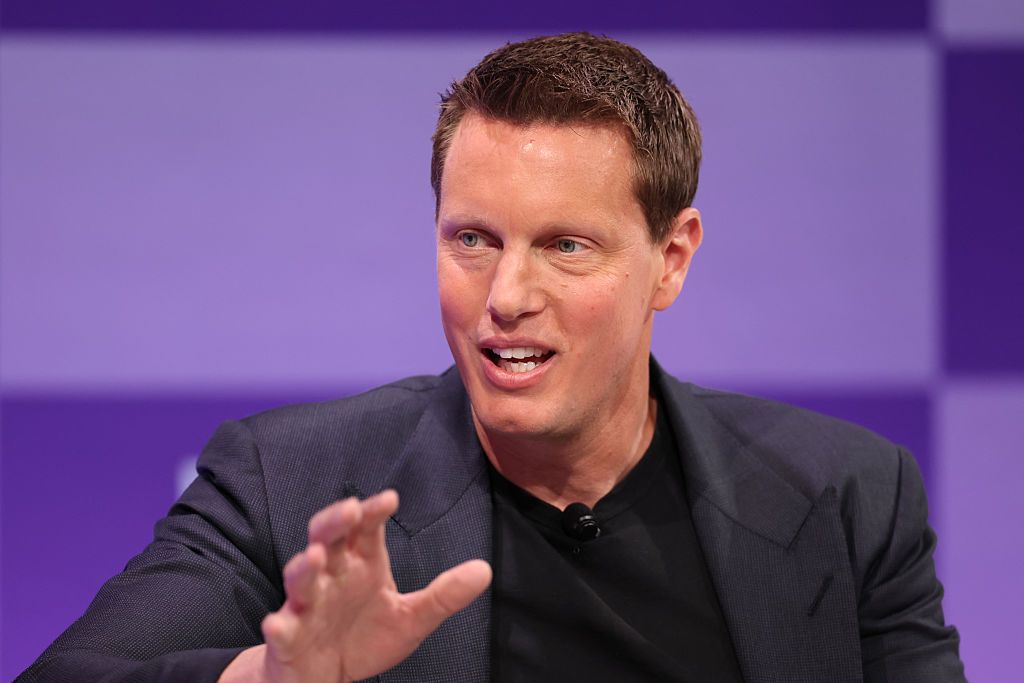
When Paramount Skydance completes its takeover of Warner Bros. Discovery next week, the combined company will be called Skydance. CEO David Ellison announced the name on social media this morning, Oct. 2, and presented it as a way to keep the two legacy studios at the center of the company. “We never wanted a new corporate identity to diminish, alter or overshadow either one,” he wrote.
Ellison said the goal was a name that would give the combined company an identity of its own while letting Paramount, Warner Bros. and their brands “remain in the spotlight.” He wrote that both studios have distinct identities and legacies that audiences have connected with for generations.
The deal is expected to close Tuesday, Oct. 6, after which Ellison and Mattel CEO Ynon Kreiz will serve as co-CEOs. The announcement caps a busy week for Ellison. On Oct. 1, he announced that CNN CEO Mark Thompson would stay at the helm, news first reported by the Wall Street Journal. Ellison’s naming announcement came a day after Paramount’s shares posted their biggest one-day drop since December, following a rocky $52 billion debt sale.
Ellison opened his post with a line that could double as an investor pitch: “What once was the peak, is now just the beginning.” On streaming, at least, Warner Bros. Discovery reached its peak only recently. As the fall TV season begins and advertisers finalize fourth-quarter budgets, WBD is posting the streaming profits Wall Street demanded for years, just as it is being handed to Ellison in a deal valued at more than $110 billion.
In the second quarter, WBD’s streaming segment topped $3 billion in revenue for the first time, up 10 percent. Streaming adjusted EBITDA rose 63 percent to $512 million, excluding currency effects. Meanwhile, linear TV kept shrinking.
For David Zaslav, who is nearing the end of a multi-year turnaround, the numbers may be the clearest evidence yet that his strategy worked. They also raise the value of what Ellison is buying. On the earnings call, Zaslav called the results a “powerful and impressive business turnaround.” He noted that as recently as 2022, HBO’s streaming business was a mostly U.S.-only operation losing more than $2 billion.
How Zaslav got here
When Zaslav took over after the Discovery-WarnerMedia merger, his mandate was to stop the cash burn and prove that prestige programming could support a profitable streaming service. Three moves got him there.
The first was international expansion. This year HBO Max launched in Germany, Italy, the U.K. and Ireland, including through a partnership with Sky. WBD says subscriber acquisition in the U.K. and Germany is running ahead of internal targets. It’s aiming for more than 150 million subscribers by year’s end, though it no longer reports subscriber counts.
The second was distribution. Zaslav reversed a WarnerMedia-era decision to keep HBO Max out of Amazon’s reseller marketplace, a pullout that had reportedly cost about 5 million subscribers. He returned the service to Prime Video Channels in 2022 and added other distribution partners. Streaming distribution revenue grew 11 percent in the quarter, excluding currency effects.
The third was bundling. That includes the Disney+/Hulu/HBO Max package that launched in July 2024 and distributor deals such as Verizon’s. On the same call, streaming chief JB Perrette said bundles are producing meaningful improvements in churn, and that WBD expects its best retention year ever in 2026.
The Q4 ad test
Advertising is the weak spot. Total ad revenue fell 22 percent, mostly because of the loss of the NBA. Streaming ad revenue rose 8 percent, excluding currency effects, driven by growth in the cheaper ad-supported tier. But at $306 million last quarter, streaming ads were only about a tenth of the segment’s revenue. Linear advertising still brought in $1.43 billion.
On the second-quarter call, Warner Bros. Discovery CFO Gunnar Wiedenfels said visibility into the rest of the year was limited, citing softer international ad markets and the FIFA World Cup, which drew spending away over the summer. As linear erodes, streaming ads will have to carry more of the load, and the fourth quarter is when WBD has to show they can.
What the Ellisons inherit
Ellison says the merger isn’t about rewriting history but about “equipping these iconic studios with a more powerful engine.” When the deal closes Tuesday, that engine will include more than a film studio and a shrinking cable footprint. Skydance will get a profitable streaming business, a deep library of global franchises and an international rollout that is still expanding.
Getting there took a fight. The deal cleared federal review, but a coalition of 12 state attorneys general, led by California, sued to block it. On Sept. 21, they settled in exchange for commitments that stopped short of the divestiture some officials wanted. Those commitments include at least 30 theatrical releases a year and a five-member board of journalists, to be set up within 180 days of closing, to oversee editorial independence at CNN and CBS News. At a Sept. 24 hearing, U.S. District Judge Araceli Martínez-Olguín questioned legal points of the consent decree but didn’t rule, saying a decision would come in “due course.” Martínez-Olguín approved the settlement on Wednesday, Sept. 30, clearing the way to close.
The delay was expensive. While the lawsuit was pending, Paramount couldn’t tap debt markets, and borrowing costs climbed as inflation worries pushed yields higher. Every day past Sept. 30 also carried a $7 million penalty under the deal’s terms. On Sept. 30, Paramount sold $52 billion of bonds and loans to fund the acquisition, the largest takeover in Hollywood history, according to Bloomberg.
Within hours, investors were sitting on more than $100 million in losses, according to Bloomberg. The company’s eight-year dollar-denominated junk bonds traded at about 96 cents on the dollar on Oct. 1 after selling at par the day before. The cost of insuring against a Paramount default hit a 17-year high, and the company’s shares fell 9.6 percent, their steepest one-day drop since December. By the close, some of the debt had pared its losses.
Demand also turned out to be softer than advertised. Orders for the investment-grade bonds topped out near $109 billion. They then fell to roughly $80 billion as underwriters Bank of America and Citigroup cut the premiums they were offering, and more than half the demand for longer-dated bonds disappeared. Money managers who ended up holding more debt than they expected called the banks to complain. One trader told Bank of America that it shouldn’t sell bonds that fall right away. Paramount CFO Dennis Cinelli told Bloomberg the selloff was “one-day choppiness in the market.”
On the equity side, the Ellison family has pledged $47 billion, with Larry Ellison, David’s father and Oracle’s co-founder, personally guaranteeing more than $40 billion of it. Roughly $24 billion is coming from three Middle Eastern sovereign wealth funds, Bloomberg reports, and foreign investors will end up with just under half of the combined company’s equity, according to regulatory filings.
Ellison wrote that Skydance will pursue big goals “with passion, imagination and a willingness to take smart risks,” and that it will bring both studios’ stories to broader audiences around the world. What he does with HBO Max will be the first real test of that. He has said he plans to merge it with Paramount+ into a single service. Zaslav has set the benchmark for what a legacy media company’s streaming business can earn, and the Ellisons will decide what becomes of it.