
Breakthroughs for the radical and far-right in Europe
After recent regional election breakthroughs by the Alternative for Germany (AfD), here is an overview of radical, nationalist and far- and hard-right parties’ positions across Europe in recent years.
Germany: AfD breakthrough
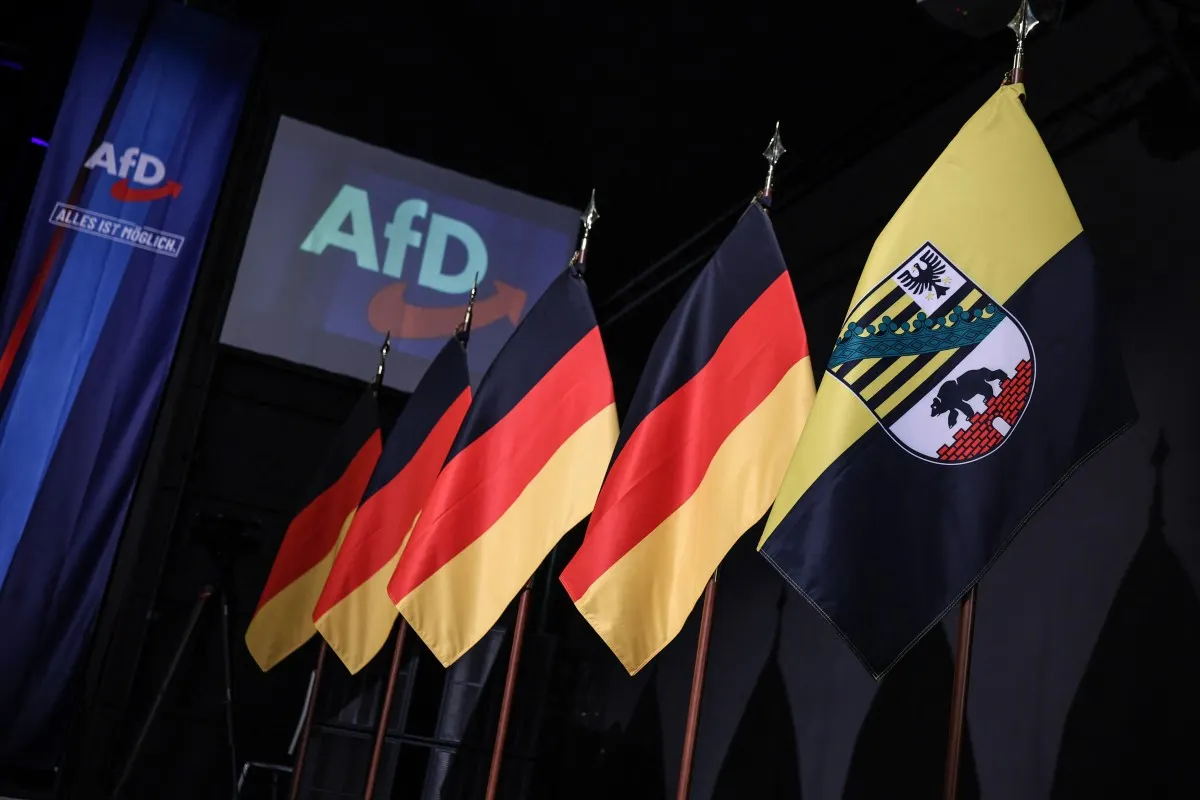
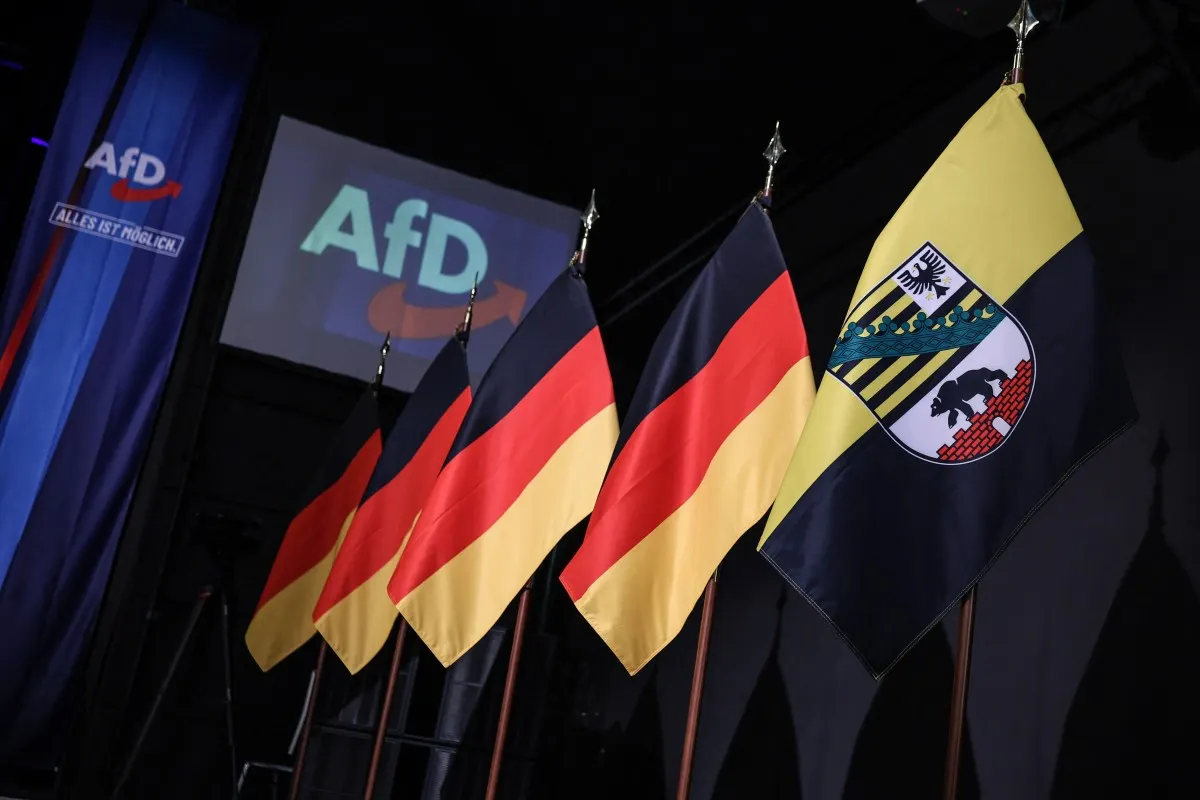
The far-right AfD became Germany’s main opposition party in the February 2025 legislative elections, finishing second behind Chancellor Friedrich Merz’s conservatives with 20.8 percent of the vote.
The anti-immigration party, which is sympathetic to Russia and US President Donald Trump, scored a historic victory in the September 6 regional election in the eastern state of Saxony-Anhalt.
It also came first in the September 20 regional election in Mecklenburg-Western Pomerania state, but the centre-left SPD party looks set to continue governing by forming a coalition with left-wing allies.
READ ALSO: Why are young Europeans increasingly supporting anti-immigration parties?
Italy: governing force
In Italy, Giorgia Meloni — whose post-fascist Brothers of Italy party scored a historic victory in the 2022 legislative elections — has headed the government since October that year.
Her coalition includes another far-right party, Matteo Salvini’s League, as well as the conservative Forza Italia.
Advances in Austria, Switzerland
In Austria, the Freedom Party (FPO), founded by former Nazis, came first in the September 2024 legislative elections but failed to find coalition partners to form a government.
In Switzerland, the October 2023 elections consolidated the radical-right and nationalist Swiss People’s Party (SVP) as the largest party in the National Council, the lower house of parliament, with 62 of its 200 seats.
France: Le Pen rides high
In France in 2024, the National Rally became the largest single party in the lower house of parliament by number of seats, but its power there was curbed by an alliance of rival parties.
The National Rally’s most prominent figure, Marine Le Pen, is the frontrunner for the spring 2027 presidential election in current opinion polls.
Spain surge
In Spain, buoyed by gains in regional elections, the far-right Vox party has allied with the conservative Popular Party (PP) to jointly govern or collaborate in several regions.
Portugal
In Portugal, the far-right Chega (“Enough”) party topped 20 percent of the vote for the first time in the May 2025 legislative elections. The minority right-wing government has struck ad hoc deals with Chega to pass legislation, including on nationality and naturalisation.
Eight months later, Chega leader and populist Andre Ventura reached the second round of the presidential election, only to be defeated by moderate Socialist Antonio Jose Seguro.
Setback in Sweden
Sweden’s legislative elections on September 13 brought an unexpected setback for the far-right Sweden Democrats (SD). Their support declined for the first time since the party entered parliament in 2010.
The party fell to third place, behind the Social Democrats and the centre-right Moderates.
In Finland, the far-right Finns Party, which came second in the April 2023 legislative elections, is part of the governing coalition led by conservative Petteri Orpo.
READ ALSO: EXPLAINED – What needs to happen for Sweden to get a new prime minister?
Britain, Belgium: seats won
In Belgium, the far-right Vlaams Belang in the June 2024 elections increased its seats to 31 of 124 in the Flemish parliament and 20 of 150 seats at federal level. It is the largest opposition group in both assemblies.
In Britain, Nigel Farage’s anti-immigration Reform UK won 14 percent of the vote and secured its first five MPs in the July 2024 general election. In August 2026, Farage was re-elected as an MP in a snap by-election by a wide margin.
Netherlands: far-right persists –
In the Netherlands, far-right leader Geert Wilders and his PVV party lost the November 2025 legislative elections in a tight contest with young centrist Rob Jetten.
But the Dutch far-right remains a powerful force and two other parties at that end of the political spectrum, Forum for Democracy and JA21, made strong gains in the election.
Czech, Slovak coalitions
In the Czech Republic, the far-right SPD party has been part of the governing coalition of premier Andrej Babis since December 2025. SPD leader Tomio Okamura has served as speaker of the Czech parliament since November 2025.
In Slovakia, nationalist Prime Minister Robert Fico and his Smer-SD party returned to power in October 2023. Fico, who is close to the Kremlin, governs in coalition with the far-right SNS.
In Hungary, ultraconservative nationalist Viktor Orban governed from 2010 until his Fidesz party was defeated in the April 2026 legislative elections. He handed power to conservative Peter Magyar.
Gains in Poland, Romania
Poland’s pro-European government suffered a setback in June 2025 with the election as president of nationalist Karol Nawrocki, backed by the main opposition Law and Justice party (PiS). The result forced the government into a difficult cohabitation with the conservative historian.
In Romania, far-right AUR party leader George Simion, an ardent admirer of US President Donald Trump, finished second in the May 2025 presidential election behind pro-European centrist Nicusor Dan.
READ ALSO: Which of Europe’s anti-immigration parties are the most extreme?