Researchers confirm slave sales occurred at Old State House Museum site
Three state historical researchers have confirmed what a former tour guide at the Old State House Museum discovered, that slaves were sold on the old state Capitol grounds.
Revis Edmonds, who holds a doctoral degree in heritage studies from Arkansas State University and is a historian in the Arkansas Historic Preservation Program, was asked by officials at the state Parks, Heritage and Tourism Department to look into Tessa Wahlquist’s claim that somewhere between 400 and 500 slaves were sold on the site.
“Current research does conclude that the Old State House was the site where 414 slaves were sold at auction between 1836 and 1861,” Edmonds wrote in his report, dated September 2026, a copy of which was obtained by the Arkansas Times through a Freedom of Information Act request. “This marked the height of the domestic slave trade in Arkansas.”
Marty Ryall, director of the Division of Arkansas Heritage, which falls under the Parks, Heritage and Tourism Department, made the request to have Edmonds look into Wahlquist’s research. A story about her findings was carried in the Arkansas Times in August. Wahlquist, a former tour guide employee of the Old State House Museum, said her supervisors at the museum had pressured her to keep quiet about her research.
“I asked Revis to put together some research on the history of slave auctions at the Old State House Museum,” Ryall wrote in a Sept. 22 email to Julienne Crawford, a curator and staff member with the Arkansas State Archives. “Attached is what he put together. I would like to get a second pair of eyes on this to verify its accuracy and get an expert opinion on if there is pertinent information missing.”
Ryall wrote that the department wanted to “recognize and acknowledge the history of slave auctions that were held at the Old State House.”
“The Pulaski County Courthouse was operating out of the building between 1836 and through the abolition of slavery and held auctions there,” he wrote. “Do you mind helping out? Revis’ report is attached. Thanks.”
Crawford and David Ware, a state historian and director of the Arkansas State Archives, reviewed what Edmonds found, departing with him on the exact number of slaves sold at the site.
“Our conclusion is that offering a figure of 414 or 413 or any other number as a definitive number of enslaved persons ‘sold from the courthouse steps’ is inadvisable,” the two wrote. “We are sure that over 400 such persons were sold, but that an exact number may be impossible to determine. We both feel that it is better to offer a supportable ‘ballpark’ number than to claim knowledge of a precise number which may later be shown to be wrong.”
They concluded their report, dated Oct. 2, by saying that they appreciated Edmonds’ work.
“Revis has made a good start with this document, which is obviously a preliminary draft,” they wrote. “We look forward to seeing his final version.”
Wahlquist said Friday she was pleased to hear the news that multiple historians had given her work a thumbs up but said she’d always been confident in the conclusions she had made.
“I don’t need validation,” said Wahlquist, who holds a bachelor’s degree in public history from Arkansas Tech University and has a certificate in investigative genetic genealogy from Ramapo College in New Jersey. “I knew I was right. I spent months on this and asked my own Ph.D.s, my own professors. I lived and breathed this, to the point that my family got sick of listening to me talk about it.”
Wahlquist said that after the Arkansas Times story ran, she was contacted by several interested parties, one wanting her to do genealogical research for them and another, a reporter from The Emancipator, an online publication connected to Howard University that covers racism and slavery, wanting to interview her. That story, which was published this week, is a Q and A with Wahlquist.
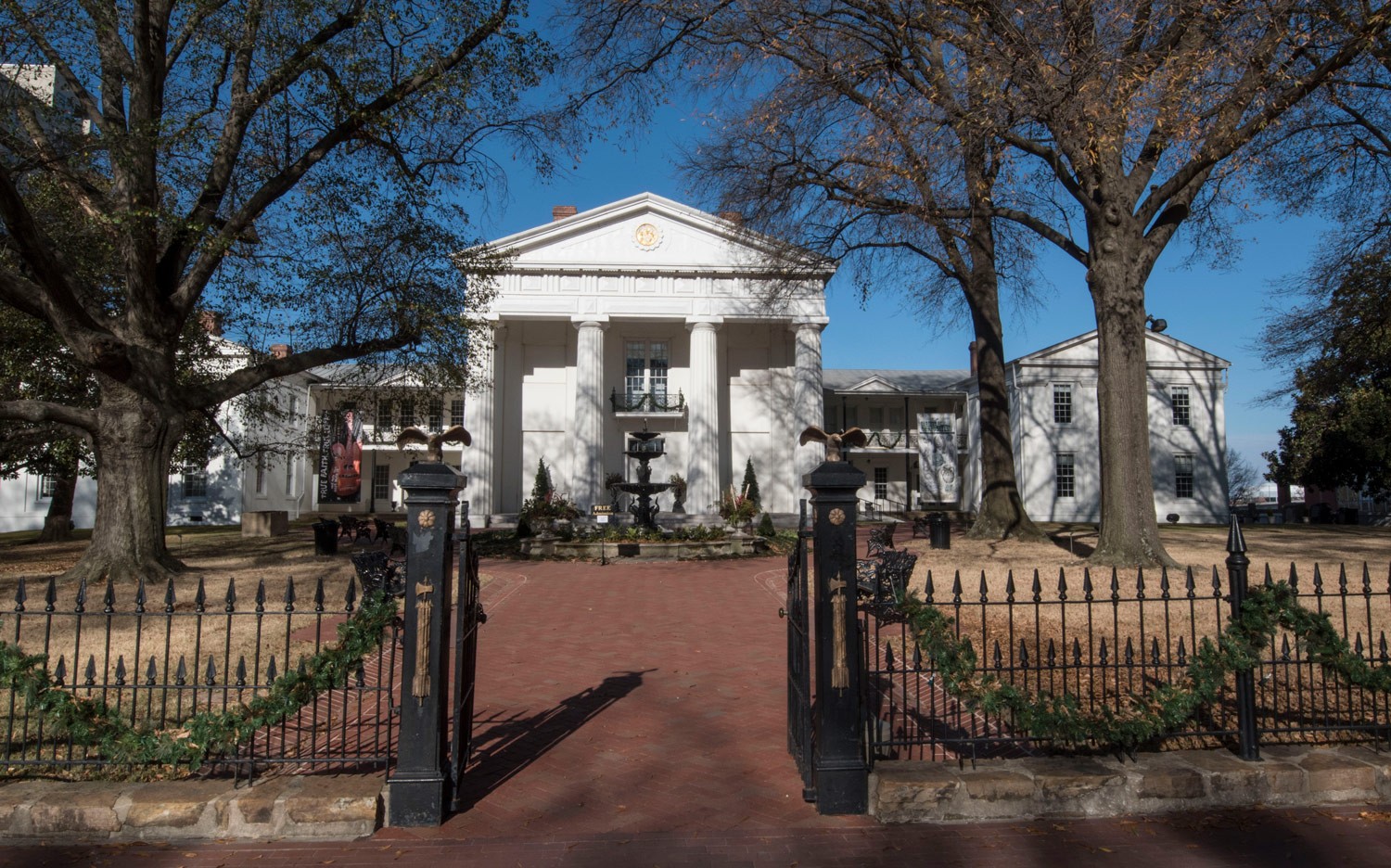
The key element to Wahlquist’s work was not that slaves were sold in Little Rock – historians have determined that slave sales occurred all across the South. It was that the Pulaski County Courthouse had no home of its own at the time and shared space in the east wing of the state Capitol – meaning that slaves sold “on the courthouse steps,” as the sales were advertised in newspapers at the time, were being sold on the state Capitol steps.
Wahlquist said she would consider working on a master’s degree, but only if she could “tailor it to myself.”
“Black genealogy, Black history, it would have to be furthering what I have already done but in a really deep dive into what I’m doing,” she said.
Barring that, she said, she will focus on her own brand.
“My husband gave me a domain name – allthewayhomegeneaology.com – it’s not live yet, but I’ve been working on that,” she said, adding that much of the research she does is for free.
“One sculptor contacted me right after they read the Times story,” Wahlquist said. “They were interested in a family that was buried in unmarked graves in Oakland Cemetery and wanted to create a sculpture for them.”
Asked where the research goes from here, Heritage Director Ryall wrote in an email that it was a work in progress. He said that Ware and Crawford had met with Edmonds to offer feedback and that Edmonds was now revising his research to incorporate those suggestions.
“Once the revised draft is completed,” Ryall wrote, “Heritage leadership will review the findings and determine whether the research is ready to move forward to release to the public and make part of the interpretation at the Old Statehouse Museum or if further work is required.”
In the original story, Wahlquist pointed out that below the steps from which slaves were likely sold, there are monuments celebrating Civil War officers.
“I get mad about all these monuments,” she said. “We commemorate secession, and we shouldn’t be commemorating that. I want a plaque there, something to the effect of ‘At this door, over 400 people were separated from their families and auctioned off against their will, and while we may never know what happened to them, we acknowledge the suffering that went on.”
She may get her wish.
“We assigned a full‑time staff historian to verify, contextualize, and expand upon the research begun by the former part‑time employee,” Ryall wrote in the email, referring to Wahlquist. “His first draft included a mock‑up of a potential historical marker and proposed text, but these mock‑ups are premature because the research is still in progress.”
Source link