What to eat in France in November

In France, seasonality is important for both produce and dishes – here’s a look at the ingredients in season in November, and the traditional French dishes that you can make with them.
If you want to eat seasonally in France, here is what to look for at your local market, what French specialities are worth trying this month and what you may see in restaurants across the country.
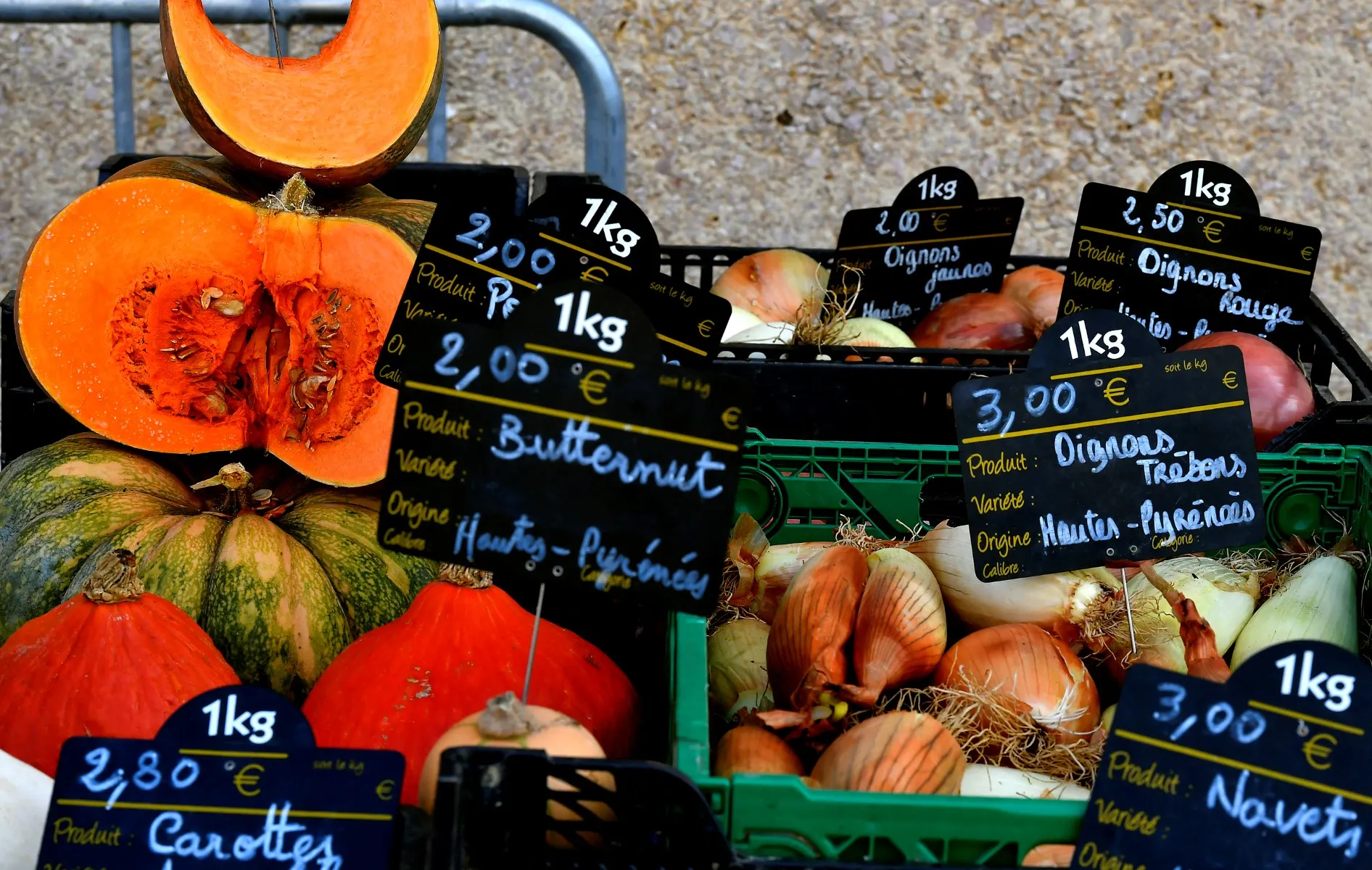
Squash and pumpkin (courges et potirons)
November is prime time for winter squash, including potimarron (a small, chestnut-flavoured squash), butternut squash and pumpkin (potiron).
These vegetables are ideal for the colder months and are commonly used in soups, gratins and roasted vegetable dishes. Try making a velouté de potimarron – a smooth, creamy squash soup, or roasting squash with olive oil, garlic and herbs.
It also means pumpkin pie season – canned pumpkin filling is hard to find and expensive in France, but fresh pumpkins are plentiful so you can make your own.
Mushrooms (champignons)
November is particularly suitable for cultivated button mushrooms, known as champignons de Paris, as well as seasonal varieties such as porcini (cèpes) and black trumpets (trompettes-de-la-mort), depending on the region and weather.
You’ll see them piled high on market stalls during the season, but you can also go foraging for your own – How to enjoy mushroom foraging safely in France
Don’t miss our journalists’ daily news roundup from France
Mushrooms are often served sautéed with garlic and parsley, stirred into risotto or added to omelettes and creamy sauces.
Chestnuts (châtaignes)
Chestnuts are one of the classic flavours of autumn in France, and they remain a popular choice in November.
You can buy them fresh to roast at home or find them sold hot at some markets and street stalls.
You can also enjoy them in dishes, soups and even desserts. Most supermarkets sell pre-cooked vacuum packed chestnuts to add to dishes, and look out for crème de marrons – a sweet chestnut spread often used in pastries and cakes.
One useful vocabulary point – châtaigne is the general French word for an edible chestnut, while marron is commonly used in food names such as marrons glacés (candied chestnuts).
Cabbage, leeks and other vegetables
November is the month to embrace winter vegetables. Look out for leeks (poireaux), carrots (carottes), beetroot (betteraves), turnips (navets), parsnips (panais), celery root/celeriac (céleri-rave) and different varieties of cabbage (chou).
These ingredients are used in many traditional French winter dishes. A soupe aux poireaux makes a simple seasonal dish, while a potée is a hearty one-pot dish traditionally prepared with cabbage, root vegetables and meat.
All of these vegetables are also used to make any type of purée, and are often found as sides in restaurant dishes, moving away from the classic mashed potato.
In terms of salads, try mâche, a tender salad that is popular during the colder months or endives (chicory), which can be eaten raw in salads or cooked.
For example, endives au jambon, a traditional dish from the north of France and Belgium, consists of cooked endives wrapped individually in ham, covered in béchamel sauce and sprinkled with cheese. They are then baked in the oven. A comforting option for a cold autumn evening.
Seasonal fruits
November’s fruit selection includes apples (pommes), pears (poires), kiwis, chestnuts and clementines (clémentines).
Apples and pears are versatile ingredients for both sweet and savoury cooking. You can never go wrong with a classic tarte aux pommes (apple pie), baked pears or a simple fruit crumble.
Clementines and mandarins also start appearing on market stalls. Look for clémentines de Corse, the Corsican variety that is particularly associated with the start of the winter citrus season.
Seafood (fruits de mer)
November is a good month to enjoy seafood in France, especially oysters. They are available throughout much of the autumn and winter season.
Have you ever heard the French saying – les huîtres, c’est pendant les mois en R? It means oysters are traditionally best eaten during the months whose names contain the letter R: September (septembre), October (octobre), November (novembre), December (décembre), January (janvier), February (février), March (mars) and April (avril).
The saying comes from the days before fridges, and oysters can be eaten year-round, provided they are properly harvested, handled and stored. But November is certainly a good time to enjoy them, especially with a squeeze of lemon, shallot vinegar and a slice of buttered bread – consider it a warm-up before France goes oyster crazy over Christmas.
The same “months with an R” rule is often applied to mussels (moules), although the best time to eat them depends on the variety and where they are farmed. For example, moules de bouchot – mussels grown on wooden poles along the coast – are generally in season from July to January, with September and October often considered peak months. In November, they are still a good choice.
November is also prime time for scallops (coquilles Saint-Jacques). The French fishing season generally opens on October 1st and runs until mid-May, although local rules can vary. Scallops are particularly popular in autumn and around Christmas.
Meanwhile herrings are best enjoyed from October until January – although you’ll have to wait until February for the Dieppe herring festival which involves the mayor throwing herrings at people while others do seagull impressions (we’re not making this up, promise).
What traditional French dishes should you try in November?
Some classic French dishes make good use of these seasonal ingredients, here are a few suggestions;
Bœuf bourguignon: A Burgundy classic of beef slowly braised in red wine, usually with carrots, onions and mushrooms.
Pot-au-feu: A traditional French one-pot meal of beef and root vegetables cooked in broth, often served with mustard or pickles.
Chou farci: Cabbage leaves stuffed with a mixture of minced meat, herbs and sometimes rice, then cooked slowly in a sauce or broth.
Gratin de ravioles et poireaux: A comforting baked dish combining small ravioles – filled pasta with leeks and a creamy sauce, often topped with cheese.
Potée: A dish of cabbage, root vegetables and meat, with regional variations.
Soupe de potiron: Pumpkin soup, sometimes served with cream or croutons.
Risotto aux champignons: Mushroom risotto, a popular way to enjoy autumn mushrooms.
READ ALSO: Nine delicious seasonal French dishes to try this autumn
And what about cheese, you ask?
The minute temperatures drop, it’s very tempting to reach for that raclette machine in the back of your cupboard. But is it too early?
In reality, you can do whatever you please – there is no rule on raclette or any sort of melted cheese. But November does mark the start of the season in many French households. It’s a good excuse to gather around a tabletop grill to melt cheese and enjoy a nice platter of charcuterie.
Traditionally associated with the French and Swiss Alps, raclette has become a winter favourite throughout France. Many households use an electric raclette grill, which allows everyone at the table to melt their own slices of cheese in individual pans.
Another dish worth trying is tartiflette, a rich, oven-baked speciality from the French Alps made with potatoes, bacon (lardons), onions and Reblochon cheese.
Look out also for fondue savoyarde, a speciality in which you dip pieces of bread into a communal pot of melted cheese, typically made with varieties such as Beaufort, Comté and Emmental.
And don’t forget the Mont d’Or – this one is super easy as it doesn’t require a raclette machine or a fondue pot. You can find it in any grocery store or at your local cheese shop. All you need to do is cut the cheese slightly at the top, put a few garlic cloves inside and add a little white wine. When it’s melted, add some herbs and honey.
READ MORE: Exactly how many different types of cheese are there in France?
Useful vocabulary to know
Some useful words to know if you’re going to the market and looking for seasonal vegetables.
De saison (pronounced say-zon) – in season
Un marché (pronounced mar-shay) – a market
Légumes (pronounced lay-goome) – vegetables
Les produits locaux (pronounced pro-dwee lo-ko) – local produce
Une recette de saison (pronounced ruh-set duh seh-zon) – a seasonal recipe