Can AI tell America’s stories? Join the conversation at Hartford’s Mark Twain House
A two-day celebration honors author Lydia Millet and brings writers, critics, and scholars together to explore creativity in the age of AI.
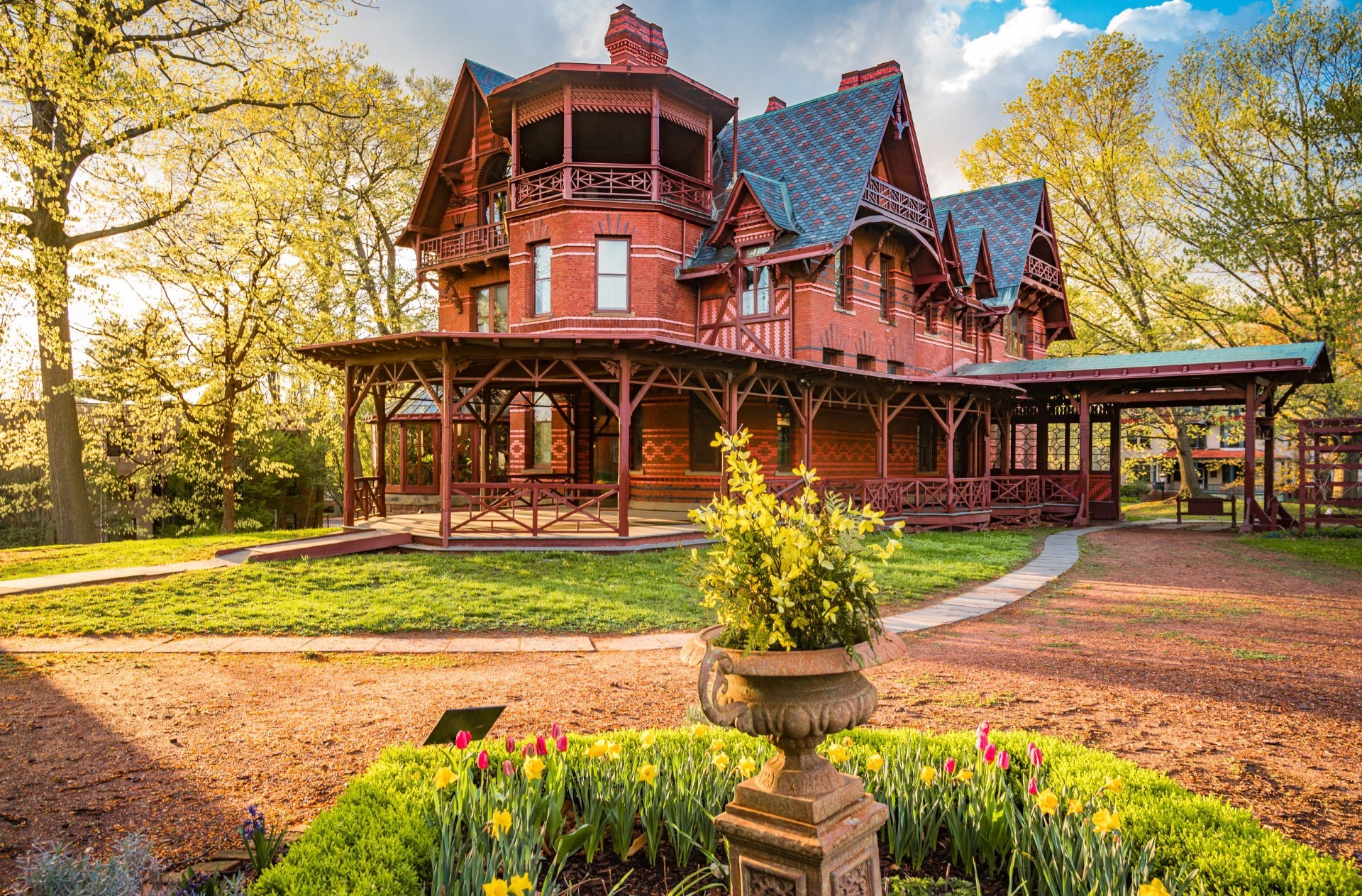
At a house on Farmington Avenue in Hartford, one of America’s most recognizable literary voices helped change the way a nation told its stories. More than a century later, that same house is asking a new question: What happens to the American voice when machines can write, too?
For Samuel Clemens, better known as Mark Twain, storytelling was never simply a matter of putting words on a page. His fiction captured the contradictions of American life, challenged comfortable assumptions, and gave readers characters whose voices felt unmistakably their own. His Hartford home, where he lived with his family from 1874 to 1891, remains a place to encounter the power of those words.
This November, The Mark Twain House & Museum will bring that legacy into the present with a two-day celebration of literature, imagination, and the questions confronting writers today. On Friday, November 6, the Museum will honor Lydia Millet with the 2026 Mark Twain American Voice in Literature Award. On Saturday, November 7, it will welcome authors, editors, critics, educators, and scholars for Creative Writing in the Age of AI, a public symposium examining the future of human creativity.
An American voice for our own time
Now in its tenth year, the Mark Twain American Voice in Literature Award recognizes fiction that speaks to American experiences in a distinctive voice. Established through the support of bestselling novelist and Museum board member David Baldacci and his wife, Michelle, the award includes a $25,000 prize. Its purpose is not to find the next Mark Twain, but to recognize writers who continue his tradition of seeing the country clearly, questioning its conventions, and giving memorable expression to its people.
This year’s recipient, Lydia Millet, is being honored for Atavists, a collection of interconnected short stories published by W. W. Norton & Company. With wit, insight, and compassion, the stories move among families, neighbors, and strangers navigating contemporary American life. Their relationships unfold amid digital distractions, shifting expectations, and a sense of uncertainty about the world around them.
Millet, whose work has previously been recognized with finalist honors for both the Pulitzer Prize and the National Book Award, joins a distinguished group of past recipients, including Ocean Vuong, Jesmyn Ward, Alice McDermott, and Ben Shattuck. The November 6 celebration offers readers an opportunity to gather in Hartford, honor a living writer, and consider why individual voices still matter.
What does creativity mean in the age of AI?
The following day turns from celebrating an exceptional literary voice to examining the forces that may reshape how voices are created, shared, taught, and valued. Generative artificial intelligence is increasingly capable of producing polished prose, summarizing books, and imitating familiar styles. Those capabilities can be useful. They also raise fundamental questions about authorship, originality, copyright, education, and the livelihoods of people who work with words.
Who should decide how creative work is used to train AI systems? What happens when readers cannot easily distinguish machine-generated material from human writing? How should schools help students develop their own voices when a draft can appear at the push of a button? And beyond questions of convenience or efficiency, what do people actually value about a story written by another human being?
On November 7, Creative Writing in the Age of AI will address those questions through a series of conversations designed for anyone who reads, writes, teaches, or cares about the future of the written word. The symposium runs from 9:30 a.m. to 3 p.m. at The Mark Twain House & Museum, with both in-person attendance and livestream registration available.
The day’s discussions will explore the legal and ethical frameworks surrounding AI; the experiences of authors, editors, and publishers; and the changes already reaching classrooms, libraries, and reading habits. A concluding conversation will ask participants to look ahead: What now, and what next?
The lineup includes David Baldacci and Lydia Millet, along with former Washington Post book critic Ron Charles, Asimov’s Science Fiction editor Emily Hockaday, writer and editor Jane Rosenzweig, Twain scholar Matt Seybold, and academics working at the intersections of philosophy, law, and technology. Writer and speaker John Warner will moderate the symposium.
These are not abstract questions reserved for the technology industry. They concern students learning to think on the page, educators deciding what and how to teach, authors trying to make a living, and readers searching for work that moves them.
A historic house, a living conversation
There is a particular resonance to having these conversations in Hartford. During Twain’s years here, American life was being transformed by new technologies, industries, and ideas. He wrote about his society with a combination of curiosity, humor, and skepticism that still feels timely. The home that witnessed the creation of some of his best-known books now offers a setting to ask what the next generation of American literature might become.
The Museum’s role is not simply to preserve the rooms where Twain lived. It is also to keep alive the conversations his work began: about who gets heard, whose stories are told, and what literature can reveal about our shared lives. The November 6–7 weekend is an invitation to take part in those conversations rather than watch them from a distance.
Tickets for the November 6 award celebration are available, and the November 7 symposium offers in-person and livestream options. Discounted in-person symposium admission is available for students and educators; in-person registration includes lunch and refreshments. Whether attending for a favorite author, a professional interest in AI, or a curiosity about where storytelling is headed, visitors will find a timely reason to return to Mark Twain’s Hartford home.
Explore the schedule, speakers, and registration options at marktwainaward.org/2026-avl-weekend.