AIPAC to stop endorsing candidates, making direct PAC contributions
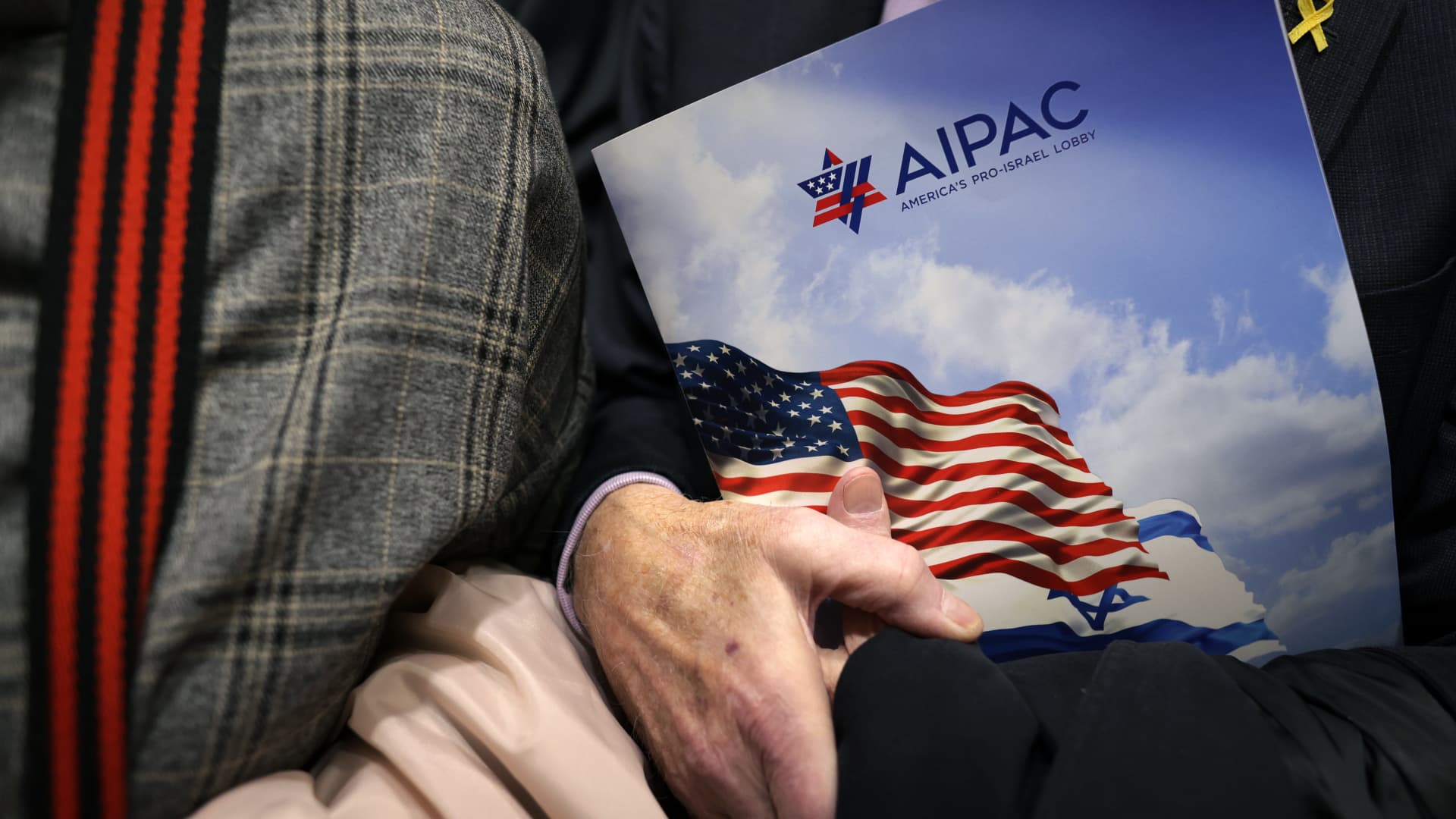
The American Israel Public Affairs Committee, better known as AIPAC, plans to stop endorsing candidates, making direct PAC contributions and earmarking contributions to candidates. The shift reverses a strategy adopted five years ago as the influential pro-Israel group faces mounting political resistance.
The change was disclosed Wednesday in a letter to members obtained by CNBC. AIPAC will continue operating United Democracy Project, its super PAC, while putting greater emphasis on mobilizing individual donors to give directly to candidates, according to the letter.
Jewish Insider first reported the change.
“We’re looking to dramatically expand our political involvement as a community and to heighten our activists’ direct impact. That will be our focus in the next two years,” AIPAC spokesperson Deryn Sousa told CNBC in a statement.
In the letter, however, the group called 2026 “one of the most challenging environments in recent memory” and warned those challenges “will continue to grow.”
The overhaul strips away some of AIPAC’s most visible political activity while preserving its ability to move large sums of money. It could also make AIPAC’s influence harder to see in campaign finance records. Donations routed through the group are currently disclosed as AIPAC-earmarked contributions, while direct donations from its members would not carry the same label.
That distinction matters as AIPAC support has become a liability in some Democratic primaries amid the war in Gaza, with candidates attacking rivals for accepting its support and some lawmakers pledging to reject money tied to the group.
A Pew Research Center survey this year found that 80% of Democrats and Democratic-leaning independents held an unfavorable view of Israel, up from 53% in 2022.
AIPAC has deployed about $105.1 million through its traditional PAC and affiliated super PAC this cycle, according to a CNBC analysis of FEC filings. Its United Democracy Project reported $53.4 million in independent expenditures through the end of September, according to FEC filings.
AIPAC’s traditional PAC was the nation’s largest PAC contributor to candidates and other political committees in 2025, giving $26.8 million, according to FEC data. That was more than four times the $6.1 million given by the National Association of Realtors’ PAC, the next-largest contributor.
AIPAC’s biggest intervention of the cycle was also a major defeat. Its United Democracy Project super PAC spent more than $30 million in Michigan’s Democratic Senate primary supporting Rep. Haley Stevens and opposing Abdul El-Sayed, according to a CNBC analysis of FEC filings, but El-Sayed narrowly won the nomination.
The super PAC also spent millions in House primaries opposing Democrats Cori Bush and Tom Malinowski and Republican Thomas Massie. According to a CNBC analysis of FEC filings, it spent more than $3 million in the Bush race, roughly $2.3 million against Malinowski and more than $4 million in the Kentucky primary where Massie was defeated.
United Democracy Project will continue operating, according to the letter, preserving AIPAC’s ability to raise unlimited sums for independent political spending even as the group ends candidate endorsements, direct PAC contributions and earmarking.