CA state worker strike could affect DMV and unemployment services
In summary
California state government’s largest union is scheduled to strike this week. It could affect services at a number of offices that people visit every day, including the DMV.
Tens of thousands of state government workers are expected to walk off the job Wednesday in a one-day strike that could affect services at the DMV, unemployment offices and more.
Members of SEIU Local 1000 are protesting what they argue are bad-faith bargaining practices by Gov. Gavin Newsom’s administration. The union has been negotiating a new labor agreement since its latest three-year contract expired on June 30, and the strike would be Local 1000’s first statewide walkout in its 44-year history.
The union represents about 100,000 public workers, with members employed in dozens of agencies across California. They’re accountants, government analysts, nurses, IT workers, custodians and more.
Local 1000 could call off the work stoppage at any time leading up to Wednesday. But if it happens, here’s how the strike could affect you.
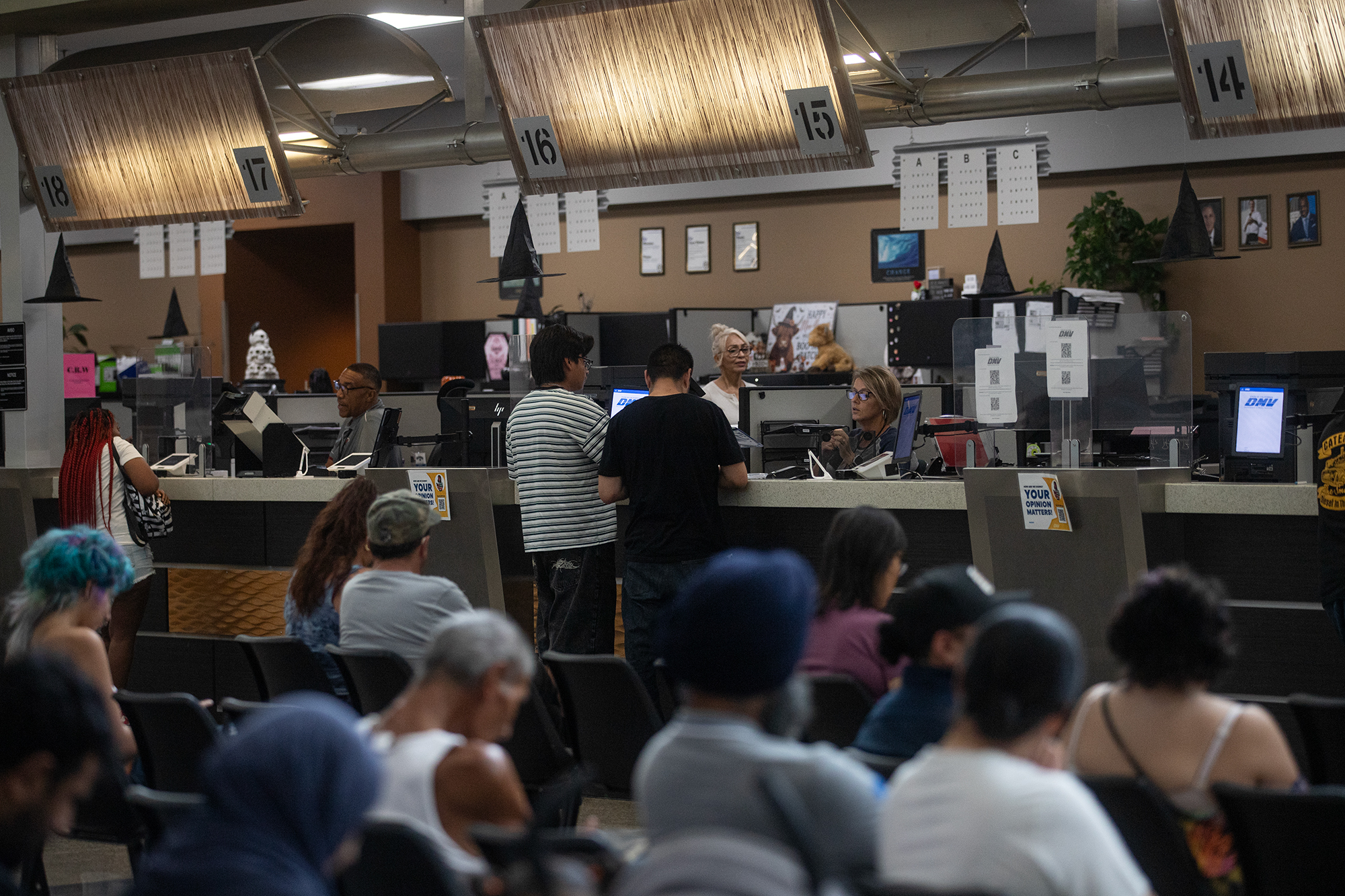
Can I still go to the DMV
Yes, you can, but services could be delayed depending on who is participating in the strike. DMV offices might close early, too, a department spokesperson said. The same holds for other public-facing services, including unemployment benefits at the Employment Development Department and food assistance at CalFresh.
State parks could be affected, too, even though rangers are not represented by Local 1000. Hearst Castle in San Luis Obispo County, for instance, adjusted its tour schedule to accommodate people who’ve already reserved spots to see the newspaper magnate’s estate.
This may not be ideal from a customer service standpoint, but union president Anica Walls urges Californians “to give our employees some grace.”
“If you happen to go to the DMV office and the services are limited, make an appointment for another day,” Walls said. “Realize that we are standing up for 100,000 state workers who have not had a good living wage. … It’s not just about state employees. It really is about the working class.”
Which state workers can’t strike?
Local 1000 represents almost half of the state’s workforce, and 95,000 workers would be able to participate in the strike. The remaining 5,000 workers are legally excluded from the strike, because their absence “would create an imminent and substantial threat to public health or safety,” according to the union. In general, they work in healthcare or public safety.
Eight state agencies and divisions employ workers who are deemed essential. These include workers such as veterans homes nurses, cooks at state prisons, Caltrans dispatchers and others:
- Department of Veterans Affairs
- Correctional Health Care Services
- Department of Corrections and Rehabilitation
- Department of Corrections and Rehabilitation, Division of Adult Parole Operations
- Department of Education
- Department of Developmental Services
- Department of State Hospitals
- Caltrans
To see which employees at which worksites are deemed essential, check out this list.
How did we get here?
Many state workers are frustrated with Newsom, who has demanded wage cuts to help balance the budget in three of the eight years he’s led the state. These cuts essentially negated the last 3% salary increase he gave Local 1000 members.
Pointing to a $20 billion increase in general fund spending over the past two years, the union wants better pay and more affordable healthcare coverage than the administration has offered. It also wants more flexibility to work from home, pushing back against the governor’s return-to-office mandate for state workers.
But talks have been contentious. In July, the union filed a complaint with the state’s Public Employment Relations Board, accusing CalHR, the state agency that handles labor negotiations, of delaying negotiations and rejecting proposals outright. Last month the labor board sided with the union and concluded that CalHR “refused to meet and confer in good faith.”
Earlier this month, union members authorized the strike. Local 1000 members will hold demonstrations in more than a dozen cities, including Oakland, San Francisco, Los Angeles, San Diego and Sacramento, where members will also hold a march to lawmakers’ offices near the Capitol.
How has the Newsom administration responded?
In response to the labor board’s findings, Angela Musallam, CalHR’s deputy director of communications, said in an email to CalMatters that “the state has been and remains open to negotiation” She added that the state “is prepared to move into mediation to assist the parties in reaching an agreement.”
CalHR also filed an unfair practice complaint of its own to the board in an effort to stop the strike. CalHR claimed that the strike was unlawful because the union did not initially identify which essential workers would be excluded from the walkout. The union disagreed with CalHR’s interpretation of events, arguing that it did identify these employees. The board sided with the union last week, rejecting CalHR’s request for an injunction.
Could there be another strike?
Both parties are scheduled to meet for mediation talks on Oct. 30. For now the union is planning to only strike on Wednesday, but Walls said that if the Newsom administration continues to engage in bad-faith bargaining, the union will “escalate” its actions. This could include filing another complaint with the labor board, and potentially holding another strike.
Source link