Colorado Supreme Court dismisses injured snowboarder’s lawsuit
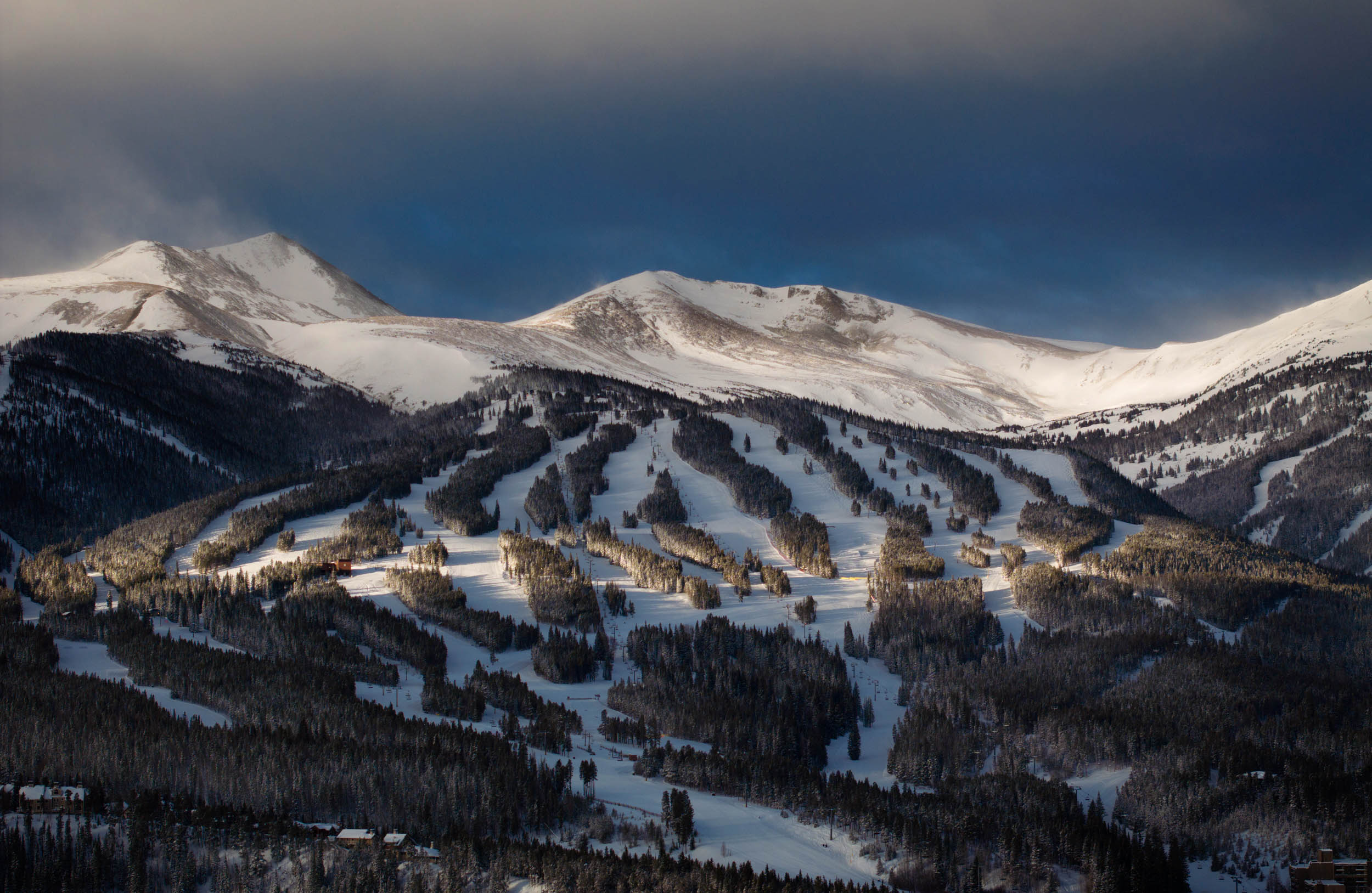
The Colorado Supreme Court has dismissed a lawsuit filed by a snowboarder who collided with an employee-driven snowmobile at Breckenridge ski area.
The court, in its Sept. 21 ruling, pointed to the liability waiver the snowboarder signed when he bought a season pass after the snowmobile collision that prevented him from suing the resort operator.
The 4-3 decision supported a Summit County District Court’s dismissal of snowboarder John Litterer’s lawsuit following his December 2020 collision with the snowmobile. Litterer was in active litigation with resort owner Vail Resorts when he bought a 2022-23 Epic Pass and signed a release of liability — or exculpatory agreement — that gave up “any and all claims and rights that I may now have” against Vail Resorts.
Litterer argued he was unsure what he was signing but the high court ruled that anyone who signs a contract presumes to know its contents.
Justices Maria E. Berkenkotter, Brian D. Boatright, Susan Blanco and Monica M. Márquez ruled to dismiss Litterer’s claim.
The majority ruled the industry-shaking Miller case from Crested Butte Mountain Resort, in which the state Supreme Court said that liability waivers do not allow resort operators to ignore state laws and regulations around safety, did not apply to the Litterer case. The majority said Mike Miller signed a liability waiver before his teenage daughter fell from a chairlift at Crested Butte Mountain Resort, resulting in her paralysis, while Litterer signed the liability waiver for the 2022-23 Epic Pass after he was injured.
Justices Richard L. Gabriel, William W. Hood III and Carlos A. Samour Jr. dissented, saying the court’s ruling “provides the ski industry with an extraordinary perpetual pass of its own” and allows the ski industry to “avoid a limitless range of liability.”
The 21-page dissent, written by Gabriel, said the ruling gives the resort industry a pass on liability claims “by burying exceptionally broad release language in the click-through, lengthy boilerplate document that unwitting patrons check off when they buy their ski passes.”
Gabriel said the majority’s decision “is unjust to Litterer and will result in manifest injustice to innumerable unsuspecting ski pass purchasers like him.”
The Colorado Supreme Court heard oral arguments in the Litterer case in April, with the resort industry closely watching the case following the landmark Miller decision that resulted in a record-setting $12.4 million award to the injured Annie Miller.
Litterer argued that the Vail Resorts employee driving the snowmobile was negligent — displaying “extreme and outrageous conduct” and “reckless endangerment” — when he collided with the snowboarder. Litterer’s attorney argued that resort owner Vail Resorts violated both the Ski Safety Act and the Colorado Snowmobile Safety Act, resulting in the collision.
But the Supreme Court justices homed in on the Epic Pass contract. Justices wondered if this was about the Miller case — involving a resort dodging state-mandated safety requirements because a skier signed a liability waiver — or a contractual issue.
Vail Resorts argued that the issue was contractual and pointed to all-caps and yellow-highlighting in the Epic Pass contract that warned buyers they “will forfeit certain claims you have against Vail Resorts … including a release of any claims of negligence.”
The dissent said the majority decision focused on the timing of Litterer’s injury instead of the wording of the release. Gabriel wrote that he was not aware of any ruling or authority that supports the majority’s argument that “the meaning of contract language changes depending on when a contract is signed.”
Gabriel wrote that while skiing is “essential to Colorado’s tourism industry and economy,” the “simple” purchase of a ski pass “should not become a game of gotcha for unsuspecting” purchasers.
“But that is precisely what the majority condones today,” Gabriel wrote.
Joseph Bloch, whose team at Bloch Ongert, LLC represented Litterer, said the sweeping liability waivers allow ski areas to ignore their responsibilities under the Ski Safety Act, a pioneering law that has protected the state’s ski resorts from lawsuits and large awards for 47 years. He called for a broader discussion — kicked off by the minority of Supreme Court justices in the case — that reviews the use of liability releases “to protect the public, not billionaire corporations.”
“No other industry or landowner is allowed to knowingly operate for the paying public in a dangerous and reckless manner and be allowed complete impunity and immunity for injuries caused by their knowingly wrongful conduct,” Bloch told The Sun. “This is a classic approach of profit over safety in a billion-dollar industry that is already inherently dangerous.”