
Tropical Smoothie Cafe announces new branding, plans for new locations
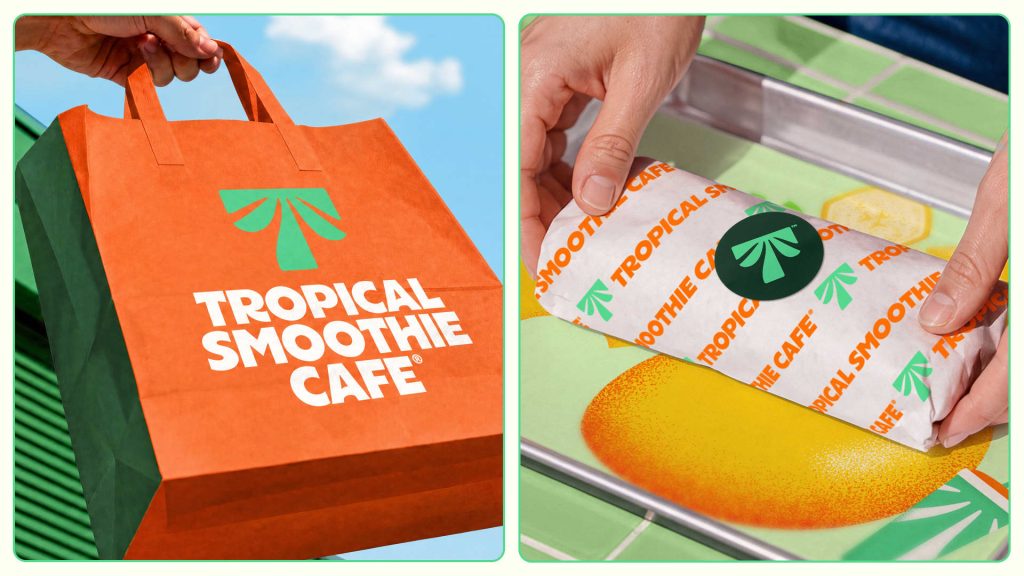
Tropical Smoothie Cafe’s new packaging will highlight its frond icon.
Source: Tropical Smoothie Cafe
Tropical Smoothie Cafe on Wednesday unveiled a new look as the restaurant chain prepares to continue its streak of rapid growth under Blackstone’s ownership.
“We are a company and a brand that has evolved significantly over the last few years and really over the last 10 years,” CEO Max Wetzel told CNBC. “We’re thinking about what our next 3,000 cafes look like, and so it’s a perfect time for us to roll this out.”
The redesign comes as Tropical Smoothie prepares to introduce itself to more consumers, both in the U.S. and internationally. The chain, which also sells bowls and wraps, surpassed $1.6 billion in system sales over the 12 months ended in June. By the end of the year, it is projecting it will exceed 1,800 locations nationwide, up 50% since the end of 2022. Tropical Smoothie has plans to expand outside of the U.S., too.
But its bold plans come during a tricky time for the restaurant industry. Diners have been eating out less frequently, trying to save money while paying more for gas, groceries and other necessities. As a result, eateries have been battling for a smaller pool of customers and often leaning on discounts to win them over.
Tropical Smoothie last tinkered with its logo a decade ago. The new design, which will be found everywhere from packaging for its wraps to its mobile app interface, uses brighter colors and a uniform font, in part to try to set it apart from quick-service competitors.
“The color palette is entirely created by the ingredients that you can find in our cafe,” Wetzel said. “All these ingredients are very different than a category that’s really dominated by browns and beiges and fried food.”
It also introduces the “Palm T,” a frond-shaped icon that will represent the brand in “shorthand,” particularly on digital platforms, according to Wetzel.
Tropical Smoothie has been working on the new branding for more than a year. But it is just one step toward what Wetzel called his ultimate goal: “building a best-in-class company.”
In late 2024, Tropical Smoothie consolidated national and local media budgets into a single advertising fund. Franchisees pay 5% of their gross sales in marketing fees, meaning that the fund will grow as system sales — lifted by successful marketing initiatives — increase.
Tropical Smoothie’s $80 million marketing budget is now deployed “much more effectively,” according to Wetzel. As a result, its national brand awareness has increased from 34% of consumers a year ago to 42%, he said.
Tropical Smoothie has also been trying to improve its cafe operations. Earlier this year, it started to rearrange its food and bowl assembly lines for better speed and accuracy.
Outside of the cafes, Tropical Smoothie has also invested in what Wetzel called “the digital front door” of the brand. By the end of the year, the company will roll out an improved version of its mobile app and website, all with the new unified look. It is also testing self-ordering kiosks.
Those improvements tie into its efforts to win over repeat customers. Its loyalty program has grown to 13 million members, up 25% from the year-ago period. About 1 in 3 orders comes from a loyalty program member, according to Wetzel.
“Those are some of the bigger types of investments that we’ve built since Blackstone got here,” Wetzel said.
Tropical Smoothie Cafe’s new packaging will highlight its frond icon.
Source: Tropical Smoothie Cafe
Wellness winners
In 2024, Blackstone bought Tropical Smoothie Cafe for a reported $2 billion, including debt. The company was started in Florida in 1997, but its founders cashed out more than a decade ago. Blackstone is Tropical Smoothie’s third private equity firm owner.
Wetzel joined the chain in late 2024, after the sale. Previously, he was CEO of CKE Restaurants, the parent company of Carl’s Jr. and Hardee’s, and chief operating officer at Papa John’s.
In fiscal 2025, Tropical Smoothie reported net income of $115.4 million on revenue of $131.4 million, according to franchise disclosure documents. With just one company-operated location, Tropical Smoothie makes the majority of its revenue from franchising the brand.
As a chain that began on the East Coast, Tropical Smoothie sees the most growth opportunities out west, particularly in the Midwest and Southwest. And the chain is a big hit in cold climates like Michigan, too.
“What’s exciting is as we hit critical brand awareness levels in these markets, we’re seeing a nice increase in overall [average unit volumes],” Wetzel said, referring to the industry term for annual sales for the average restaurant in its footprint.
Wetzel said that Tropical Smoothie is not currently working on an initial public offering, but “over time” the company will evaluate its options. Sandwich chain Jersey Mike’s, which was also owned by Blackstone, went public in late July, less than two years after the private equity firm bought it for a reported $8 billion.
Based on both system sales and number of restaurants, Tropical Smoothie is larger than its older rival Smoothie King, which has also grown rapidly recently. Last year, Smoothie King sold a minority stake to private equity firm Main Post Partners to accelerate the chain’s growth.
But both smoothie chains are seeing similar trends boost their sales. Wetzel credited increased “health literacy” as one tail wind for the business; the growing adoption of GLP-1 drugs and the “Make America Healthy Again” movement have further boosted wellness trends that had already been percolating for years.
Plus, brightly colored drinks are buzzy now, too.
“We’re a beverage-led concept, and beverage has gone from being the sidekick to the main event,” Wetzel said, adding that about 85% of the chain’s transactions include a smoothie, but the fruity drinks only account for about half of sales.