
Arch Manning’s Sense Of Humor And The Men Who Laughed Alongside Him
Texas quarterback Arch Manning is just another man. He isn’t any better than that.
He showed us a side of who he is — in a brief moment, looking comfortable, being in control. He was surrounded by men who, presumably, want Manning to like them, and many showed us who they are, too: humored by the depiction of violence against women.
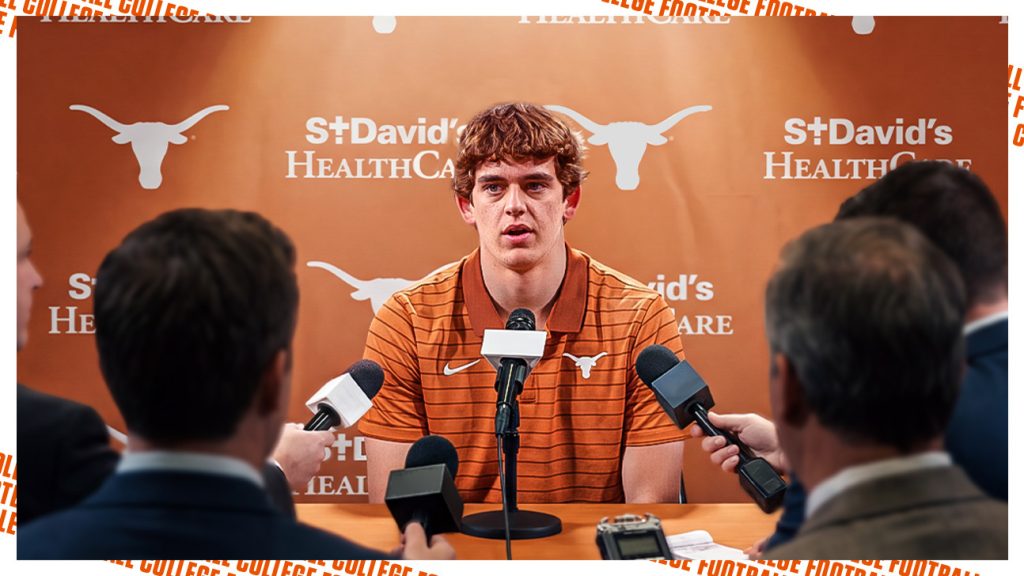
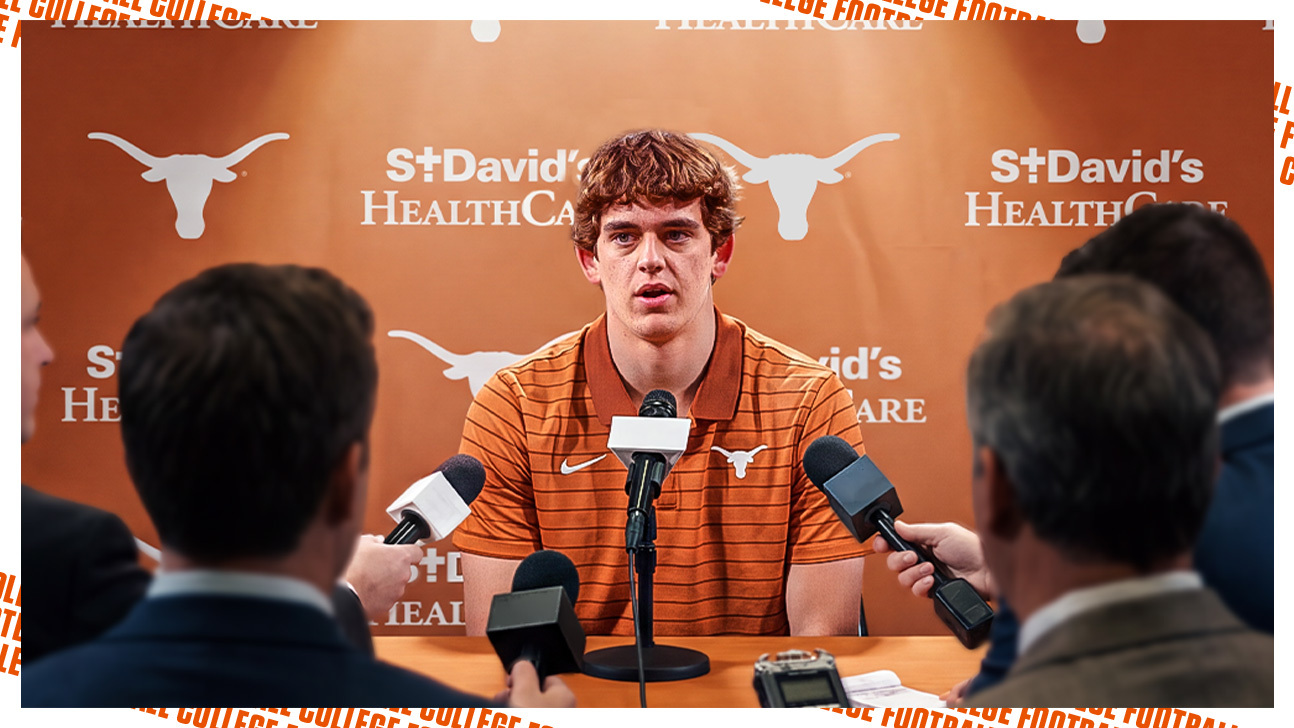
Not more than 48 hours after Manning led the Longhorns to the largest comeback win against an Associated Press No. 1-ranked team in 30 years, he sat for standard media availability. And then he joked about an AI video featuring violence against women, laughed at his own remarks and got a room full of men to laugh at it too.
“I’ve seen a few AI edits of stuff, but that’s about it,” Manning said, responding to a question about seeing any Texas-Ohio State clips on social media.
“I saw an AI edit of Sark’s interview,” he continued, igniting howls from his audience as he laughed alongside them. “Have you all seen that one? That’s a good one. Of him slapping Holly Rowe? That’s hilarious.”
Saturday night after Texas’ comeback win, Rowe, an ESPN sideline reporter, tried to perform her duty and one of the most difficult tasks in the sport: get the immediate postgame interview. Amid pandemonium on the field at Darrell K. Royal Stadium, Rowe managed to duck, dart and dodge through the masses to get next to Longhorns coach Steve Sarkisian.
As Rowe began to ask her question, Sarkisian dismissed her — and the national TV audience watching this exchange unfold. Many folks, myself included, were appalled at how Sarkisian chose to represent himself, his program and the University of Texas in that moment. He failed not only to show the proper respect for the title he holds, but also the decency to allow Rowe to do her job.
(Mikala Compton/The Austin American-Statesman via Getty Images)
But most people probably forgot about that moment by Sunday morning. Preparation for Week 3 of the college football season began for every team as soon as they’d finished their last game. That’s true of Texas, which enters its next game against UTSA as both my No. 1 team and the AP’s.
That game should be the focus for Manning and the Longhorns. But it’s not because Manning chose to mention — and then laugh about — an AI video depicting violence against women. Well, one woman in particular.
At first, I thought the video of Arch Manning — widely considered one of the most polite and aw-shucks players in the country — was AI created, too. Then I realized I was wrong.
He laughed. Some men in the room laughed.
I didn’t.
I was appalled. I was ashamed. I was angry. Angry that the natural follow-up question — “What’s so funny about an AI video of his head coach slapping a woman?” — was either not asked or never left that room.
With all due respect — which could be none — where are the male colleagues defending Rowe? Inaction and silence is cowardly at best, dehumanizing and encouraging of violence at worst.
“People who are amused by a woman being harmed and humiliated — real or fake — not only show a severe lack of empathy; they reinforce a culture that endorses cruelty and violence against women,” Tracey Lyall, the CEO of Domestic Violence Intervention Services in Oklahoma, where I live, told me.
Manning is 22 years old — four years past the minimum age to vote and to join the U.S. military. He’s a full adult. He’s also capable of issuing an apology, an explanation and, most importantly, suffering consequences that follow.
There should be consequences.
There should be apologies.
There should be explanations.
(Screenshot via Arch Manning’s Instagram stories)
I don’t have faith that any meaningful consequences will find Manning, even after he issued this statement on Instagram Tuesday afternoon:
“In my press conference yesterday, I made an insensitive comment about an AI video. There is nothing funny about it. It’s easy to say I didn’t mean it, but I know my words and actions were hurtful to a lot of people. I do not take that lightly and am deeply sorry for that. I specifically want to apologize to Holly Rowe for what she has personally had to deal with because of my comments. I have a ton of respect for her and appreciate her showing me grace in this moment. I need to do better and will be more thoughtful going forward.”
So he says. So men say. We say a lot. Being accountable for our egregious actions, though? Not so much. And there are no assurances beyond his word that Manning will show the basic respect we require. He’s lost the benefit of the doubt, and he might never earn it back.
Not long after Manning published his apology, Rowe publicly accepted it. “Thank you Arch,” she wrote on social media. “I appreciate our conversation about this — which will remain private. Apology accepted. We move forward with respect and kindness for one another.”
Online, reaction has been mostly met with the kind of toxic joke-making I’ve become all too familiar with. I reposted the now-viral video with a question: “y’all laughed at that?” Most of the responses are predictably despicable and frustrating.
There should be zero tolerance for violence against women. There should be zero tolerance even for the suggestion of violence against women as a joke.
Domestic violence is a scourge we, mostly men, are uninterested in addressing, even though globally one in three women experiences partner or sexual violence in their lifetime, and more than 316 million women have experienced partner or sexual violence in 2025 alone, according to the World Health Organization. Additionally, several studies over the years reveal a correlation between sports events and domestic violence in North America.
In college sports, the examples of violence against women, whether on an individual or systemic level, are endless — in part because so many instances are not reported. And when jokes like this are so callous and commonplace, you can’t blame victims for their silence.
But make no mistake: Believing it’s OK to make a joke about physically assaulting women is how men learn to believe it’s OK to hurt women.
The jokes are dehumanizing, belittling. They make it that much more painful for a victim of violence to come forward.
(Photo by Alex Slitz/Getty Images)
“The laughs from those in the press conference, and from everyone who shared the video, underscore how much work remains,” Lyall continued. “An apology is nice, but we must actively dismantle this culture that finds violence against women entertaining, and hold ourselves, our sports institutions and our communities to a standard where physical abuse is never tolerated, never minimized and never a joke.”
I am painfully aware much of the public does not agree with me. I am painfully aware of what standing up to a nasty joke might cost. I am also painfully aware of what still might happen if I don’t.
Standing against violence is the bare minimum for men who want to help make a safe world for women, not because they are women, but because they are human.
You’d never let your friend, your family, your teammate be ridiculed, maligned or harmed. You’d fight back on their behalf. I will too.
Look, I don’t know Rowe. She doesn’t know me. But we work in a field, on a field, in a job that is as tough as it is fun. Few folks care what we think of Arch Manning laughing about a fake video of his coach assaulting her, and more will make fun of us for caring at all.
But they care about Manning. Just not enough to hold him accountable.
Manning is an elite quarterback on the best team in college football. He has a chance to be one of the greatest players the sport has ever seen if he can lead Texas to its first national championship in 21 years.
Had he taken that horrible AI edit and used it as an opportunity to condemn violence against women, the good he could’ve done — and perhaps still can do — is an order of magnitude.
On Monday, he was just another man.