St Luke’s Hospital launches GP palliative care programme
SINGAPORE – Patients with life-limiting illnesses and their families can now get earlier access to coordinated palliative care support, following the launch of a first-of-its-kind outpatient programme at St Luke’s Hospital.
Supported by $2.2 million in funding from the Lien Foundation – a pioneer in advancing palliative care in Singapore – the Opal programme shifts the palliative support typically given in hospitals, hospices or homes into the primary care setting.
More than 90 patients have been referred to the programme based at St Luke’s community clinic, located within the community hospital in Bukit Batok.
The hospital currently supports more than 300 palliative care patients annually through its inpatient hospice, palliative care wards and home-based palliative care services.
At the launch on Oct 27, St Luke’s Hospital chief executive Tan Boon Yeow said: “As the need for palliative care grows, we cannot rely on specialist services and hospices alone. We must also equip primary care teams to provide general palliative care, alongside patients’ ongoing treatment and before their needs become more complex.”
Over the next four years, the Opal team aims to partner with GPs and healthcare specialists to support more than 1,200 patients, he said at the event attended by guests, including Minister of State for Health Rahayu Mahzam.
The patients are mostly those with illnesses such as dementia, end-stage renal disease, heart failure and respiratory failure.
The initiative involves a six-member multidisciplinary team comprising two family physicians, two advanced practice nurses, one social worker and one counsellor.
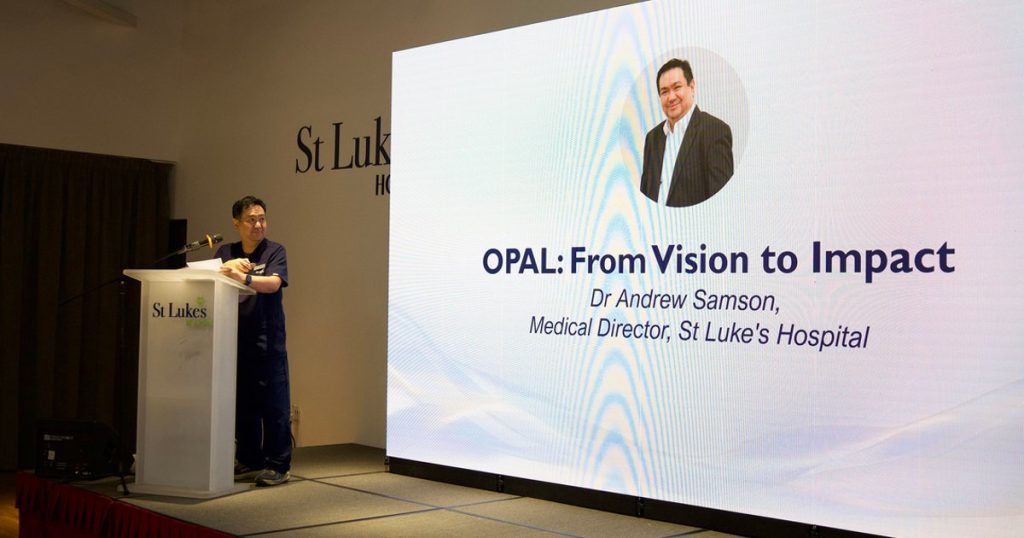
St Luke’s Hospital medical director Andrew Samson said that after a patient receives a referral, a consultation is arranged to assess their needs and those of their families.
Palliative care support can also be provided via teleconsultation and an office-hour support hotline at zero cost to patients. If needed, patients can be referred to appropriate providers, including inpatient hospice care or home-based palliative care.
Lee-Oh Chong Leng, a general practitioner at Mission (Bukit Batok) Medical Clinic, said the programme would help him provide better care for patients facing complications from their conditions and increasing frailty.
“We have to deal with not just the medical problems but a lot of psychosocial, spiritual problems as well,” he said.
“We have only about 15 to 20 minutes at most per patient. So how do we handle this? That’s a great challenge and a gap in our current management that we face right now.”
He said his long-term patients are often reluctant to leave his care.
With the Opal programme, he can continue to manage their conditions while they receive palliative care support to improve their quality of life.
To better support patients in the community, the Opal team has also begun collaborating with the National University Hospital (NUH), including its geriatric medicine department.
This enables patients receiving specialist treatment at the acute hospital to receive support for care planning as well as psychosocial and caregiving needs.
Matthew Chen, head of NUH’s geriatric medicine division, said: “Traditionally, for those with very clear remaining life expectancies, they get referred to hospice services, whether it is home hospice or inpatient hospice, particularly if the prognosis is less than three months.”
The Opal programme provides an extension beyond the typical criteria for palliative care in Singapore, he added.
To further extend the reach of the programme, St Luke’s Hospital is actively building collaborations with GPs across primary care networks, Tan said.
Lim Chien Chuan, director and clinical lead of the i-CARE Primary Care Network, which includes St Luke’s clinic, said: “We have to change the mindset of the doctors that palliative care is part of family care, that we are caring for a patient from birth all the way to the grave.”
Lien Foundation’s programme director Luo Ren said that with growing acceptance of palliative care, Opal will hopefully enable more people with life-limiting illnesses, such as dementia, to receive such support earlier in the community, instead of waiting until the last stage of their illness.