Singapore to tighten haze law amid evidence hurdles
SINGAPORE – Singapore is looking into strengthening its transboundary haze law, with the aim of addressing enforcement gaps and improving the country’s ability to hold to account those responsible for the fires.
Minister for Sustainability and the Environment Grace Fu said this on Oct 27, as she noted two challenges to enforcing Singapore’s Transboundary Haze Pollution Act.
This includes gathering evidence, and securing cooperation from companies outside Singapore, she said at an event on sustainable procurement hosted by the Singapore Environment Council (SEC).
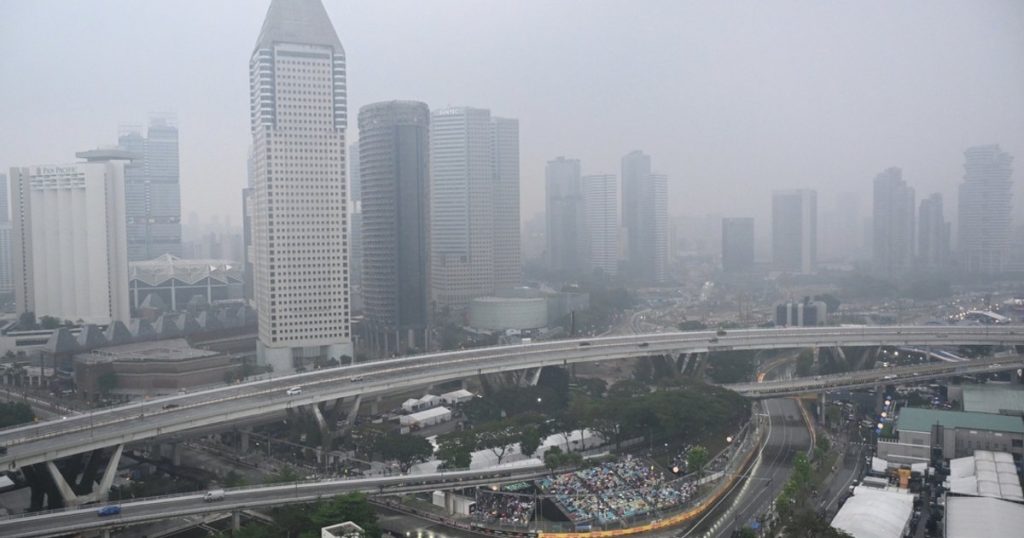
Her comments come amid the Singapore Government’s widening probe against firms linked to the ongoing haze episode – one of South-east Asia’s worst ones – with at least 20 firms in the Republic and Indonesia served legal notices under the Republic’s haze law.
The government first issued notices to 10 Indonesian firms under section 9 of the law, which required them to take preventative action against the fires. There is no penalty under this section for a non-response.
Later, Singapore stepped up its probe against companies linked to fires.
It issued notices under section 10 of the law to 10 Singapore-registered companies in the palm oil or forestry businesses. These notices require them to provide information needed for investigations.
Fu said: “There is an important distinction. Section 9 is aimed at getting companies to take preventive action against the fires. Section 10 helps us gather the information and evidence needed for our investigations.”
This is the second time the haze law has been used to target companies. It was also wielded in 2015, but no firms were sued or fined. Cases against four Indonesian firms issued Section 9 notices then remain open. Three of them have been implicated again in the 2026 haze episode.
On the difficulty in ensuring that companies cooperate, Fu pointed out that Singapore may need the foreign government’s consent to serve notices in another jurisdiction.
Singapore has consistently expressed openness to working with Indonesian authorities who share the Republic’s objective of holding responsible companies accountable, she said.
But enforcement is hard if an overseas company refuses to comply and none of its officers enter Singapore.
Fu said: “Our enforcement framework should not allow a company to frustrate an investigation simply by refusing to cooperate or remaining outside Singapore.”
She said Singapore’s willingness to work with Indonesian authorities will not change, even as the country presses ahead to make adjustments.
The second challenge lies in gathering and verifying evidence across the borders, she added.
Apart from establishing a fire, Singapore also needs to establish relevant corporate and operational links, including who owns or controls the land, the relationships between different companies, and what steps were taken to prevent and fight the fires.
Fu, who is also Minister-in-charge of Trade Relations, noted that corporate structures, operations and supply chains can span multiple jurisdictions.
The necessary information may therefore be held overseas, making it difficult for Singapore authorities to obtain, the minister said.
Said Fu: “Even where information or documents are provided by an overseas company, independently verifying them can be difficult.
“Singapore authorities cannot simply enter another jurisdiction to conduct investigations or gather evidence without the consent of the foreign government.”
To this end, the Government on Oct 23 announced that it will convene a specialist panel comprising law, audit and investigative firms to support cross- border inquiries into identified companies’ operations, corporate relationships and supply chains.
Fu said Singapore is examining the adequacy of its existing law.
This review, which will also address enforcement gaps and strengthen corporate accountability, could result in amendments or introduce new laws where necessary.
But the law is just one tool that Singapore can use. Fu said other measures, including regulatory and economic means, will also be explored.
Pointing to the Singapore firms who were issued Section 10 notices on Oct 23, Fu said: “The increased scrutiny has already prompted companies to respond publicly and set out their positions. The broader point is that companies are accountable not only to regulators.
“Investors, financiers, customers and the wider public increasingly expect companies to demonstrate responsible environmental practices.”
The Straits Times reported on Oct 26 that all 10 firms had acknowledged the requests for information. Most of them said they will cooperate with the authorities, except for three who did not explicitly say they would do so.
Among the 10 Singapore firms, two of them are linked to Asia Pulp & Paper (APP) – APP Company and APP Company (China). Products linked to APP include paper brands Paseo, Nice and Paperline.
During the recent haze episode, the SEC had stepped up monitoring under its green label, including through additional reporting and supply chain checks, noted Fu.
The SEC had on Oct 18 taken action against APP after the firm’s suppliers were linked to haze-related fires.
The council said the next day that it had requested more information from APP and that it might suspend the company’s use of the label if it is unable to demonstrate effective measures to counter the fires.
ST has asked the SEC for updates on their investigations.
Said Fu: “(Sustainable procurement) is not only about whether a product carries the right label.”
“It is about whether the product has been responsibly produced, and whether the producer abides by the law and can be held accountable for its environmental impact.”