New safety, maintenance standard in the works as Singapore’s skyrise greenery booms
SINGAPORE – A new industry standard is being developed to improve the design, safety and maintenance of plants on buildings as the extent of rooftop and vertical greenery has grown substantially over time.
The Singapore Standard on the Design for Safety and Maintainability of Skyrise Greenery will cover rooftop and vertical greenery such as rooftop gardens, landscaped balconies and green walls.
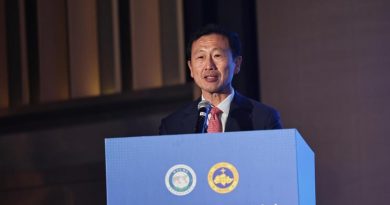
In announcing the move on Oct 17, Minister of State for National Development Alvin Tan said: “A common set of standards will give practitioners, businesses and clients a clear understanding of what good skyrise greenery should achieve.”
This comes as Singapore has exceeded its original target of having 200ha of skyrise greenery by 2030. As at end 2025, there were over 255ha of rooftop and vertical greenery across the island.
He was speaking at Green Thumbs 2026, a three-day landscape industry event organised by the Landscape Industry Association (Singapore) to celebrate its 25th anniversary, at Temasek Polytechnic.
The nation first started its Skyrise Greenery Programme in 2009 to promote urban greenery to break up the concrete landscape. The sector has since grown to include landscape architects, designers, developers, building owners, horticultural specialists and maintenance practitioners.
He said that the standard will provide common guidelines for the design, installation and maintenance of greenery on buildings. Key areas are expected to include design considerations for long-term maintenance, safe access and work practices for installation and upkeep.
The standard can also support safer and more maintainable designs, promote greater quality and consistency across projects, strengthen professional capability and enhance confidence in the landscape industry and the work it delivers.
Selecting appropriate plants and structural support for trees and other greenery on buildings will also fall in this category, he added.
National Parks Board (NParks) and the Singapore Institute of Landscape Architects will jointly lead the working group developing the standard, with Enterprise Singapore overseeing the process through the Singapore Standards Council.
The working group will include building owners, educational institutions and relevant government agencies, and will hold its first meeting in the fourth quarter of 2026, with the standard targeted for publication by end-2027.
In a separate announcement, Tan also said that landscape businesses, which do not have enough land to store their plants or bank their trees, will also be able to apply for short-term use of vacant nursery land.
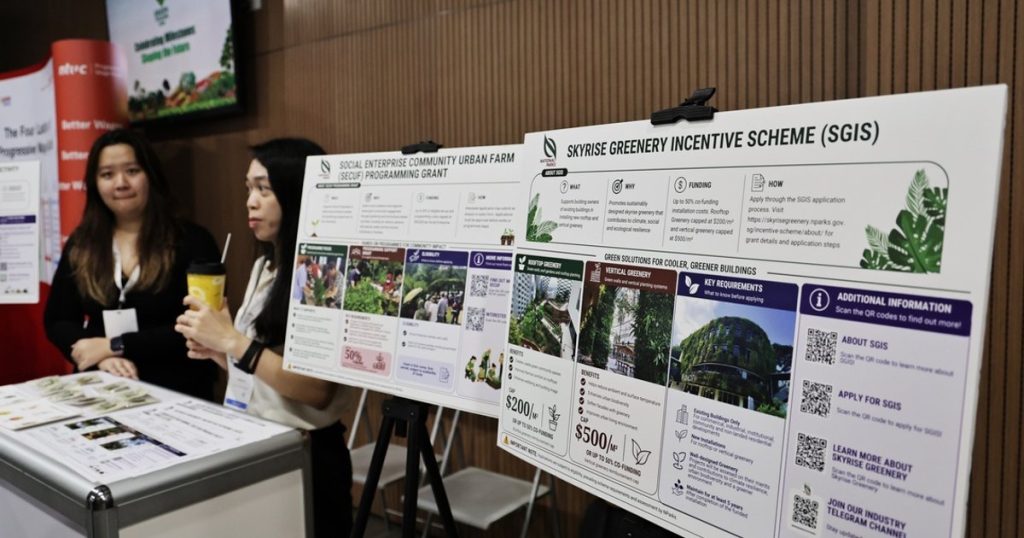
Minister of State for National Development Alvin Tan (in light green shirt) touring the National Parks Board’s booth at Green Thumbs 2026 on Oct 17.
ST PHOTO: KELVIN CHNG
From Jan 2, 2027, eligible businesses can start applying for the Temporary Occupation Licence (TOL) initiative, which will allow them to use designated nursery land for purposes such as storing plants and trees for their landscaping projects, without committing to long-term leases.
Successful applicants will initially be granted a one-year licence, with any extension subject to land availability and NParks’ operational needs.
Currently, businesses seeking land for longer-term nursery operations can participate in NParks tenders for tenancies of six years, with an option for a three-year extension, or tenancies of 10 years, with an option for a further 10 years.
These plots typically measure between one and two hectares and may require one to two years of development work before they can be used.
“These needs are often transient and unpredictable, so it may not be economical for companies to take up longer-term tenancies or leases for such purposes,” Tan said, referring to the challenges landscape businesses face in securing land for short-term use.
To qualify, businesses must have been registered on the Landscape Company Register for at least two years and provide proof of an existing landscape contract worth at least $1 million.
Two plots of about 0.6ha, each along Neo Tiew Road in Lim Chu Kang, will be used for the pilot. The plots are intended for longer-term nursery use but are temporarily available for short-term landscape-related activities.
They are currently due to be returned around end-2027, subject to NParks’ assessment of land requirements and the applicable licencing arrangements.
NParks will review take-up, industry feedback and operational outcomes before considering whether to offer other suitable sites. The Board will also provide further information on its website at a later time.