Inside flash demonstrations by student groups against Gyanesh Kumar
At the Delhi protests against Chief Election Commissioner Gyanesh Kumar, the police seemed to have a clear plan: get to the protesters before they could raise their slogans. But the protesters had a plan of their own: make sure the police had to keep running.
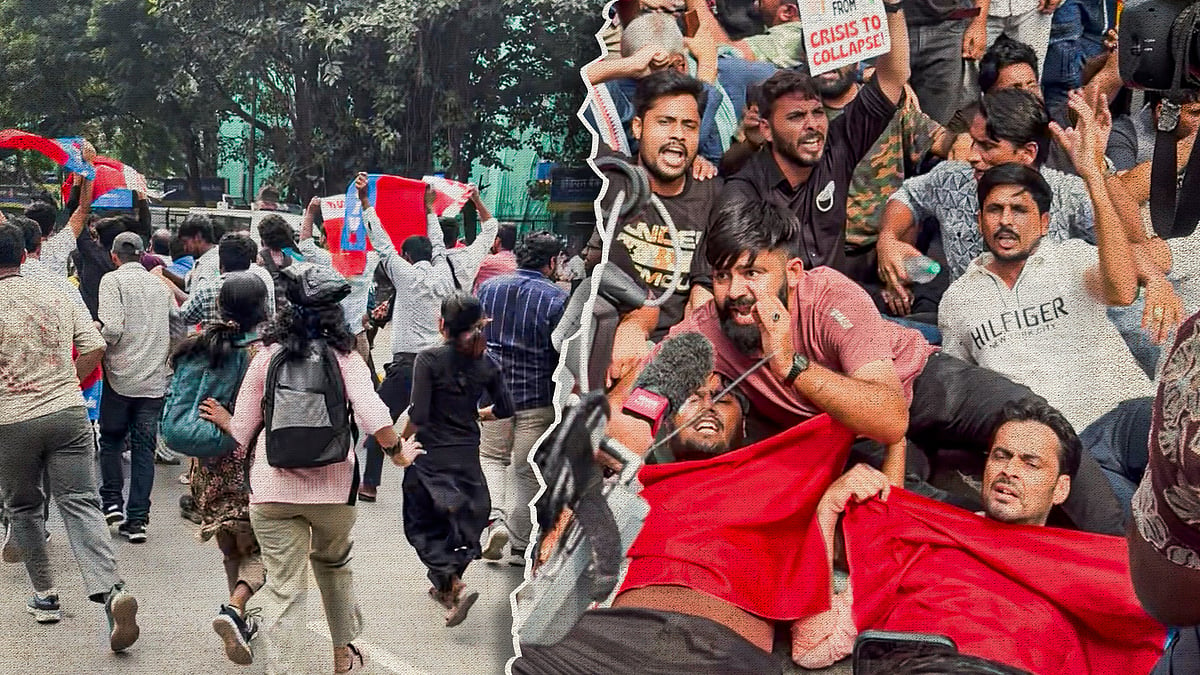
Between October 11 and 13, the capital’s streets saw many flash demonstrations, with student activists darting across Connaught Place, Janpath and other parts of the city, appearing suddenly and disappearing into police detention within minutes. Flags emerged from pockets, groups materialised from different directions, and even a tea break in Connaught Place came with an unexpected protest.
These demonstrations followed a crackdown on mobilisation. With activists alleging that restrictions made it increasingly difficult to protest, student groups turned to decentralised mobilisation, last-minute announcements and small groups to make their voices heard.
Newslaundry reporters ran alongside protesters across the capital to understand how these demonstrations were organised, how word spread, and how activists attempted to dissent despite restrictions.
A tea break, a protest and one very confused restaurant worker
On October 11, Newslaundry reporters were taking a tea break at a stall in Connaught Place when a group of around 20-25 protesters from the DISHA group suddenly ran across the area, raising slogans against CEC Gyanesh Kumar.
The spectacle left commuters and shopkeepers baffled.
Amid the commotion, security personnel attempted to detain a man who had started running alongside the crowd. The man kept running until restaurant staff intervened to explain that he was one of their employees. The security personnel then let him go. For a few moments, it was difficult to tell who was protesting, who was trying to avoid detention and who had simply been swept up in the commotion.
Suraj, a DISHA member, said such demonstrations reflected growing public anger and a willingness among people to organise independently.
“The public is increasingly expressing their concerns through spontaneous demonstrations and individual communication. People interested in participating in protests often communicated directly with one another and made their way to Connaught Place independently,” he said.
That spontaneity, however, did not mean there was no planning involved.
Small groups, folded flags and a meeting at Janpath
Before one of the demonstrations on October 13, Newslaundry reporters accompanied a protester to a location where a senior member of a left student organisation was briefing close to 30 participants on what to do.
The instructions were straightforward: move in small groups, travel in pairs or separately, and remain careful.
Before leaving, protestors checked their clothes and bags. One person removed a pin badge bearing Bhagat Singh’s photograph, while another folded the organisation’s flag so that it would not be immediately identifiable. A participant wearing a gamcha turned to us and asked, “Is my dressing noticeable?”
One by one, they booked cabs to Janpath market. They waited for instructions, trying not to appear as though they were protesters. Some media personnel were already present on the spot, and security personnel tried to understand why they had gathered.
The protesters split into two main groups, with two or three people at the front, and waited for their leader. Then a few of those at the front started walking. Within seconds, others began running behind them, raising slogans and waving flags, shouting, “SIR radd karo, SIR radd karo!” The police rushed towards them. Within five minutes, the demonstration was over. Everyone had been detained. A head constable remarked, “Toh yeh plan tha aap logon ka!”
‘We have only 10 to 15 people’
For Krantikari Yuva Sangathan (KYS) member Prithviraj, the success of flash demonstrations lies in the anger that drives people to participate. “People are angry; that’s why they want to raise their demands. They do not trust mainstream media to cover them. Instead, they approach alternative media and inform them only before they start the protest,” he said. “We have only 10 to 15 people, and we have to manage the protest with those people alone,” he added.
The groups have been using such tactics for years. During the anti-Citizenship Amendment Act (CAA) and National Register of Citizens (NRC) protests, they held small demonstrations outside Uttar Pradesh Bhawan.
He argued that the location of a demonstration matters as much as the slogans. Protesting at Jantar Mantar may be easier, but it does not always serve the purpose. If an incident takes place somewhere, he said, protesters should be able to demonstrate near the site or outside the office of the authority concerned.
According to Prithviraj, the space available for protests has been shrinking over the past six or seven years, making flash demonstrations one way to respond. The demonstration may last only minutes, but they hope its message will travel further.
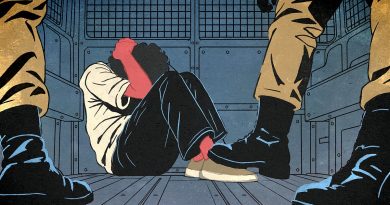
He described the October 10 demonstration near the Red Fort as spontaneous. The group had initially considered going as close to Jantar Mantar as possible, but when that did not work out, they decided to move towards the Red Fort instead. That demonstration, too, lasted only a few minutes before the police detained the protesters. Prithviraj alleged that protesters were beaten inside the police bus.
Another demonstration on October 11 by KYS, SFI and some other organisations began outside Central Park in CP. When Newslaundry reporters were stationed at the spot waiting for any student groups to give a call regarding the day’s plan, a group marched from a parking lot. It started like a march; however, the protestors began running in different blocks of CP, as security personnel began their detentions.