Northwest Arkansas candidates consider Iran war, immigration in US House race
Whoever is elected in November to represent Arkansas’ 3rd Congressional District will have plenty of issues to address in Washington, including the Iran war, immigration and the nation’s budget.
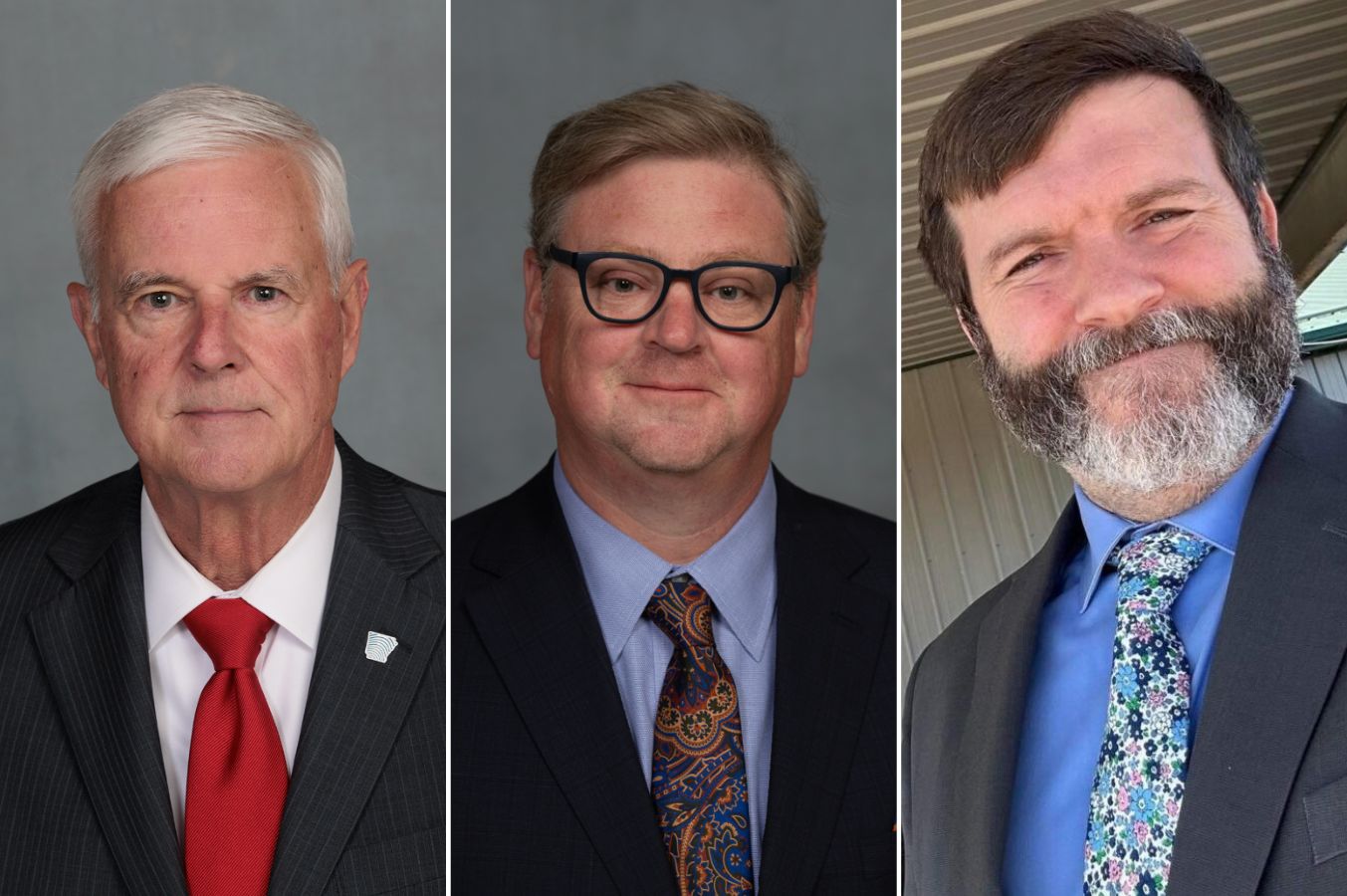
Republican U.S. Rep. Steve Womack is vying for a ninth term in Congress and said he still has the energy, passion and drive to continue serving the district. The 69-year-old incumbent from Rogers faces challenges from Springdale Democrat Robb Ryerse and Bentonville Libertarian Bobby Wilson.
Womack defeated Wilson in the 2024 general election and Ryerse in the 2018 Republican primary.
All three candidates agreed it’s time to end the war in Iran, which has increased gas prices, an additional strain for Arkansans struggling with the rising cost of groceries.
Womack said he believes the United States has achieved its objectives in the conflict, including taking out Iran’s ballistic missile capability and degrading the country’s capacity to develop a nuclear weapon.
“It’s time for that conflict to end, that we can get oil flowing through that Strait of Hormuz, give relief to the rest of the world and move on to the bigger threats out there,” he said. “And I think the pacing threat really right now is China and what’s happening in the Pacific.”
Wilson, chief operations officer of a trim and door company, said he is against the war and “being the world’s police force.”
“Even if Iran is one of the worst governments, which I think they are, I just think it’s not our job,” he said.
Ryerse, a 51-year-old pastor of a nondenominational church and director of development for a nonprofit working to end chronic homelessness, said to lower the costs of everything, the U.S. needs to end the Iran war and address tariffs President Donald Trump has levied since returning to office in 2025.
“If there’s anything economists hate, it’s uncertainty, so Congress needs to take back its tariff authority from the president so that we could have some predictability in our economy again,” Ryerse said.
A resolution to curb the president’s military action in Iran that the U.S. House approved last month failed in the Senate.
Womack did not vote on the resolution, which was debated the week of his mother’s death. The Republican joined Arkansas’ Congressional delegation in voting against previous versions of the resolution earlier this year.
Immigration
A crackdown on immigration has been a hallmark of Trump’s second term. Womack agrees with “deporting criminal aliens,” but said there have been “unfortunate” outcomes in places like Minnesota.
A surge of immigration enforcement in January in Minneapolis led to community protests where federal agents shot and killed two U.S. citizens.
Arkansas grassroots initiatives that formed following Trump’s election have been critical of immigration enforcement in the state, which is often precipitated through partnerships between municipalities and Immigration and Customs Enforcement.
Womack said he supports going after the “worst of the worst,” but he wouldn’t have been as hard on immigrants who were “collateral” arrests, meaning they weren’t the original target of law enforcement operations.
There are immigrants who come to the U.S. legally and overstay their visa, but that’s a different set of circumstances that requires a different solution, Womack said.
“You can’t just put a mask on a Homeland Security officer, an ICE officer, and deal with them all in exactly the same way,” he said. “I think there are different levels of illegal behavior.”
Wilson said he has mixed opinions about immigration enforcement. Wilson supports restricting immigrants’ access to some federal programs, such as U.S. Small Business Association loans, and offering money to people who self-deport, but said he opposes “the cruelty” of how policies have been implemented.
“If I do have one critique, it’s that I think that people actually and generally support a lot of these deportations, but don’t support the methods,” he said.
Wilson said he supports border security because “the world’s a scary place with bioterrorism,” and is “agnostic” to Trump’s efforts to build a wall along the southern border.
Ryerse said he wants to abolish ICE. The agency is only two decades old, and customs and border patrol can enforce immigration laws as they did prior to its creation, he said.
Trump directed billions of dollars to ICE in a 2025 tax and spending cut bill known as the One Big Beautiful Bill Act. Ryerse said he’d use that money to make the nation’s “atrocious” immigration system more efficient by hiring asylum judges and staff to clear a backlog of cases.
“We have made this system so complicated and so convoluted that it’s actually easier to cross the desert than it is to navigate the American immigration system, and I just think that’s a tragedy,” he said.
Ryerse said he also supports amnesty, something Republican President Ronald Reagan provided 40 years ago through legislation he signed that offered legalization to undocumented migrants who entered the country prior to 1982.
Details would need to be determined, but Ryerse said he would support a path to legalization for some of the nation’s undocumented immigrants who live in our communities, pay taxes and are “stuck in a system that moves very, very slowly.”
Federal budget
With the nation’s debt surpassing a record $40 trillion in August, the federal budget continues to be a concern for Congress.
In June, Womack introduced a bipartisan bill to reform Congress’ budgeting process. The legislation calls for the creation of an 18-member bipartisan commission — appointed by the president and Congressional leaders — to develop policies to reduce the federal deficit.
Womack said there’s a challenge with safety net programs like Social Security, which will cut recipients’ benefits in 2032 without a plan to address insufficient funding.
There are several options on the table, including raising the retirement age or looking at the threshold at which people stop paying taxes into the program, he said.
They’re tough decisions that elected officials concerned with losing elections don’t want to make, but Congress has to have a resolve to fix the problem, Womack said.
“And the fix is probably going to hurt a lot of people, maybe everybody, but if the program’s going to survive, we’re going to have to do this,” he said.
Wilson agreed no one is willing to address the cost of federal safety net programs.
“You’re really not going to touch the deficit until people are honest about Social Security, Medicare and Medicaid,” he said. “Everything else is just window dressing because the debt is massive.”
Wilson said he’d like to see more options for people under 35 to opt out of Social Security because the program likely won’t be there when they retire. If there were more retirement options for people paying into the program, that would lead to better outcomes, he said.
Wilson is supportive of tax-advantaged “Trump Accounts” that receive $1,000 from the government for certain babies born in the U.S. between 2025 and 2028. Families and friends can contribute up to a combined $5,000 annually into the investment accounts that will gain interest.
“Forty years in they’re going to have really good retirements, and I just think that the second and third and fourth order effects of this is just going to be so good for the country,” Wilson said.
Ryerse said the people making decisions about how the country spends its money recently care more about priorities other than things that matter to the American public.
“I think that budgets are moral documents that ought to reflect our values,” he said.
It would be a better use of the country’s money to spend it “on things that are going to make a difference in people’s lives,” Ryerse said. That could look like addressing the affordable housing crisis with a program that provides down payment assistance for people like teachers and first responders so they can afford to live in the communities they serve, he said.
Wilson said energy production could also help address affordability issues and bring down the cost of other goods and services.
Arkansas Advocate is part of States Newsroom, a nonprofit news network supported by grants and a coalition of donors as a 501c(3) public charity. Arkansas Advocate maintains editorial independence. Contact Editor Andrew DeMillo for questions: info@arkansasadvocate.com.
Source link