Will the Supreme Court’s recent ruling affect CT absentee voting?
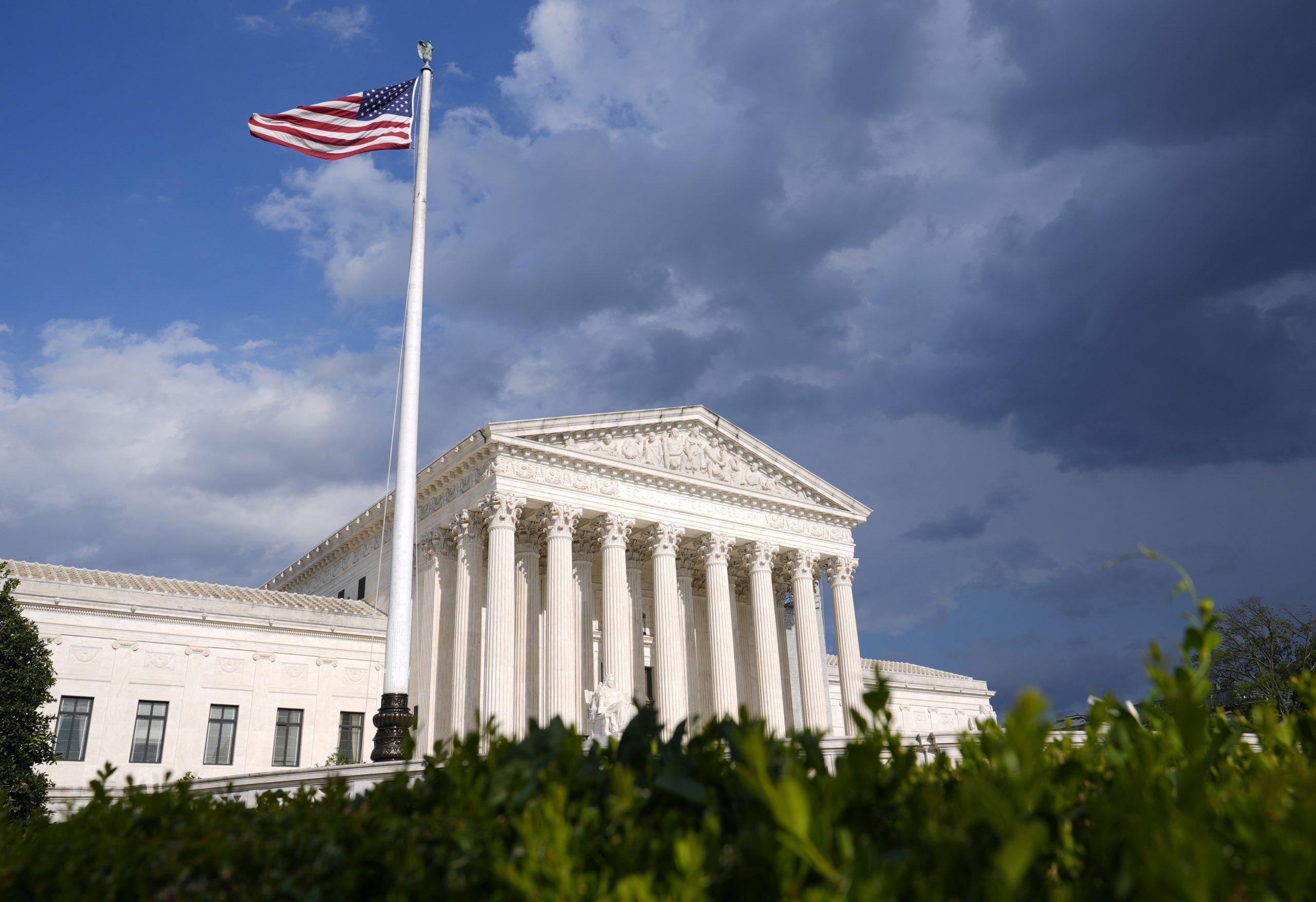
In a ruling last month, the U.S Supreme Court ended President Donald Trump’s attempt to restrict mail-in ballots.
Mail-in ballots, or absentee ballots, began going out Oct. 2 in Connecticut for the general election on Nov. 3. In the past, voters in the state could only vote by absentee for specific reasons — like having an illness or being out of town on Election Day. But beginning this year, absentee ballots are available to anyone who requests one.
So what would Trump’s executive order have meant for elections in Connecticut and what does the court’s decision change, if anything? And how is absentee voting different from “early” voting?
Here’s what Connecticut voters should know.
What would Trump’s executive order have done?
The executive order — issued in March — ordered the creation of a “state citizenship list” using citizenship, naturalization and Social Security records. That list would have been sent to each state’s election officials.
It would also have given the U.S. Postal Service a larger role in elections. The agency proposed a requirement for states to submit a mail-in and absentee participation list of all people who were intending to vote by mail, which would have given the Postal Service the ability to block mail-in ballots from states that didn’t send the list.
The president said he was trying to crack down on noncitizen voting, which is already prohibited by federal law and rare.
What does the Supreme Court’s ruling mean for Connecticut?
In a concurring opinion, Justice Brett Kavanaugh stated that even if the Postal Service has the authority to implement the change, “applying the rule in the 2026 elections would be arbitrary and capricious in violation of the Administrative Procedure Act because state and local election officials do not have sufficient time to reasonably implement the rule before the elections.”
The court’s decision allows states to continue sending out mail-in ballots using the same process they’ve been using.
“We feel a lot more confident the elections will go more normally in Connecticut now,” David McGuire, executive director of ACLU CT, said. “We do think people should take advantage of the early voting window as well.”
What’s the difference between early voting and absentee voting?
While absentee voting allows people to vote early by mail, the term “early voting” in Connecticut actually refers to the process of voting in person ahead of Election Day.
Early voting opens in Connecticut on Monday, Oct. 19 and will run through Sunday, Nov. 1. Voters can look up their town’s early voting location here. Note that it may be different from Election Day polls. Early voting locations will be open from 10 a.m. to 6 p.m., except on Tuesday, Oct. 27 and Thursday, Oct. 29 when they will be open 8 a.m. to 8 p.m.
If a person prefers to vote on Election Day, which is Nov. 3 for this year’s midterm elections, the polls in all towns will be open from 6 a.m. to 8 p.m. on that day. Voters can look up their poll location on the secretary of the state’s website.
How can someone vote by absentee?
To get a ballot, voters can fill out an application on the Connecticut Online Absentee Ballot Request Portal.
The local town clerk’s office automatically will get the application, check that the person is an eligible voter and enter their information into the Central Voter Registration System, which is used to ensure no one can vote twice. A unique ballot identification number is created for each ballot to ensure only the voter who requested it can vote with that ballot.
The voter will receive the ballot by mail and can return it by mail or in person to the town clerk’s office. They can also put it in a drop box in their town. But for an absentee vote to count, a ballot must arrive before polls close at 8 p.m. on Election Day.
The last day to request an absentee ballot is Nov. 2.
McGuire noted that if a voter requests a mail-in ballot and decides not to cast it, that person can still go to the polls in person, noting the state’s cross-checking system. “The earlier people can figure out their plan the better,” McGuire said.