Data center fight heads to Brighton and Weld County
Opponents of a proposed Brighton data center development will push the City Council for a moratorium Tuesday night, as the populist backlash against the resource-hungry megacenters spreads across Colorado.
Weld County data center opponents are also launching a signature drive to get a moratorium on a future countywide ballot.
Questions about transparency from government officials, how much water and energy the data centers will use, and how much noise they will generate for nearby subdivisions are bringing unusual coalitions together to fight growth, said Jordan Forsyth, a Democratic Socialists of America activist in Adams County.
“To see me, a very vocal member of DSA, and my neighbor who is very Republican and voted for Trump, being able to have a conversation on this issue and actually be united … it’s been really cool to see everybody be able to put politics aside and just engage for the good of the community,” Forsyth said.
A nonpartisan Weld County group says it is circulating two data center petitions in coming weeks. One, requiring 10,000 signatures in 45 days, would petition the Weld County commissioners to refer their approval of Global AI’s proposed data center to all voters in a special election sometime after the November general elections.
The second Weld County petition, also needing 10,000 signatures according to the coalition, would create a separate ballot measure that if approved would require a public referendum on any newly proposed data center or data center expansion.
“This referendum puts power back in the hands of the people of Weld County,” said community advocate Patricia Garcia-Nelson, who also works as a fossil fuels transition advocate for GreenLatinos. “We have the right to decide what happens to our community, not just on this project, but on the ones that come next. Over the next 30 days, we’re going to make sure every voter in Weld County has that chance,” Garcia-Nelson said, in a statement announcing the petition drives.
More chances for referendums on data centers arise as candidate positions on the controversial developments become a litmus test from city council races to U.S. Senate campaigns. Colorado Springs recently delayed approval of a proposed data center near Garden of the Gods after protesters were arrested at the public hearing. Aurora’s City Council rejected a moratorium on data centers but put in place new requirements on how much water projects might use.
Seeking info in Brighton
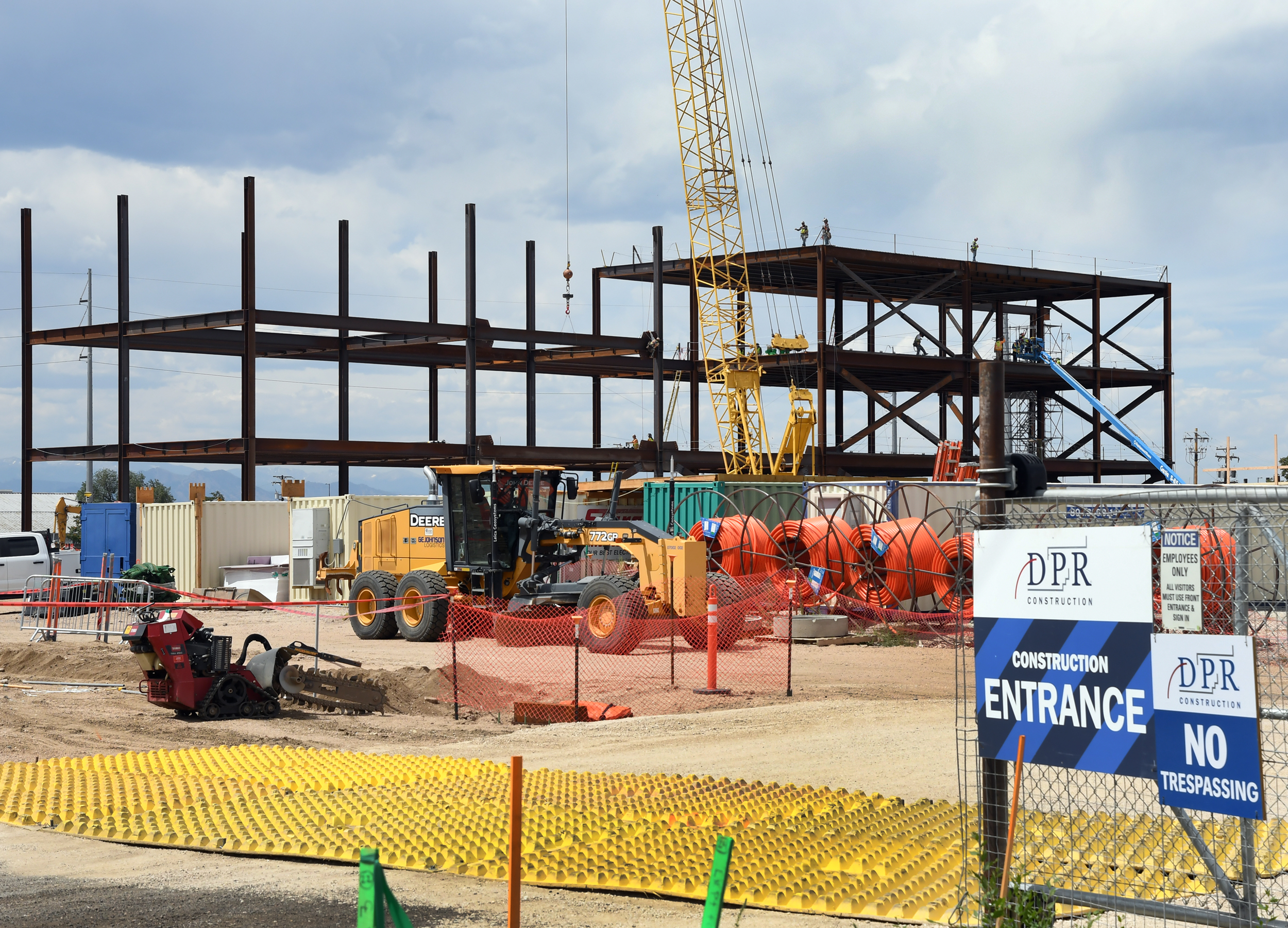
Activists in Brighton are organizing, and studying documentation filed with the city for a 2.5-million-square-foot, eight-building data center mapped out on farm land near 50th Avenue and Weld County Road 4, about 25 miles northeast of downtown Denver. The development would be in a portion of Brighton that is in Weld County, according to BizWest.
Former Chicago TV anchor and current Brighton resident Stacey Baca has compiled the documents and explanations of the developer’s plans on her YouTube channel, and activists say they want answers from City Council on why the project has moved forward without public debate.
Nondisclosure agreements or other proprietary negotiations might get in the way, Forsyth said, ““but I think they had the option for community involvement and input, and it doesn’t seem that they’re interested in it,” Forsyth said.
Council members should have looked around Colorado and seen that data centers would be coming for the ample open space on co-op United Power’s grid, the activists say. A moratorium would give the community time to develop standards, from whether they want data centers at all, to whether they should be supported with tax breaks, to how water and power will be supplied, opponents say.
Representatives of Dewberry engineers, the firm that has filed paperwork for the Brighton development, did not return calls seeking comment about the project. Activists against the project say they believe a California company is behind the development, but a major California developer who has been mentioned said Monday is has no involvement with the Brighton data center.
In addition to concerns about data centers’ cooling-water use amid historic drought conditions, activists also question how the centers’ massive power needs will be supplied.
Data centers come with large fossil-fueled backup generators that emit pollution when fired up; their everyday needs require hundreds of megawatts of power. If the data centers are powered by new fossil-fuel generation such as natural gas, Colorado’s progress in switching to clean, renewable energy could stall further, opponents say.
A United Power spokesperson said the co-op power supplier cannot talk about individual customer projects or proposals. United Power said it works with large-load prospective customers to ensure adequate supply will be available.
Some Brighton City Council members have supported consideration of a 90-day moratorium on data center approvals. Forsyth said another council member will support a 180-day freeze at the Oct. 6 meeting.
Weld County activists will be at the Brighton meeting, in neighboring Adams County, to gather signatures for their data center petitions, a campaign spokesperson said.
Political leaders haven’t listened so far, said Matt Cheroutes, who is the campaign manager for the Weld County activists calling themselves Protect Our Water and Energy Resources, or POWER.
“So now we’re taking this to the voters. The commissioners had their vote. Now it’s the people’s turn,” Cheroutes said.
This story was updated Monday, Oct. 5, to reflect an out-of-state data center developer saying it had no involvement in the project.