SCOTUS skeptical of Boulder climate case v. Big Oil
U.S. Supreme Court justices Monday struggled with complex questions over whether Boulder can sue international oil companies for damages under state law, and whether it’s the right time for the nation’s highest court to intervene in a climate change reparations case.
Oil companies told the court at the opening of the new Supreme Court term that only federal law or federal courts can address Boulder’s damage claims, and that the liberal city and county’s lawsuit should not be allowed to continue in Colorado state courts.
“If Boulder’s claims are allowed to go forward, some 90,000 municipalities across the country will have the ability to make national and international energy policy by asking juries to impose catastrophic damages on selected fossil fuel producers,” oil company attorney Kannon Shanmugam said in his opening statement Monday.
Some of the conservative justices indicated they will give significant weight to that argument. Multiple federal court decisions “make crystal clear that interstate air and water pollution are matters for federal law unless Congress specifically preserves state law,” Justice Brett Kavanaugh said, during the court’s question time.
Other justices occasionally challenged that stance.
“If you throw a rock over the border” and hit someone, you can be sued, Chief Justice John Roberts said to the oil company attorneys.
“When somebody in New York defames a citizen of Boulder on national television, or somebody in California releases a computer virus on the internet, or biological virus into the world, and it causes mass damage in Colorado, it has never been thought that only federal law can provide a remedy,” Boulder’s Washington, D.C.-based attorney, Kevin Russell, said in his opening statement.
“In an area like this, there are uniquely federal interests that dictate the application of federal law,” Shanmugam countered. “Our bottom line is that no state’s law can apply here,” he added in response to a question from Justice Elena Kagan.
In his rebuttal time, Shanmugam said if Boulder was allowed to continue, the city could reach out “when I am in Colorado in two weeks and sue me on a nuisance claim for refilling my car and thereby contributing to global climate change.”
Some of the more liberal justices appeared to be looking for ways to allow Boulder to continue its quest.
“There are nuisance suits that we have permitted under state law in the Clean Water Act, and I don’t see why we wouldn’t permit it under the Clean Air Act either,” Kagan said.
“A number of the discussions that you’ve had with my colleagues make me think that we’re really early in this case. That this is sort of premature from the standpoint of this court exercising its jurisdiction,” said Justice Ketanji Brown Jackson. “Why shouldn’t we wait and hear all of these claims once the state courts are done with their federal considerations?”
Sarah Harris, principal deputy solicitor general for the U.S. Department of Justice, added the Trump administration’s voice in support of the oil companies’ arguments.
“Colorado’s entire thesis is that by a mere fact of having injuries in Colorado, they can regulate petitioners’ worldwide conduct. And again, that is an unprecedented idea,” Harris said.
Many of the early questions from the justices focused on legal minutiae: whether it’s the right time for the Supreme Court to set a precedent, since Colorado courts have not held a full trial on reparations issues; and case citations of when state or federal law have applied in past environmental disputes.
When they eventually issue their opinion from Monday’s arguments, the Supreme Court justices will not be deciding the merits of the reparations case itself. Instead, they will either allow Boulder’s lawsuit to go to trial in a Colorado state court, or shut down the strategy by saying climate change pollution that crosses all borders is an issue for the federal courts or for Congress to decide.
Dozens of similar lawsuits by other cities and states against major petroleum businesses could be affected by the Supreme Court’s decision.
Skeptics of the city of Boulder and Boulder County case often assume the current court’s GOP-appointed majority would reject community efforts to get oil industry reparations for the effects of warming. But legal advisors for Boulder argue a “true conservative” position should favor states’ rights and decisions made in state courts.
Those local avenues for redress become ever more prominent as the Trump administration peels away numerous federal protections on everything from coal plant emissions to roadless areas in national forests, these legal advocates say. The current administration specifically reversed the “endangerment finding” on climate change, claiming there is no federal role in controlling greenhouse gases. Many of those Trump administration moves are being challenged by cities and states in other court cases.
Boulder and its attorneys emphasize they are not seeking to take over federal powers of controlling fossil fuel emissions and setting pollution limits, but only seeking monetary compensation for damages already done. They also want damages for their allegations that the oil companies knew how fossil fuel use has contributed to global warming, and tried to obscure that. That argument parallels’ past state lawsuits against tobacco companies for covering up health consequences of tobacco use.
The oil companies and trade group supporters like the Manufacturers’ Accountability Project counter that decisions on national and international climate and economic issues should be made by federal policymakers, not by local officials or the court system.
“Manufacturers are also concerned that allowing these claims to proceed would encourage local and state governments to turn to the courts to resolve complex policy disputes that ordinarily require legislative and regulatory balancing,” the trade group said in a briefing paper for journalists. “Similar legal theories have already been waged beyond climate litigation to other social and economic disputes involving other products, industries, and conduct, with nationwide effects.”
One of the nine justices, Samuel Alito, recused himself from hearing the Boulder case; the Supreme Court does not disclose reasons behind the recusals. That removes one reliable conservative vote from the oil companies’ cause.
Advocates for the lawsuit say the defendants and the Trump administration “can’t have it both ways.” The oil interests argue that communities have no right to address climate change, while also saying the Clean Air Act gives no authority to the federal government to do the same. Meanwhile, climate advocates note, the current Congress is doing nothing to address the climate change damages in local communities that increasingly come as intense wildfires, water shortages and deadly heat waves.
Boulder’s attorneys and supporters also say they can prove that oil companies knew their products contributed to damaging climate change and tried to obscure the evidence.
The actual merits of the Boulder reparations case have not yet been fully tested in any court. Before a trial on climate change damages and who should pay could move forward, the oil companies moved to block any action in state courts. After the Colorado Supreme Court ruled a state lawsuit was legal, the U.S. Supreme Court in February agreed to hear an appeal of that decision. The oil companies’ appeal Monday was the first case argued in the new SCOTUS fall term.
The city of Boulder and Boulder County originally sued Suncor and Exxon Mobil in 2018 over their contributions to climate change. They were joined by San Miguel County, which was later dropped because it needed to sue in a different state court district. The Boulder lawsuit followed examples in New York and California, but it was the first instance of the fight moving inland, and a precursor to dozens of lawsuits since.
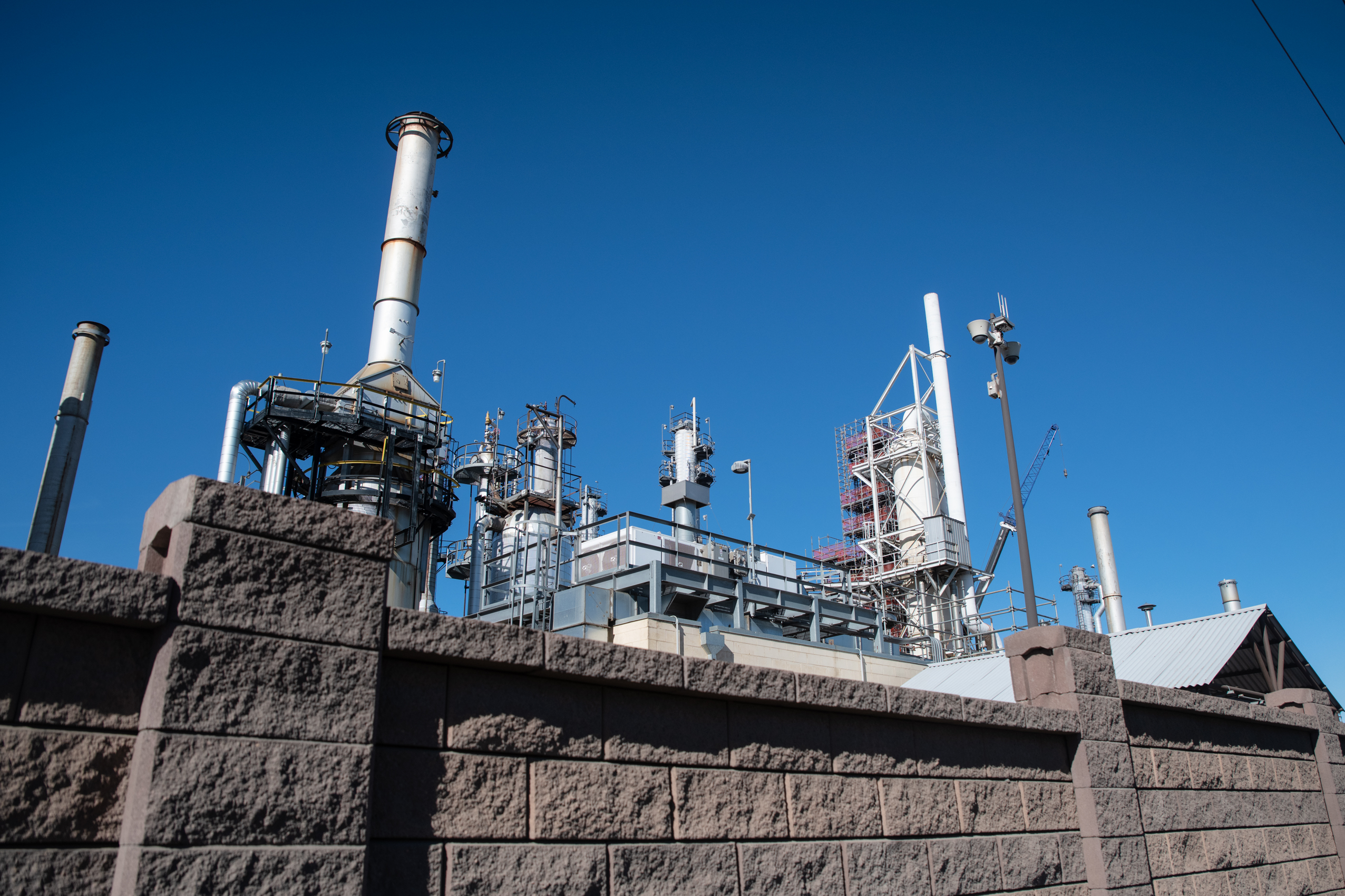
Suncor operates the Commerce City refinery that emits large amounts of carbon dioxide and has also been fined repeatedly by state officials for other pollution violations. Suncor’s refinery supplies a significant amount of gasoline and aviation fuel in Western states. Much of the oil refined at Commerce City comes from Suncor’s extensive tar sands oil mining operations in Alberta, which environmentalists criticize as one of the most damaging forms of oil extraction.
Exxon Mobil, of course, is an international oil conglomerate operating everything from wells to refineries to filling stations around the world.