
Kratom, 7-OH laws diverge as use of the synthetic products rises
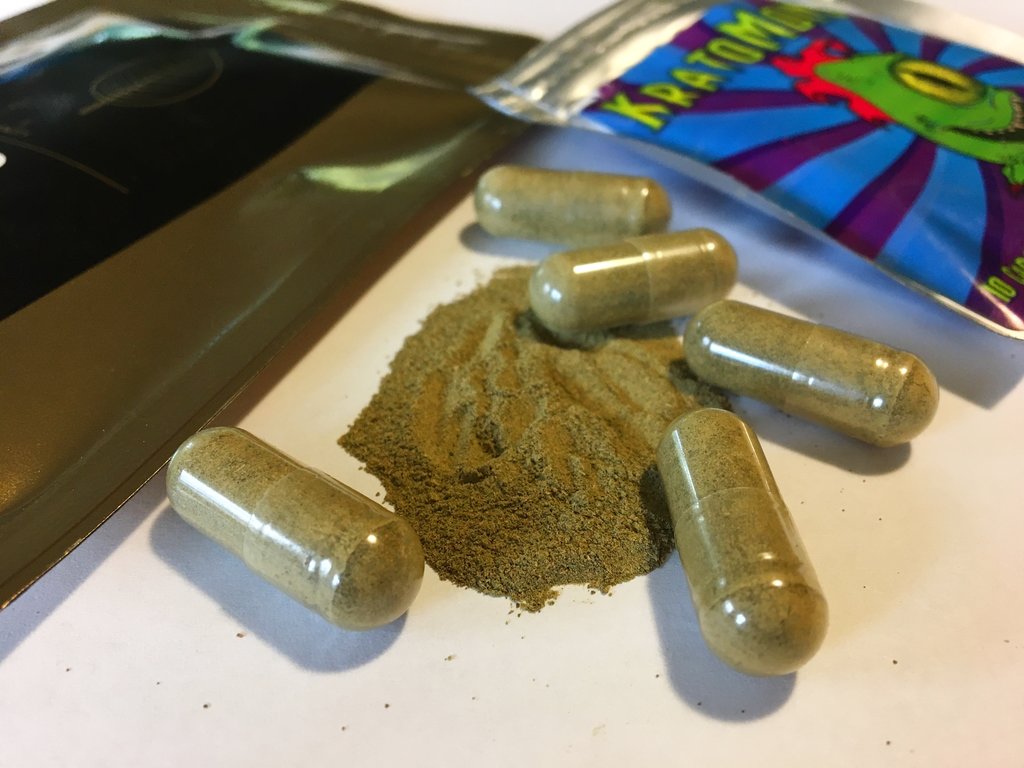
For years, the psychoactive compound kratom has been sold across much of the United States as an herbal supplement, available in powders, capsules and extracts with few of the restrictions applied to controlled substances.
But the market is changing. Products containing a potentially dangerous kratom derivative known as concentrated 7-hydroxymitragynine, or 7-OH, and other chemically modified kratom compounds are increasingly being sold alongside traditional kratom leaf products, prompting state lawmakers and federal regulators to reconsider how the substances should be regulated.
The evolution has put states in the middle of a difficult policy question: how to address concerns about increasingly potent kratom-related products without treating traditional kratom leaf the same way.
At least 31 states regulate kratom, according to the National Conference of State Legislatures. Some have banned or scheduled kratom, while others have imposed age limits, labeling requirements or restrictions on 7-OH and synthetic compounds.
During the 2025 and 2026 legislative sessions, lawmakers in 36 states introduced legislation to regulate kratom, 7-OH or synthetic kratom compounds, according to the Rockefeller Institute of Government. Many cities and towns nationwide have adopted sales restrictions.
Federal regulators are increasingly taking a similar approach, targeting certain high-potency and synthetic compounds while leaving traditional botanical kratom outside the latest federal scheduling actions.
The issue gained new attention recently in Mississippi, where local police found the same potent synthetic kratom-derived product while investigating the separate deaths of two University of Mississippi students last month. Authorities have not established that the product contributed to either death, and toxicology results are still pending.
Lawmakers in a growing number of states, including Mississippi, are calling on their legislatures to act swiftly against concentrated 7-OH products, commonly referred to as “gas station heroin.”
Pennsylvania lawmakers also are considering legislation that would allow registered retailers to sell natural-leaf kratom to people 21 and older while banning synthetic and adulterated products, including those containing more than 0.5% 7-OH. The bill unanimously cleared a House committee last week and now heads to the full House.
This year, lawmakers in Connecticut, Georgia, Idaho, Illinois, Iowa, Kansas, Massachusetts, Michigan, New York, Tennessee, Virginia, Washington and Wyoming have considered or adopted bans and regulations on kratom and its synthetic variants.
The number of kratom-related reports to U.S. poison centers has also risen sharply recently. An analysis published on the U.S. Centers for Disease Control and Prevention website in March reported 14,449 kratom exposure reports from 2015 through 2025, including 3,434 in 2025 — about 1,200% more than in 2015.
But this data does not identify whether those exposures involved traditional leaf products or newer concentrated and semisynthetic formulations such as 7-OH, limiting what researchers can conclude about the risks of particular products.
Poison centers have logged 3,190 reports involving kratom or its derivatives through June, according to a news release. If that pace continues, the number of reports in 2026 would be nearly 68% higher than in 2025.
Addiction medicine experts and researchers say significant questions remain about the safety and effects of these largely unregulated products, including how they affect people of different ages, what doses may be safe or effective, and whether they have potential therapeutic uses. More research is needed to better understand the risks and potential benefits of kratom and its newer formulations.
“These products are unregulated,” said Dr. Sarah Kawasaki, an associate professor of psychiatry and internal medicine at Pennsylvania State University. “There’s no quality control needed to make sure that what is stated is on the bottle is actually in the bottle.
“What we don’t know, and its accessibility, should scare us all,” Kawasaki added, referring to the lack of research on dosing and effects across different age groups.
The changing kratom market
Kratom comes from the leaves of Mitragyna speciosa, a tree native to Southeast Asia. Traditionally, the leaves have been chewed, brewed into tea or dried and ground into powder.
The plant contains dozens of alkaloids, including mitragynine and smaller amounts of naturally occurring 7-OH. Those compounds interact with opioid receptors in the brain. Kratom, which is most commonly sold as powder, capsules and tablets, can have stimulant effects at lower doses and more sedating effects at higher doses.
“With kratom, it’s weaker and it’s hitting more than just the opioid receptor. When you go with 7-OH, it’s very targeted at the mu-opioid receptor –– the same receptor that morphine or fentanyl would hit,” said Dr. Alta DeRoo, the chief medical officer of the Hazelden Betty Ford Foundation, one of the largest nonprofit treatment providers for addiction and mental health. DeRoo also is a board-certified addiction medicine physician and OB-GYN.
“It’s easier to become dependent and more euphoric with the 7-OH, and so coming off of it is more dramatic as well,” she said.
People use kratom or 7-OH for a variety of reasons, according to addiction medicine experts. Some report using it for pain, energy or focus, while others use it in an effort to manage opioid withdrawal or reduce their reliance on opioids.
“7-OH products are really the first thing in almost two decades that have helped me sleep for more than about a half hour at a time, so they’ve helped me deal with that kind of chronic pain,” said Jeff Smith, the executive director of the Holistic Alternative Recovery Trust, an advocacy group that represents some 7-OH manufacturers.
Government health officials and addiction medicine experts have also raised concerns about 7-OH’s potential to cause dependence, withdrawal and other adverse effects.
Some newer products in the market may contain concentrated amounts of 7-OH and chemically modified or semisynthetic kratom-derived compounds, including mitragynine pseudoindoxyl, MGM-15, and MGM-16. These products are sometimes marketed or sold under the broad label of “kratom,” which some experts say creates a challenge for both consumers and regulators.
These types of products also are widely accessible. Concentrated 7-OH products that may also contain other kratom-derived compounds are sold online and at gas stations, convenience stores and smoke shops as tablets, capsules, extracts or shots, drinks, gummies and dissolvable strips.
Latest regulatory changes
State and local governments have taken increasingly different approaches as the market has changed.
Some have banned kratom, while others have classified it or its components as controlled substances under state law. Others have focused on sales restrictions, including minimum-age requirements, labeling rules and manufacturing standards. A growing number of states are specifically targeting concentrated 7-OH or synthetic kratom-derived compounds rather than banning traditional leaf products.
A Rockefeller Institute of Government analysis lists three states that ban or schedule non “pure leaf kratom,” 14 states that ban or schedule kratom, 13 with potency limits and 24 with sales restrictions. The categories overlap because states can impose multiple types of restrictions.
A new Tennessee law went into effect in July that prohibits the possession, sale and distribution of kratom statewide, joining the other 13 states that have chosen prohibition rather than regulation. In Massachusetts, Democratic Gov. Maura Healey issued an executive order in August temporarily placing all forms of kratom in Schedule I under state law for one year.
States taking a more targeted approach include Oklahoma, which has set a 1% ceiling for 7-OH as a share of the total kratom alkaloids in a product and bars the sale of products containing synthetic kratom-derived compounds or other contaminants. The state also requires manufacturers to disclose the amounts of total kratom alkaloids, mitragynine and 7-OH on product packaging.
But some Oklahoma officials say those restrictions do not go far enough.
Republican state Rep. Tim Turner, a former sheriff and narcotics officer, announced plans in September to introduce legislation targeting concentrated or synthetically enhanced kratom compounds, including 7-OH and MGM-15, during the 2027 session.
“It is time to stop treating this like just another product on a convenience store shelf,” Turner said in a news release. “If companies knowingly manufacture, market, distribute or sell dangerous products that are killing Oklahomans, there needs to be accountability.”
Donnie Anderson, the director of the Oklahoma Bureau of Narcotics and Dangerous Drugs Control, also said that gaps in state law make it difficult for investigators to pursue suppliers of synthetically enhanced kratom products.
Rhode Island took a different approach this year, becoming the first state to replace a statewide kratom ban with a regulated market for people 21 and older. The state still prohibits products containing synthetic kratom alkaloids or other synthetically derived compounds, including mitragynine and 7-OH.
Mississippi falls somewhere in between. A 2025 law prohibits kratom sales to people under 21 and prohibits products containing certain synthesized or semisynthesized kratom compounds. It also establishes registration requirements and preserves local governments’ ability to restrict kratom.
But state Rep. Lee Yancey, a Republican who has pushed for additional restrictions, has called for lawmakers to revisit the issue in 2027 following the Ole Miss deaths, including the consideration of a statewide kratom ban.
A public health approach
Federal regulators have also increasingly focused on the newer products.
In July, the U.S. Drug Enforcement Administration announced plans to temporarily place 7-OH above a 0.05% concentration threshold and three related compounds — mitragynine pseudoindoxyl, MGM-15 and MGM-16 — in Schedule I of the federal Controlled Substances Act. The three related compounds were placed in Schedule I effective Aug. 26 and will remain there through Aug. 26, 2028. The separate 7-OH scheduling action has not yet taken effect. The change does not apply to botanical kratom containing naturally occurring 7-OH below the threshold.
“We support what the feds are doing,” said Matthew Lowe, the executive director of the Global Kratom Coalition, an industry advocacy group representing kratom businesses and consumers. “It’s the right thing to do from a public health perspective.”
The New York Times also reported in June on efforts by kratom industry groups to build relationships with Trump administration officials and influence federal policy. The industry has sought to distinguish traditional kratom leaf from newer, more potent 7-OH products, while pushing for tougher restrictions on those synthetic products.
“This is pretty much overblown by the critics of kratom, who are saying that some in the industry are trying to buy their way in to get a policy that they’re pursuing, when in fact both sides are doing that,” said Mac Haddow, the senior fellow on public policy at the American Kratom Association, one of the nation’s leading kratom industry groups.
The authors of the CDC analysis found that 233 deaths were associated with kratom exposure reports between 2015 and 2025. In 184 cases, or 79%, more than one substance was involved. Opioids were detected in 62% of the deaths, while benzodiazepines, stimulants and alcohol also appeared in some cases. Multiple-substance exposures were more likely to result in hospitalization and serious medical outcomes than exposures involving kratom alone.
But the researchers could not determine whether people had used traditional leaf kratom or concentrated or semisynthetic products such as 7-OH. They also could not determine which substance was most responsible for a medical outcome or death when multiple substances were involved.
John Puls, a Florida psychotherapist and addiction specialist, said clinicians treating kratom or 7-OH dependence often approach detox similarly to opioid withdrawal: After assessing what a patient has been using and how much, providers may use a short taper of buprenorphine, commonly known by the brand name Suboxone.
Kellen Russoniello, the director of public health at the Drug Policy Alliance, said the organization shares public health concerns about 7-OH and other kratom derivatives but opposes criminalization as the response.
Russoniello said safety information and a regulated market could instead give consumers more reliable information through product testing, accurate labeling and limits on active ingredients.
“In a sensibly regulated model, the consumer would have much more information by being able to read the bottle and see what’s in it, what percentage of certain substances are in there,” he said. “It’s a much better approach for protecting the consumer.”