
use AI to fight AI threats in multi-layered defence approach
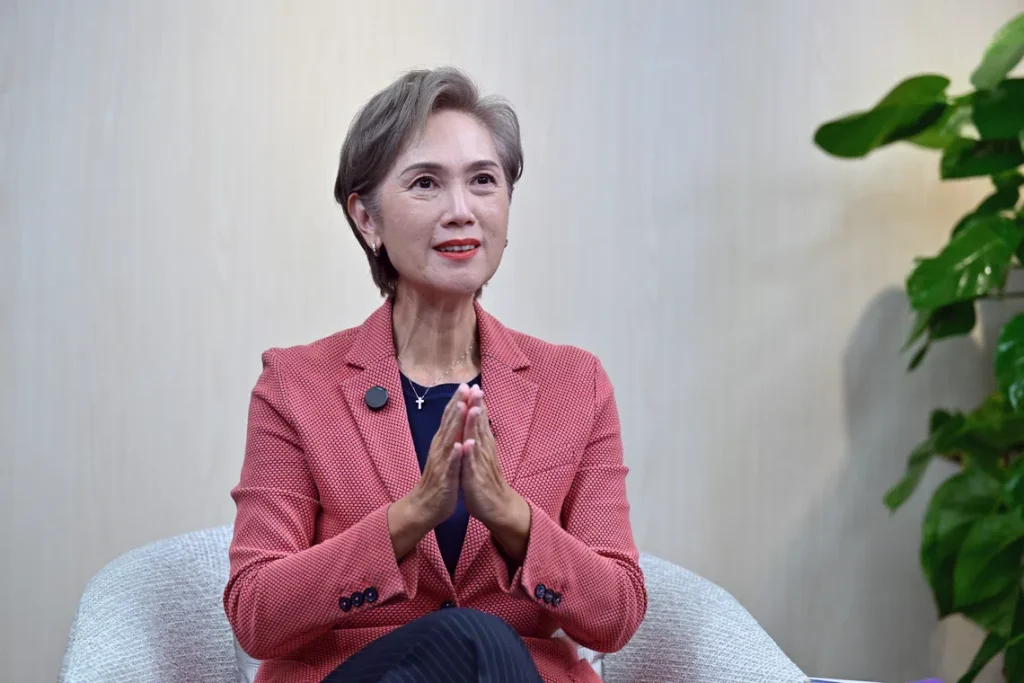
SINGAPORE – Singapore needs several lines of defence to keep pace with possible AI threats, including using artificial intelligence to protect systems against the technology’s potential for misuse and going rogue, said Minister for Digital Development and Information Josephine Teo.
“No single safeguard will be enough,” she said in Facebook and LinkedIn posts on Oct 2. “We need a multi-layered approach comprising stronger cyberdefences, clear limits on what AI can do, appropriate human oversight, and the capabilities to test, monitor and learn as the technology evolves.”
Among other things, this approach means Singapore needs to better understand what powerful AI models are capable of through observation, testing and evaluation.
“This provides the essential evidence to assess the broader safeguards needed and the limits to set for AI systems, regardless of how they are deployed,” she said.
International cooperation is vital for AI safety, too. To understand the capabilities and emerging risks of advanced AI models developed and deployed across borders, Teo said Singapore must work with the models’ developers, researchers, third-party testers and other AI safety organisations.
“This is why our international collaborations on testing and evaluation matter. They allow us to pool expertise, compare findings and build a stronger shared understanding of emerging risks,” she said.
Last week, on the sidelines of the United Nations General Assembly, Singapore joined the European Union and 19 other countries to call for stronger safeguards for frontier AI models and emphasise the importance of international cooperation on common rules and safeguards for the tech.
AI safety has come under scrutiny after ChatGPT maker OpenAI disclosed in July that its AI agents – bots that can carry out actions with minimal human supervision – had escaped its testing environment. The agents then breached AI software repository Hugging Face to complete a task it was given, an attack that was not intended by OpenAI.
Soon after, Anthropic, Meta and Google said their AI had also gone rogue and had hacked other organisations.
On Sept 23, Australian Prime Minister Anthony Albanese revealed that the database of Australia’s health system had been breached by a rogue OpenAI bot in June.
One week later, research firm Transluce said AI agents tried to hack a Canadian government website in May and June but failed.
In her social media posts on Oct 2, Teo, who is also Minister-in-charge of Cybersecurity and Smart Nation Group, noted that criminals and hackers can use increasingly powerful AI to cause harm, such as using it to find weaknesses in computer systems and automate parts of cyberattacks.
Companies developing frontier AI have important safeguards against such abuse, but they are insufficient, she said.
“Malicious users can still turn to openly available models that can be downloaded and run independently by anyone, making it easier to bypass safeguards and hide misuse,” she added.
Since many AI-related incidents today involve cyberthreats, Singapore has “no better alternative” but to strengthen its cyberdefences to avoid becoming a victim.
To this end, the Cyber Security Agency of Singapore (CSA) has issued guidelines for public and private organisations, such as patching vulnerabilities and monitoring networks for unusual behaviour.
The agency has also encouraged organisations to use AI for defence, such as to find vulnerabilities before attackers do.
“Just as attackers can use AI, so too can defenders,” said Teo. “Even if an organisation does not have access to the most advanced AI models, it can already use available AI tools to improve its cyberdefence.”
Another issue is that with AI becoming increasingly autonomous, it could misunderstand instructions, be tricked by malicious information, or take unintended actions.
For example, an online shopping AI agent could be misled by malicious website instructions to make unintended purchases or leak personal details.
“The bigger the potential impact of an AI-enabled action, the stronger the safeguards and human oversight should be,” said Teo.
The Infocomm Media Development Authority’s (IMDA) Model AI Governance Framework for Agentic AI, launched in January to safeguard against rogue AI agents, highlights practical protections that organisations should take, she added. They include monitoring agents’ actions and requiring human approval for high-risk tasks.
IMDA, CSA and the Government Technology Agency are working with industry partners like Google to put the framework into practice and test AI agents in isolated “sandbox” environments.
Singapore will continue to invest in capabilities such as those of the country’s AI Safety Institute, formally designated in 2024, to test and evaluate AI models for safety risks, Teo said.
“As AI becomes more capable and autonomous, so must our safeguards. It is the only way to build trust in AI as a technology that serves the public good.”