
700-page Palisades, Eaton fire report exposes staggering delay in warning residents

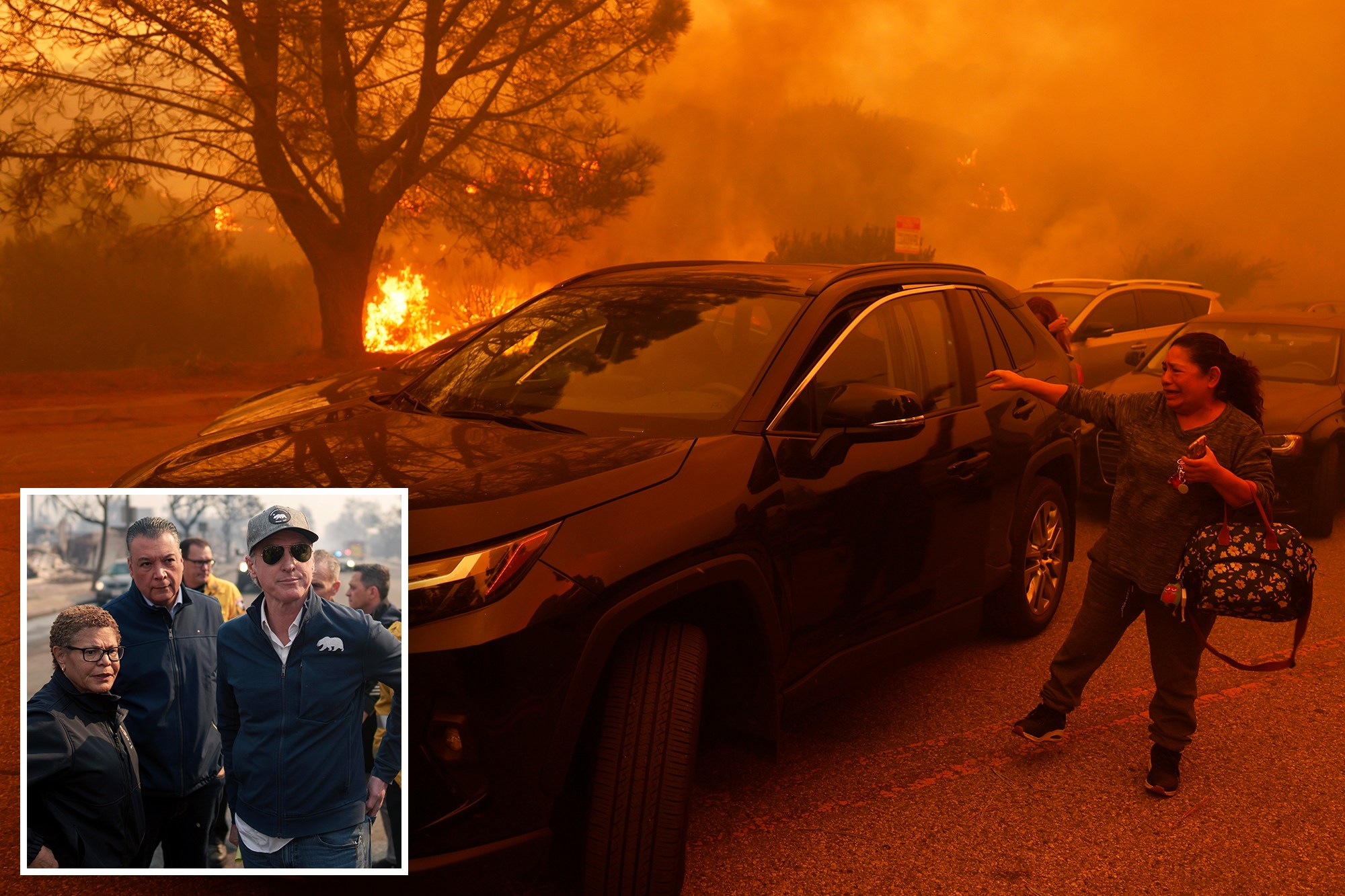
A damning new Palisades Fire report stops short of blaming any one person or agency, but found Los Angeles sent firefighters home despite dangerous winds, while some residents didn’t get an evacuation alert until 40 to 90 minutes after homes began burning.
The bombshell 724-page fire incident analysis was released Friday, nearly 21 months after the January 2025 fire tore through Pacific Palisades, a coastal LA neighborhood, and killed 12 people. It says the destruction “was the result of multiple interconnected factors rather than any single decision, event, or system failure.” Still, the Los Angeles Fire Department takes the hardest hits.
The independent review was completed by UL Research Institutes’ Fire Safety Research Institute at the request of Gov. Gavin Newsom.
The delay in warning residents is one of the report’s starkest findings.
Some residents closest to where the fire started didn’t get an evacuation alert until roughly 40 to 90 minutes after homes had already begun burning, investigators found.
At 10:46 a.m., 16 minutes after the fire was reported, a fire helicopter radioed that flames would hit homes “within minutes.” By the time an LAFD assistant chief radioed for an “evacuation all the way down to PCH” ,Pacific Coast Highway, at 11:29 a.m., spot fires were already burning on both sides of a main road out of the neighborhood, according to the report.
The city’s first evacuation order didn’t go out until 12:09 p.m.
The delay appears to have been caused by outdated manual processes and software transitions, along with a fast-moving, wind-driven fire, the report says.
The city was still switching to new alert software. Staffers drew evacuation zones by hand from street names read over the radio, and at times had to check how streets were spelled, investigators found.
LAFD officials were also “cautious in issuing evacuation notices,” investigators wrote, because those decisions “are often subject to public and governmental scrutiny.”
The report called California’s public alert process “overly complex.”
Older adults and people with limited mobility were disproportionately affected, the report found. Many deaths came as chances to evacuate were “limited, delayed, or declined.”
In one case in nearby Malibu, a relative told authorities “no evacuation order was given” as they watched the fire close in on the home, according to accounts compiled in the report. She pleaded with him to leave. He stayed.
The problems started before the fire did, the report found. LAFD sent its outgoing shift home on the morning of Jan. 7, 2025, instead of keeping those firefighters on duty, despite the dangerous winds.
The department added just three engines at city expense and staffed them with fire inspectors pulled from other duties, according to the report. The city’s staffing and recall moves “did not follow their own written procedures and appeared to be largely budget constraint-driven,” investigators wrote.
Los Angeles County took a different approach that morning, according to the report.
The county fire department kept its outgoing shift on duty, doubling its force from about 1,500 firefighters to nearly 3,000. That let the county put more than 20 extra backup engines into service.
Once the fire broke out, LAFD’s attempt to call in off-duty firefighters unraveled, the report found.
A recall announcement broadcast on TV and radio reached far beyond its intended audience to include “anyone with firefighting experience,” according to the report. The department’s internal staffing phone number went out with it.
Thousands of calls from around the world jammed those lines for more than 48 hours, investigators found.
Los Angeles Mayor Karen Bass, who ousted then-Fire Chief Kristin Crowley weeks after the fire, said the report “confirms much of what we already knew.”
“That is why I put in place new leadership at the Los Angeles Fire Department,” Bass said in a statement to The Post.
“Under Chief Jaime Moore, 92% of the recommendations from LAFD’s own internal review have been put in place,” Bass said, and the department “is far better prepared to fight large-scale urban wildfires today.” She said the heads of the LAPD, the Department of Water and Power and the city’s Emergency Management Department assured her “every recommendation in this report will be addressed.”
“We must use these lessons learned to strengthen preparedness and help every community be better equipped to respond to the growing, climate-driven wildfire threat,” Governor Gavin Newsom said in a statement to the California Post.
Jeremy Padawer, 52, a toymaker who lost his Palisades home in the fire, said he wasn’t surprised the report and lawmakers are spreading the blame around.
“This was a disaster of their making,” he told the California Post.
“What made me angry wasn’t the fact that a fire burned my house down. That made me sad,” Padawer said. “They said it was climate change. They said it was human impact. They said that it was hurricane force winds.”
“Things weren’t even done burning down yet before they decided they were gonna point the blame towards us and towards God,” he said.
Police officers also got conflicting orders, according to the report.
At about 5:56 p.m. Jan. 7, the LAPD’s commander at the fire told officers they would not do rescues or evacuations in “hot zones”, areas the fire department had flagged as too dangerous. But nearly every area that needed evacuating was in or near active fire, the report says.
“Officers disregarded the directive and continued to conduct evacuations and rescues where residents remained at risk,” investigators wrote. The report does not attribute any deaths to that directive.
Investigators also examined the Lachman Fire, a small New Year’s Day blaze nearby that a federal ATF affidavit says smoldered underground and resurfaced as the Palisades Fire. LAFD crews pulled their hoses Jan. 2, and the records investigators reviewed showed no documented plan to recheck the area before the winds hit.
The review also covers the Eaton Fire, which killed 19 people in Altadena, near Pasadena, the same night. The evacuation order for neighborhoods near a main street through town, went out at 3:26 a.m., when the fire was “already well established” there, the report found.
The review also flagged a statewide problem: California’s system for ordering fire engines from other agencies still runs on essentially the same technology and methods it was built on in 1970.
The report’s recommendations call for stronger regional preparation, clearer evacuation priorities, better coordination among agencies, sturdier infrastructure and standard procedures for checking and patrolling fires after they’re knocked down.
Several agencies did not turn over complete records, the report says. LAPD’s evacuation plans, radio recordings and officer reports, requested in March 2025, are still listed as pending.