
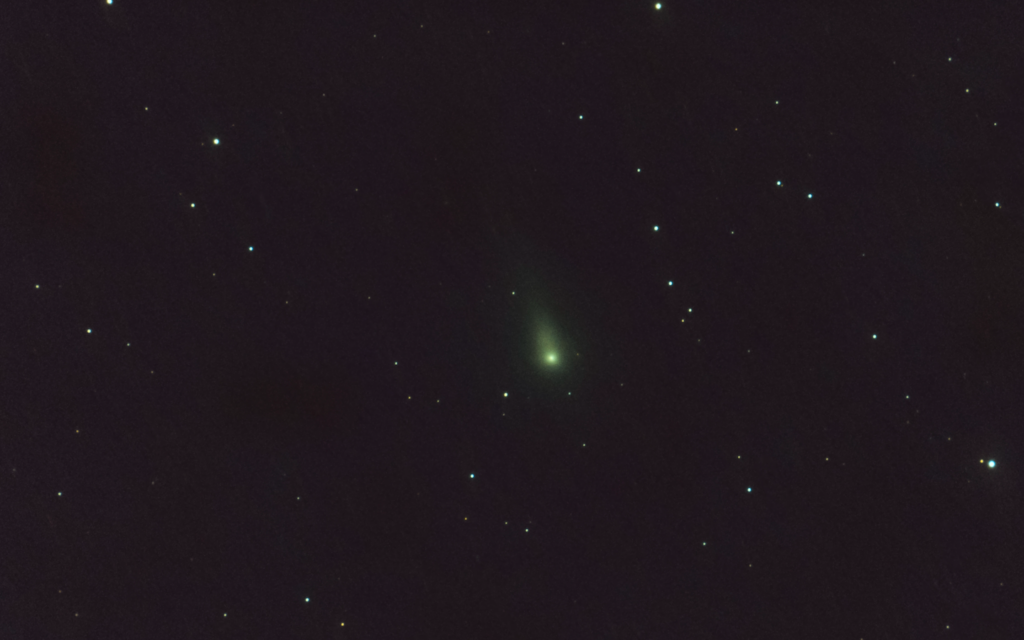
3I/ATLAS surprises scientists again as they spot something unusual around the comet « Euro Weekly News
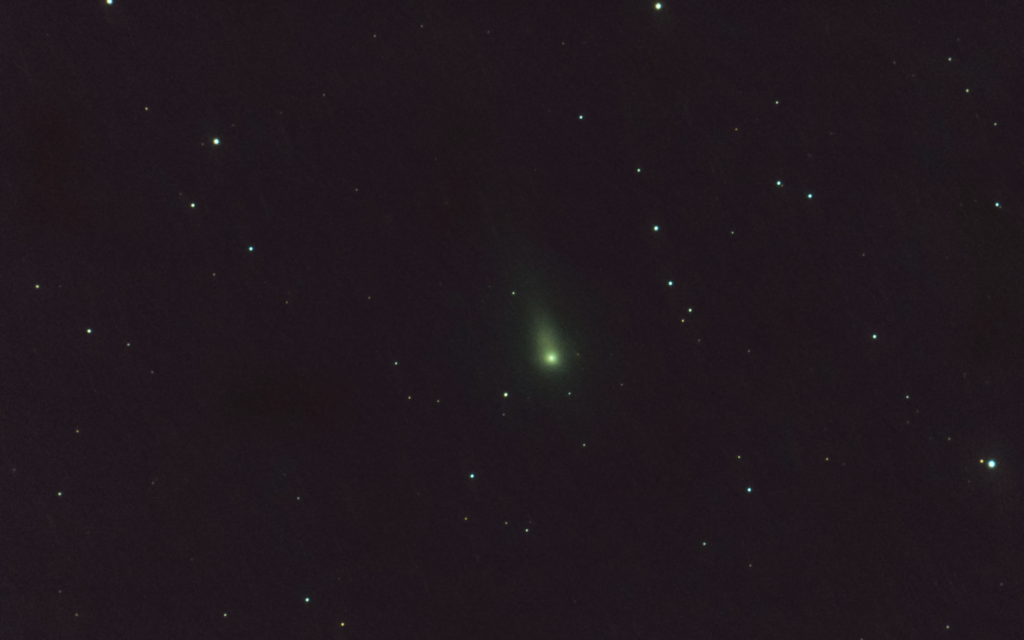
3I/ATLAS arrived from beyond the solar system, carrying material from a different stellar environment. Photo credit: Franco Tognarini/Shutterstock
Scientists studying 3I/ATLAS have uncovered another surprise around the comet that captured worldwide attention. Measurements show gas escaping around the interstellar visitor is moving more slowly than expected, raising questions about what is driving its activity.
The findings published by IRAM on September 14 draw on observations made near the comet’s closest approach to the Sun in October 2025. They also reveal chemical proportions that differ from those found in comets belonging to our Solar System. For researchers, those differences offer clues about the distant environment where 3I/ATLAS formed.
What scientists found around 3I/ATLAS
A team led by Nicolas Biver used the IRAM telescope to examine the cloud of gas and dust surrounding the comet, known as its coma. They found that some chemicals were present in different proportions from those typically measured in Solar System comets. Hydrogen cyanide was depleted, while the ratio of sulphur to carbon was particularly low.
Another unexpected result came from the gas itself. Its measured speed was slower than researchers anticipated for the comet’s activity and distance from the Sun. One possible explanation is that heavier molecules, such as carbon dioxide, are driving the outflow. Another involves icy grains releasing water as they evaporate around the comet. The observations leave both possibilities open.
Why this visitor is so valuable
Most comets astronomers study formed within our Solar System. 3I/ATLAS arrived from beyond it, carrying material from a different stellar environment. As NASA explains, it is only the third known interstellar object discovered passing through our celestial neighbourhood. Its trajectory shows that it came from outside the Solar System.
That makes every measurement valuable. Astronomers can compare its ingredients with familiar comets and investigate how the building blocks of other planetary systems might differ. For the background to its discovery and journey, read EWN’s guide to the rare comet from another star system.
A telescope in Spain uncovered another clue
Separate research announced in September used the William Herschel Telescope on La Palma to examine charged gases in the comet’s tail. According to the Isaac Newton Group of Telescopes, the measurements suggest 3I/ATLAS formed in extremely cold conditions, likely below minus 240 degrees Celsius, far from its home star.
The team identified five different ions simultaneously, providing an unusually detailed view of the tail of an interstellar object. This adds to earlier work examining its history, including the research covered in EWN’s report on why 3I/ATLAS could be an exceptionally ancient comet.
Does 3I/ATLAS pose a threat to Earth?
No. NASA says 3I/ATLAS posed no threat to Earth. Even at its closest approach, it remained around 270 million kilometres from our planet. Its scientific importance comes from its origins and composition.
As researchers continue analysing the observations, the question is whether its unusual chemistry is common among comets from other star systems, or whether this visitor is an exceptional example. Answering that will require more interstellar discoveries. For now, 3I/ATLAS is giving astronomers a rare opportunity to investigate material formed around another star.