Colorado fires back at Nebraska SCOTUS water claims
Colorado returned fire Monday in the water war with Nebraska, telling the U.S. Supreme Court that it’s actually the cornhusker state, not Colorado, that’s taking more than their fair share of the water out of the South Platte River system and robbing their neighbor of precious resources.
“We will defend the rights of Colorado water users, which is why we are asserting our own claims against Nebraska for using water that belongs to Colorado under the compact,” Attorney General Phil Weiser said, in a release accompanying a detailed SCOTUS brief in Nebraska’s lawsuit, and a request for a partial dismissal of Nebraska’s claims.
“If anything, Nebraska owes Colorado for the water that the Cornhusker State has wrongfully taken,” according to the release from Weiser’s office.
Nebraska claims it wants to build a canal into Colorado to tap the river, a right it holds under an old interstate compact, and sued Colorado for allegedly blocking efforts to buy farmland for the canal. The original suit also blames Colorado for taking too much water before the South Platte runs into Nebraska, with a bogus augmentation plan that doesn’t restore flows that Nebraska counts on.
Such interstate water disputes go directly to the Supreme Court as final arbiter of complex, decades-old negotiations.
Colorado has acknowledged since the canal plans came to light in 2021 that Nebraska has some kind of canal right under a 1923 compact. But the attorney general has also said Colorado will defend the rights of property and water rights owners during land sales or eminent domain proceedings, and Nebraska’s suit claims that is illegal interference.
Nebraska also claims that Colorado’s detailed augmentation system, in which farmers are supposed to put extra water in ponds in the off-season to trickle down and replenish the aquifer that feeds the river, does not actually restore river flows to required levels.
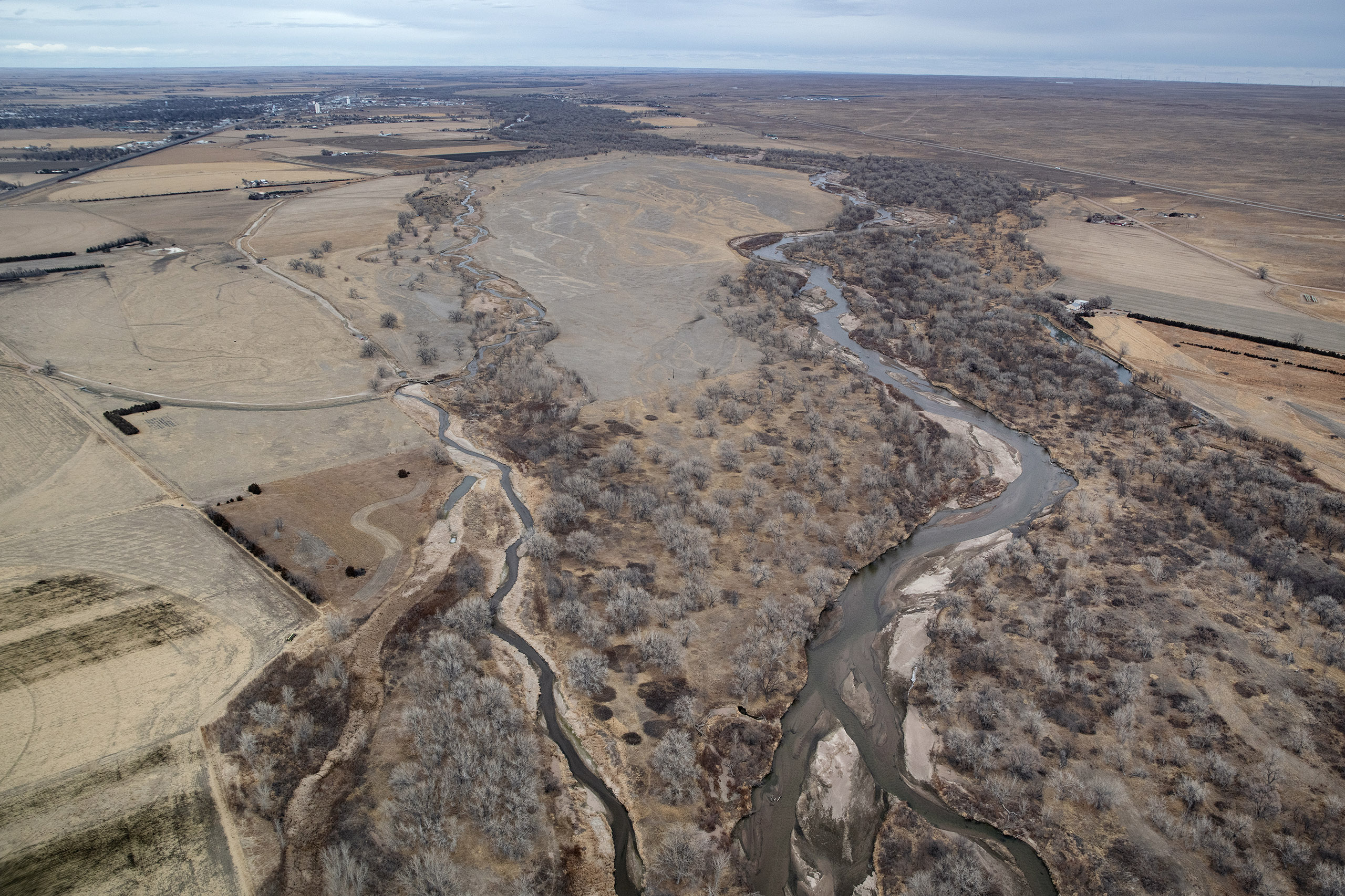
Colorado’s 58-page counterclaim filed Monday with the Supreme Court says Nebraska is mistakenly implying it has a right to a fixed number on water flow as the South Platte leaves Colorado just past Julesburg.
Not true, Weiser’s brief says. “It has a priority for some water over some Colorado water users — a place in line to water when and if available.” Nebraska’s position is that Colorado has intentionally developed South Platte Basin water as much as possible for growth and agriculture, and left very little “available.”
Colorado now counterclaims that Nebraska farmers pumping from groundwater wells are taking too much water out of Lodgepole Creek before it flows into northern Colorado and meets the South Platte.
“Nebraska has been violating its obligation to preserve the last two miles of Lodgepole Creek within Nebraska for Colorado’s use, as required,” Colorado’s counterclaim brief says. “Nebraska has also engaged in well pumping that reduces South Platte flows within Colorado. These and other actions cause damage to Colorado, both in the form of reduced flows and in the form of requiring additional curtailment of Colorado water users.”
Nebraska undertakes similar excessive pumping on its side of the border that depletes South Platte basin water before it reaches a key measurement point at the beginning of the Western Canal irrigation ditch. The reduced flows from these alleged violations, Colorado says, force the Colorado state engineer to curtail some Colorado water rights users before they should have to.
Weiser’s second filing Monday asks SCOTUS to dismiss the portion of Nebraska’s suit that claims Colorado is using an overly complex augmentation system that doesn’t work to restore water for downstream users.
“Nothing in the text (of the compact) imposes any limitations on how Colorado complies with its obligations under the compact,” the request for partial dismissal says.
The canal case is not on a fast track, as SCOTUS begins its new session. Instead of acting on appeals, SCOTUS becomes in effect the trial court, and Nebraska will next have the chance to respond to Colorado’s counterclaims, the Colorado AG’s office said.
The court will also decide whether to act on the motion to dismiss on its own, or appoint a special master with more experience in water compacts and interstate negotiations. “There likely will not be any oral arguments before the court for a while,” an AG spokesperson said.