
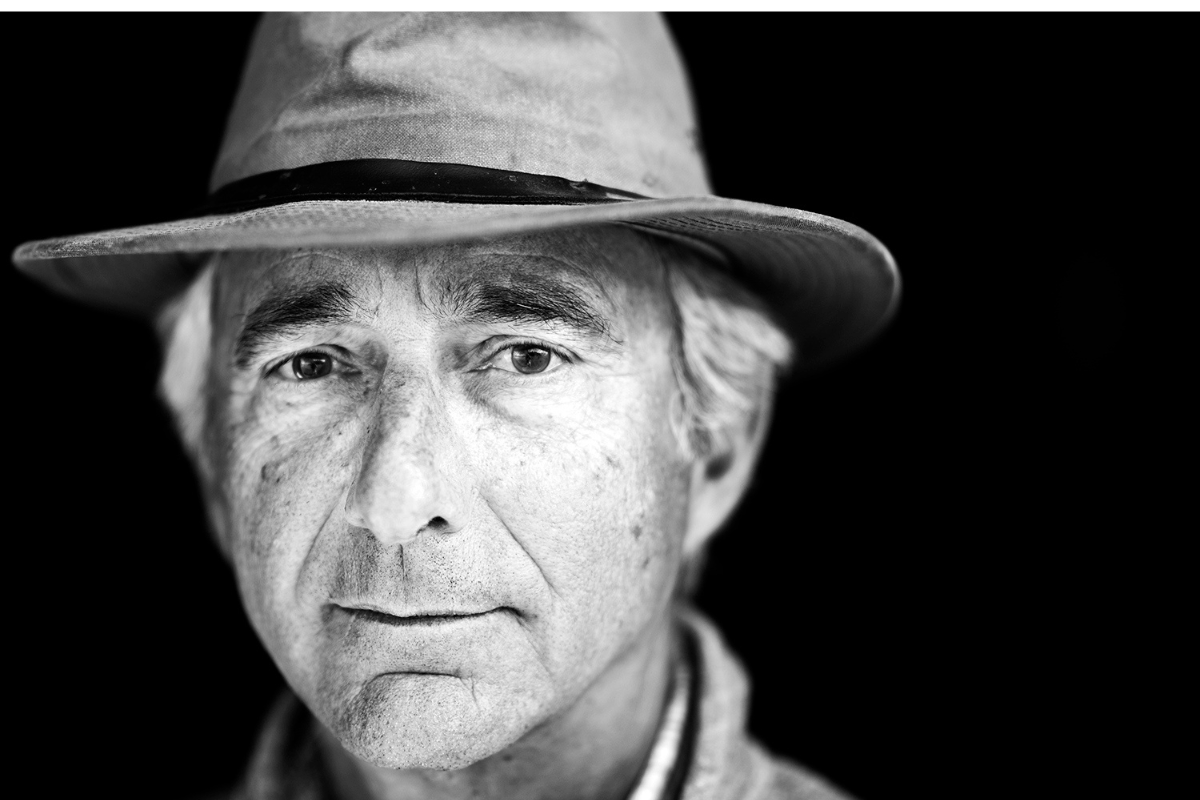
At 60, Stephen Collector finally got to tell stories behind his photos
Stephen Collector attended George Washington University and received a degree in English literature from the University of Colorado in 1973. He began a career as a freelance photographer in 1975, for the most part, self-taught. Collector freelanced for a number of magazines and periodicals, including Esquire, Men’s Journal, The New York Times, Outside and Field & Stream. A lifelong sportsman, he lives in Boulder, Colorado, with his wife, Leigh.
SunLit: Tell us this book’s backstory – what inspired you to shift gears from photography and explore writing? And how did you select the various topics?
Stephen Collector: Having an English degree I’d always wanted to write, however it wasn’t until I hit 60 that things aligned to allow me to give storytelling the attention it requires. A picture is not worth a thousand words, but to be able to blend prose with visuals allows me to give a fuller expression to my passions.
UNDERWRITTEN BY
Each week, The Colorado Sun and Colorado Humanities & Center For The Book feature an excerpt from a Colorado book and an interview with the author. Explore the SunLit archives at coloradosun.com/sunlit.
SunLit: Tell us about the excerpt titled “September Solo,” and the feelings that month in Colorado inspires – especially when you hear Sinatra’s version of “September Song”?
Collector: Living in a place with four seasons heightens my perception of time and its passage. And as a visual artist, the fall here in the West is unparalleled. So it can be a symbol for the Latin term, “tempus fugit” — time flies.
SunLit: Many authors have talked about how a sense of place can become a “character” unto itself in their writing. Throughout the book, how important are the locations you photographed and set your narrative in?
Collector: The places themselves are like characters that can take the reader out into the landscape. Place changes your character, your sense of yourself — everything.
SunLit: How does the presence of the visual part of the book influence you as a writer? Do you find yourself looking at older photos with fresh eyes when you’re writing about these locations?
“No Do-Overs in Paradise: Journeys Through Wild Places and Inner Landscapes“
Where to find it:
SunLit present new excerpts from some of the best Colorado authors that not only spin engaging narratives but also illuminate who we are as a community. Read more.
Collector: Absolutely. At times I refer to the imagery I’ve cataloged, It helps ground me into the locations about which I write. As I’ve aged my memory has suffered and photographs can summon forgotten detail.
SunLit: How do the various sporting pursuits you describe fit into your perception of the Western landscape and the importance in preserving our wild places?
Collector: I can’t emphatically enough express the importance of not only respecting the land, but doing everything in our power to protect it. The Earth is our home. It’s not something to soil. It’s essential that our air and water purity, our forests, fields, rivers, and oceans are protected so that all of the Earth’s creatures can take sanctuary.
SunLit: What do you want readers to take from this book?
Collector: The world of nature nourishes us. We can unburden our worries, anxieties, and fears here because our ego is dwarfed by the elements of water cascading over boulders, exploring canyons, hiking in the mountains. For me, nature is sanctuary, and hopefully the reader can identify with this reality.
SunLit: You divide the book by seasons. Do you have a least favorite time of year for getting outside in the American West?
Collector: Probably the winter, though my bird season lingered until the end of January. Running a pointer on a frosty day has many charms. I did most of my skiing in February and March. It’s the equinoxes, spring and fall, that holds the most appeal, not the solstices so much.
SunLit: In “September Solo” you write, “For many years, once the snow flies, I’ve had the feeling I’ve squandered the fall.” How has that feeling grown stronger with age?
Collector: In the fall the ripeness of summer transitions into a desiccation and dying process. The fall can act like a mirror to our mortality. Due to its brevity it’s something to savor and for me it triggers an impulse to live more fully in the moment. Aging is no longer just a concept (now in my 70s), but a visceral reality.
SunLit: Tell us about your next project.
Collector: I’m collaborating on a book with writer John Nizalowski titled “The Land of the Sun Father: The Southwest of Frank Waters” about the desert sage, Frank Waters. I am providing the photography and an afterword for the book.
A few more quick items
Currently on your nightstand for recreational reading: “Hunters in the Dark” by Lawrence Osborne
First book you remember really making an impression on you as a kid: Myths of the ancient Greeks and Romans
Best writing advice you’ve ever received: Pay attention to detail.
Favorite fictional literary character: Gus McCrae in “Lonesome Dove”
Literary guilty pleasure (title or genre): “Damascus Gate” by Robert Stone
Digital, print or audio – favorite medium to consume literature: Print, but also audio books
One book you’ve read multiple times: “Journey to Ixtlan” by Carlos Castañeda
Other than writing utensils, one thing you must have within reach when you write: My iTunes music
Best antidote for writer’s block: Travel
Most valuable beta reader: My son James, who has a degree in journalism