Student leaders call for CSCU reforms
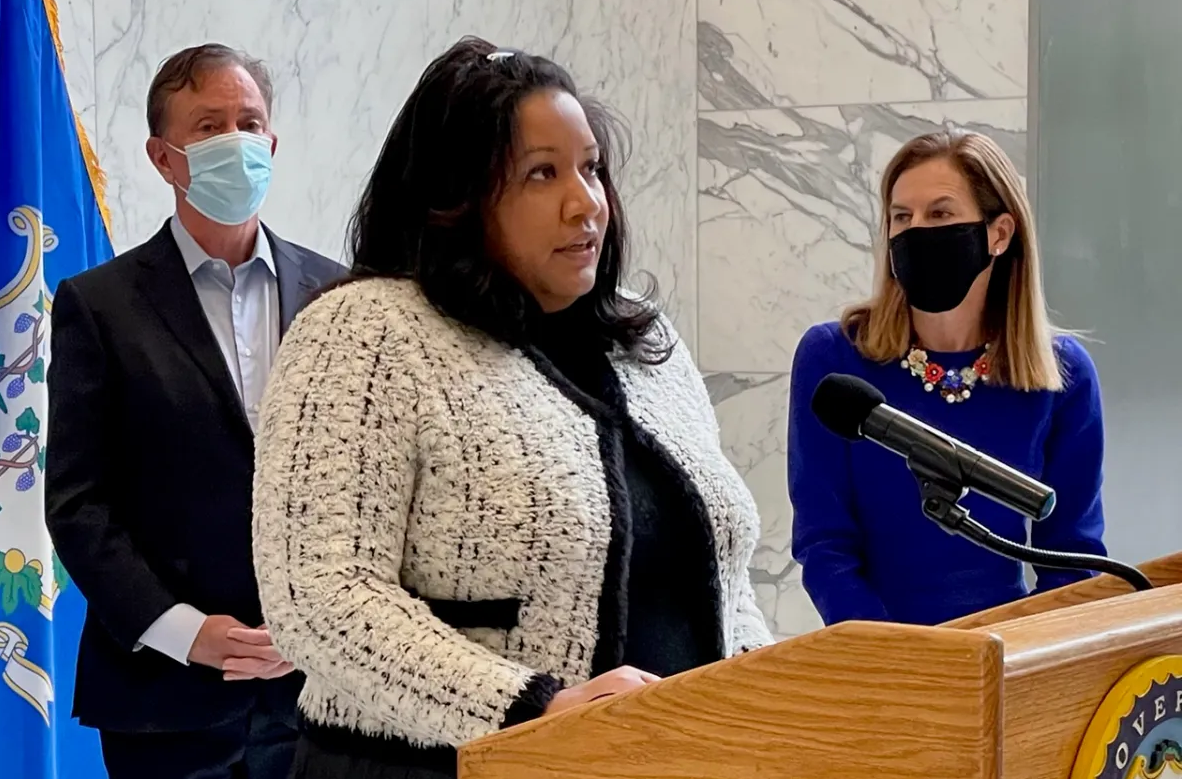
“ I think one of the things that was really important to me is the stability of our public university system,” Natalie Braswell, Interim Chancellor of the Connecticut State Colleges and University (CSCU) System said in a recent interview . “…I think it’s important to be able to come in and lend my skillset where I think I can and help to put the system back in a place where people feel that they can believe in it again, feels that there’s credibility there, feels that there’s stability there. I think that’s an important thing for the students here.”
As students ourselves, we couldn’t agree more.
For too long, CSCU has been stuck on damage control. Fire after fire has monopolized the attention of system leadership, policymakers, and the media, taking away from both the needs and successes of students and their institutions. Chancellor Braswell is correct in identifying the need. We need to have a system that is trusted, credible, and stable, not just now, but moving forward.
We have been pleased to see the Board of Regents take steps towards reform and stability, such as a recently-unveiled ‘Reforms Dashboard’ and a new Interim Chancellor chosen to be a steady hand. These are good steps for the system. The recent cases of Terrence Cheng and John Maduko have made resolutely clear that major problems must be taken seriously and tackled head-on.
As student leaders across the four state universities within the CSCU System, we hope that the system will learn from prior scandals, and will implement systemic, lasting reforms in order to prevent such circumstances from happening again. In the spirit of reform, we publicly call for the following actions to be taken by both system leadership, and state leadership, to improve the system going forward.
1. Conduct an audit of Systems Office
What is the purpose of the Systems Office?
Since the CSCU System was consolidated in 2011, the central System Office has grown tremendously. What was once a rather small office housed on a single floor of a building at CCSU has ballooned into a large bureaucracy costing more money annually than all of Charter Oak State College. Naturally, this increased size has made the question of its role and purpose even more relevant.
If the purpose of the System Office is to make the system more efficient through shared services, then recent audits put this into question, such as one which found that a centralization initiative dating back to 1998 has still not been finished, and that millions of dollars of assets have been mishandled. This does not seem like efficiency.
If the purpose of the System Office is to advocate as a unified front on behalf of all the institutions under its umbrella, this strategy does not appear to have worked either. Consolidation has tied the reputation of the broader system to the reputation of each individual campus, even when they have nothing to do with one another. Scandalous spending or failed audits in the System Office directly impact individual institutions when the System Office is responsible for their advocacy, particularly when it comes to requesting funds from the state legislature.
In light of this, we ask for two actions to be taken. The first is an in-depth audit of the System Office, conducted by the legislature, in order to find out what efficiencies the office does create compared to the funds it requires. If centralization is meant to eliminate inefficiencies, we must confirm that it does not create them. The second is for system leadership to consider what the purpose of the System Office is. If the Chancellor and the Board of Regents cannot clearly articulate what the purpose of the System Office should be, then they cannot expect anyone to look upon it positively.
What cannot be defined cannot be defended; so we ask for a clear definition and mission to be identified.
2. Re-examine the chancellor contract
The recent administration of former-Chancellor Terrence Cheng revealed concerning elements of his contract. One detail included moving expenses and a state-funding housing allowance which was not used, resulting in expensive, chauffeured rides being charged to his P-Card to fund a commute from his residence in New York. Another included even more-controversial ‘Professor Retreat Rights’, which guaranteed him a tenured position at Western which he now holds, despite leaving his role and the university mired in scandal.
Given that the Chancellor serves at the explicit pleasure of the board, we ask that the Board of Regents take a close look at the chancellor contract, particularly given that a search process remains underway. Is the $442,187 salary warranted? Should a residency requirement be implemented? Are Professor Retreat Rights appropriate? These are all elements that should be examined before a new contract is written.
3. Continue the investigation Into Zulma Toro
In the Grand River Report written after the resignation of former-Chancellor John Maduko, one recommendation was to, quote, “ avoid the actual or perceived practice of dismissing Title IX complaints because a respondent is no longer affiliated with the System, as it prevents the institution from fully addressing its obligations under Title IX to prevent future harm resulting from the same or similar circumstances, and provide appropriate remedy to the complainant”. While the departure of former CCSU President Zulma Toro was not due to equivalent Title IX complaints, we believe the same logic holds. An investigation should not be cancelled simply due to the subject’s resignation. This is a disservice not only to the truth, but to the victims, and to the university and the system. How can one implement reforms and solutions if the problem is not thoroughly investigated?
If a settlement agreement was reached preventing an investigation, that is an immensely poor decision, and such agreements should not happen moving forward. The Board of Regents already set a proper example for itself with the Grand River Report. It should continue the investigation into Pres. Toro, or at least an investigation into how people were treated and the effects it had on the university, and then respond to said investigation with any steps necessary.
4. Impeachment processes
The recent departures of former-Chancellors Cheng and Maduko, along with former Board of Regents Chair Martin Guay and former Board of Regents Vice Chair Juanita James have made one fact clear – good behavior is never guaranteed, and people in all positions in power can make bad decisions in their roles.
The only way to remove a failed official should not be to wait until enough public pressure mounts and they choose to resign. Motions of no confidence carry weight, but are unbinding and lack authority. There should be a more proactive option available. In light of this the Board of Regents, working with the state legislature as necessary, should create and outline clear impeachment protocols not only for Chancellors, but for members of the Board of Regents itself.
5. Pausing the chancellor search process
As has been acknowledged by system leadership, and as we have called for in this opinion-piece, there is significant work to be done within the CSCU System. Nine priority-reforms are currently underway. Seeing as the previous Chair of the Chancellor Search Committee was Juanita James, who has resigned, we take it that the search process has been de facto paused or hindered due to the circumstances.
Taking this into account, we request that the Board of Regents formally pause the Search Committee in order to prioritize implementing reforms and stabilizing the system. The Board of Regents specifically chose Interim Chancellor Braswell to steady the ship. She should continue in the role until the ship is steady enough to sail through a search process properly, rather than rushing through one amidst major reforms.
In an effort for public accountability, we share these statements not only with our fellow students, but with faculty, staff, and administrators across our universities, as well as with the media. The moment calls for a serious, public discussion on reform to take place, and we look forward to seeing those conversations happen and participating in them.
Amber Monzillo is President of the Student Government Association at Central Connecticut State University. Owen Ibey is President of the Student Government Association at Western Connecticut State University. Mathew Biadun is President of the Student Government Association at Eastern Connecticut State University.