Boulder County offers very short leash for data centers
Boulder County is poised to go full NIMBY — Not In My Boulder Yard — on potential data centers, with commissioners voting on draft rules that would effectively shut down the concept by sharply limiting the power they could draw.
Boulder County Commissioners on Tuesday will hear draft rules from Community Planning and Permitting that limit any new data centers to drawing 75 kilowatt of power, about the same as a marijuana growing operation.
By contrast, a controversial data center under debate in Colorado Springs may draw up to 50 megawatts of power, or 50,000 kW. Larimer County commissioners in January will vote on data center limits of 30 MW, or 30,000 kW. (A kilowatt or megawatt measures the peak demand a power user needs at a given moment; a kilowatt-hour measures energy used over time and charged for by the utility.)
Planning staff acknowledged in hearings at the Planning Commission that the proposed limits mean standalone data centers won’t be coming to Boulder County. Just a couple of racks of stacked computing servers would take up 75 kW of power, while the kind of data centers under debate elsewhere employ thousands of racks of servers over hundreds of thousands of square feet.
Like a growing portfolio of Colorado communities, Boulder County currently has a moratorium on any new data centers while it writes zoning rules and operating conditions. Staff noted that at the January vote on a moratorium, Boulder County commissioners and many members of the public who spoke “expressed support for prohibiting these uses.”
A representative public email was included in the board packet from Jaimie Epstein, whose email signature reads “get daily moon wisdom here!”:
“Data centers do not belong in Boulder County — we do not have water to spare, we do not have power to share, we do not want to bear the burden of noise, of higher energy bills, of pollution … so that the rich tech bros can get even richer,” Epstein wrote. “The rush to build data centers is going to produce the same kind of bubble (AI already is!) that resulted in the 2008 financial crisis.”
Moonbeams aside, many Boulder County leaders appear to agree. They asked the rule drafters to consider data centers’ high demands not just for electricity that can generate air pollution, but also water use, noise disturbance for neighbors, and a bleak industrial aesthetic.
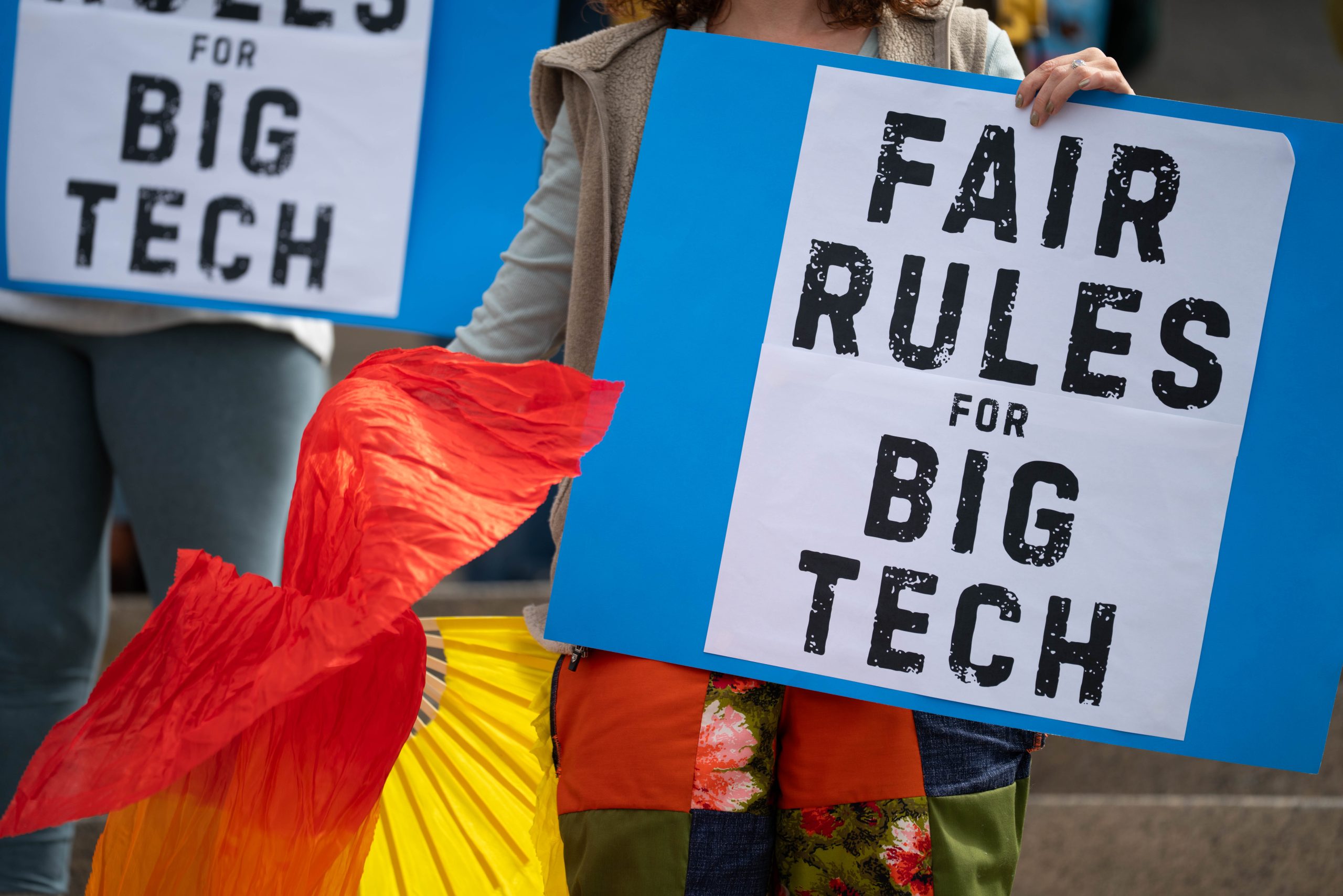
Local leaders across the country are responded to a groundswell of public anger over data center growth, and worries about the artificial intelligence systems that need bigger data centers to expand their reach. The Associated Press noted how candidates for governor and Congress in multiple states who spoke out against data centers rode a big wave into office last week.
“Data Center Watch, a project of AI security consultancy 10a Labs, said it tracked winning candidates for Congress and governorships and found the vast majority had expressed support for stronger regulation or even a moratorium,” the Associated Press article said.
Planners for the city of Boulder, however, noted that while massive data centers are out of favor, Boulder has thrived on growth in tech businesses from Google to startups that may require extensive data crunching and expansions of computing power.
The county planning staff researched the 75 kW limit to allow for adequate computing power that may be required as an incidental or internal demand within an existing business, senior planner Ethan Abner said.
“In theory, that should be allowed, as long as it’s not the principal use of your business,” Abner told the Planning Commission.
The draft rules create a new land use definition for data centers, and also fence them into existing light industrial and general industrial zoning districts.
Some of the commission members told the staff to expect more questions about the 75 kW size limitation at the county commissioners hearing. They wondered if it was legal to set power limits for data centers without applying the same standard to all potential new industries with heavy needs.
“What if I’m a new business to Boulder County, moving into an existing building and installing three racks of servers, is that permitted? Not a data center but another kind of business that needs data work,” one commissioner asked.
Those are fair questions, Abner responded, and the current draft is not yet that detailed. The County Commissioners meeting will be a hybrid in-person and online meeting with a public comment period, and begins at 1 p.m. Tuesday.