Hunters, hunted meet in a mountain blizzard
Riven
The old man says this is where our target is hiding. Somewhere in this little town. Expanse, Colorado.
Cold and snow, and the old RV’s heat can’t keep my breath from frosting.
Cold’s fine.
I’ve been colder.
I’ve never killed anyone. Boone has. The old man too. Twice each. They never asked me before—maybe ’cause I’m the only girl. But they’re asking now.
“The house is about a half mile from here,” the old man says. “Imagine that? All these years, and now we’re only a half mile away.”
UNDERWRITTEN BY
Each week, The Colorado Sun and Colorado Humanities & Center For The Book feature an excerpt from a Colorado book and an interview with the author. Explore the SunLit archives at coloradosun.com/sunlit.
Boone doesn’t say anything. He’s got sleepy hair and a face that looks peaceful, but I know what’s under my brother’s expression.
“When are we doing it?” I ask. We’re parked downtown, if you can call it that. This place is tiny. We’ve been through a lot of places like this. Towns where nobody asks questions because they don’t want questions asked back. Hiding towns. Just like we like it.
We won’t be staying after the killing.
“I suspect pretty soon,” the old man says. “If you’re ready.”
Ready?
I hadn’t really thought about that. Makes it sound like I have a say.
“You sure you don’t want to do it?”
I ask him that a lot, ever since he found out where the target was living. He always answers the same.
“Years ago, I would’ve,” he says. “Thought it should be my kill. But this death belongs to all three of us now. And I need to make sure you can do it before I go.”
Boone stirs, tense for the first time. “You’re not going anywhere, Coyote.”
My father doesn’t like us calling him Dad. He says that’s too human. He likes Coyote. Sometimes I call him that. But in my head, he’s the old man. He’d hate that. Maybe that’s why I keep doing it.
Not that fifty-seven is all that old. But he’s always looked like someone in the middle of dying. Especially now.
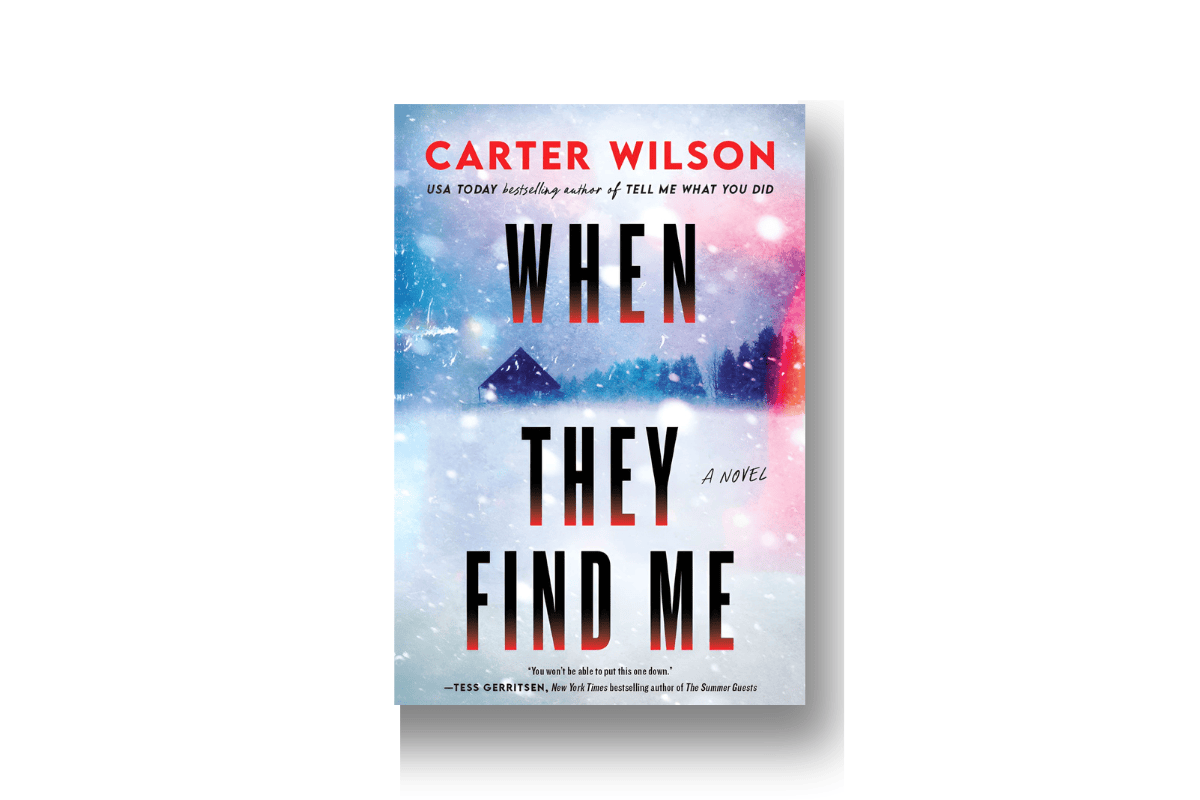
“When They Find Me”
>> READ AN INTERVIEW WITH THE AUTHOR
Where to find it:
SunLit present new excerpts from some of the best Colorado authors that not only spin engaging narratives but also illuminate who we are as a community. Read more.
“You know I am,” the old man says to Boone.
“A doctor could help,” Boone replies. We both know what the old man will say to this.
“Wild animals don’t get doctors. No dignity in fighting nature.”
The old man’s down weight—at least ten pounds he didn’t have to spare. Not a skeleton yet, but he’s headed there. I try not to think about it, but I do. I picture him dead all the time. Lying still. Last words spent. No more talk about animal glory, about human waste, about our past, or what’s supposed to happen once it’s just Boone and me.
I don’t want him gone. But I wouldn’t mind less talking.
“You need time, Riven?”
I nod. Not because I actually need time but because I don’t know how to say no.
Killing is supposed to be instinctive. Boone and the old man made it sound like breathing. But my hands won’t stop shaking, and my stomach is sour. I’m not scared. I’m just…not ready.
I want to be ready. I have to be ready. For him. For Boone. For me.
“Maybe we can get something to eat,” I say.
“Animals kill on empty stomachs,” the old man says. Quick, like he’s been waiting to say it. “That’s why they kill.”
He says stuff like that a lot.
“Please, Coyote.”
He considers, then nods. “Fine. We’ll get you some food.”
Just the idea of food hits something in me. I barely touched dinner last night, but now, on the day itself, I’m starving.
And that makes me wonder:
Does prey ever know when it’s had its last meal?
Annie
Expanse, Colorado
December 23
9:48 a.m.
The house creaks like it’s trying to tell me something.
I check the front window. No one’s outside. I open the front door, peer outside. The morning is gray, heavy.
Silence.
It hasn’t started yet, but I can smell the snow coming.
I close the door, remind myself I’m fine. We’re fine. But the paranoia always creeps up on the anniversary.
Four years ago today, I shot Jesse Lynch in the face and watched part of his skull fly off.
Every year since, I’ve waited for the knock on the door.
I’m still waiting.
“Mom?”
I spin around, startled. Coral already has her winter coat and boots on.
“Hey, sweetie.”
“You okay?”
I sigh. “You know.”
“Yeah, I know.” Then she holds up her pair of boots. “These are too small.”
“I just got you those last year.”
She gives me a duh look. “And it’ll probably happen again next year. It’s called human growth.”
Was I that lippy at twelve? Probably.
“We’ll stop at Ace Hardware next time we’re in Carbondale.”
“They won’t have anything good. There’re some purple ones on Amazon that are amazing. And super cheap.”
I turn away from her and stare back at the Advent calendar, not wanting to have this discussion again.
“No Amazon,” I say.
“But why-y-y-y-y?” The word comes out like she’s trying to start a cold engine.
“You know why.”
I can never assume the man I killed is done looking for us from beyond the grave. He was part of a network with reach. That’s why I say no to Amazon. No to Walmart. Not even Etsy. I don’t want to be on anyone’s lists. No one needs the address 1235 Cedarbrook Lane associated with the names Annie and Coral Wolfe.
Not that they’re our real names.
But still.
“When are you going to let me do normal things?”
I should just tape this conversation and play it every morning. It would be easier than rehashing it out loud like we’re in a play that never ends. Coral knows why, but that never stops her from asking.
“You have a phone.”
“Yeah, an old school burner phone.”
“Still works, doesn’t it?”
“I hate it.”
“You don’t need a smartphone,” I say.
“You have one.”
“Only because I have to. I need it for the cameras and the security system.”
I keep location sharing off at all times. Nothing with GPS tracking in this house. No way.
She absorbs this.
“It’s just not normal.”
This is a new complaint. I turn back to her.
“This is what it takes. This is how we survive.”
She lets out a dramatic sigh. “I don’t want to survive. I want to live.”
Here we go. I could tell her she has no idea, not really, about what would happen if they found us.
Sometimes I picture it in flashes. A knock on the door. The thud of boots on hardwood. Coral screaming. Hands on my shoulders, knees in my back, a gun pressed into the base of my skull. Or worse—silence. The kind of silence where they’ve already done what they came to do, and only our ghosts are left.
“I don’t want to be normal,” I tell her. “Normal is boring.” I know this could go on for a while, so I shift the conversation. “Your boots will make it another week. Now let’s get going before the snow gets worse.”
I’m tempted to give in because yesterday was another anniversary. December 22. The day my husband—Coral’s father—was gunned down in front of us.
Technically, it happened just after midnight, so really the 23rd. But I give my husband his own day to be honored, not sharing the day I hunted down and killed the man who ordered Gabriel’s death.
Coral was only eight when it happened, but she remembers. We lit candles in Gabriel’s honor last night, told some stories, cried together. And I want to break my own rules just to put a smile on her face. I want to get her those boots from Amazon. But there are people still out there, looking for us, and a temporary smile is not worth the price of a final look of surprise and horror.
We both leave the kitchen, Coral huffing back to her room. We each have our own bedroom, but our house is small, and from the front door I can hear her talking to herself. More likely she’s talking to me, throwing in a few choice words in her one-sided conversation.
I push the thoughts away, look at the Christmas tree. We cut it down ourselves, about five hundred feet from the house. It’s barely five feet tall, perfectly imperfect, draped in lights, and showcasing the few ornaments we own. The gifts under the tree are all for Coral. Harley—our four-year-old golden retriever—gets a stocking with a few treats in it.
My eye catches the small, wrapped box closest to the fireplace. It’s one of Coral’s necklaces that I steal away and regift every year. A tradition.
Harley is curled up at the door, lifting one eyebrow to ask me if we’re going to go somewhere fun. Coral named her after the comic-book character Harley Quinn, because Harley Quinn “kicks ass.” I got Harley after fleeing here from Miami, and this is the least ass-kicking dog I’ve ever known. But she’s good at letting me know if she hears something outside of our remote mountain home. That’s the important thing.
“Come on, girl,” I tell her.
Harley bounces to her feet, and after wrapping myself in my black Patagonia coat, I unlock and open the front door. Before walking outside, I head back through the living room and turn on the Bose radio sitting on the hearth. Tune it to that AM station playing commercial-free holiday songs for three days straight. It’ll be nice to come home to Christmas music playing, and it might just elevate my tween’s mood.
Outside, the familiar sting of winter bites my face. The forecast calls for as much as two feet of snow, starting in about an hour. I need to run into town for some last-minute things for Christmas, and Coral needs to come with me.
She isn’t allowed to be alone, ever. It’s why she’s homeschooled. And now that she’s twelve, it’s starting to be a problem.
“Let’s go,” I shout back into the house. Moments later, she emerges, breezing past me and climbing into the 4Runner. I follow, opening the back door for Harley before climbing into the driver’s seat. I look up through the window and past the mountain peaks, spying the milky, unformed clouds pregnant with snow. I’ll park in the garage after we get back.
I ease the SUV down my long drive and onto Cedarbrook Lane, the road flanked by evergreens. I flick my gaze to the long driveway of John Highland, my nearest neighbor. Can’t even see his house from here, just like mine. It’s how most of us like it here in the tiny mountain town of Expanse. Hidden behind trees, out of view. Not wanting to be found.
“It’s the day before the day before Christmas,” I say, taking a shot at reconciliation. “That means Die Hard night.”
“Okay.”
Her response is as frosty as the air inside the car. I almost tell her to lighten up and get in the spirit, but I hold my tongue. We lost our Christmas spirit four years ago, and all the holiday movies in the world can’t force it back. Not even Die Hard.
It’s less than a five-minute drive to downtown, just enough time for my brain to loop over and over the image of me placing three bullets into Jesse Lynch in a Miami parking garage. The deafening crack of the gunshots. Watching his skull separate, some of it flying clean off his head. Blood on the inside window of his Escalade, sprayed everywhere.
Was I happy to kill him?
No.
There was nothing happy about that day.
Just the cold-steel satisfaction of revenge.
Carter Wilson is the USA Today and Publishers Weekly bestselling author of eleven standalone psychological thrillers, including “Tell Me What You Did,” a national monthly pick by Barnes & Noble. His work has received starred reviews from major trade publications and has been optioned for film and television. He is the host of the podcast “Making It Up” and the founder of Unbound Writer, where he works with writers through coaching, retreats in the U.S. and France, and live workshops. A sought-after speaker, interviewer, and moderator, he lives in Erie, Colorado.