EU funds to Spain railways fraud investigation « Euro Weekly News

Spain’s railway network is facing renewed scrutiny after the European Public Prosecutor’s Office (EPPO) opened a second investigation into possible fraud involving European Union funding allocated to the Madrid-Seville high-speed railway.
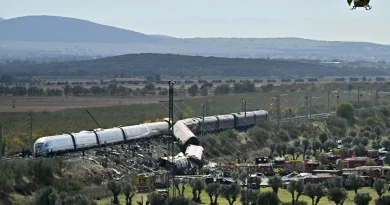
Announced on Friday, November 6, the investigation follows the October 28 disaster near Urda, Toledo, in which 69 people died. It comes just months after a separate European investigation was launched following January’s fatal accident at Adamuz, Cordoba Province, which claimed 46 lives.
EU investigators visit three Spanish institutions
The EPPO confirmed that investigative measures were being carried out at the offices of ADIF, Spain’s railway infrastructure manager, the State Railway Safety Agency (AESF) and the country’s Court of Auditors. The investigation is being supported by the Guardia Civil’s Central Operational Unit (UCO) and was opened on the European prosecutor’s own initiative.
Investigators are examining possible fraud involving European funds allocated to the renovation and upgrading of safety, signalling and communications systems on the Madrid-Seville high-speed line.
The European Public Prosecutor’s Office announcement of the second investigation confirms that another investigation concerning the same railway corridor was opened in March 2026.
In that earlier case, prosecutors examined possible fraud involving European funding earmarked for railway maintenance near Adamuz. EWN previously reported on the European criminal investigation into alleged misuse of railway maintenance funds.The EPPO has not released any more details about the latest investigation, including the specific contracts or individuals involved.
More than €110 million in European funding
Questions over how railway investment has been managed are particularly important given the scale of European funding allocated to the route. Quite simply, an important question for the public is whether the money allocated to improving the railway has delivered the promised work.
In June 2024, the European Commission approved more than €110 million from the European Regional Development Fund (ERDF) to modernise the Madrid-Seville railway. The funding was intended to improve 435.2 kilometres of the 471-kilometre route, with works including rail replacement, improvements to bridges and tunnels, and drainage upgrades.
The European Commission’s announcement of the €110 million railway investment outlined the project’s objectives, including improving reliability and bringing infrastructure into line with European standards.
However, the Commission’s €110 million grant has not been identified by the EPPO as the specific amount involved in its latest investigation.
Two disasters, one railway corridor
The two accidents have raised serious questions about the condition and management of Spain’s high-speed railway infrastructure. However, the European investigations into possible misuse of funds are separate from the judicial investigations examining the causes of the crashes and any potential criminal responsibility.
No finding of fraud has been made yet, and the opening of an investigation does not establish that European money was misappropriated or that any financial irregularity contributed to either disaster.
For passengers and visitors who regularly use Spain’s high-speed trains, the questions surrounding railway investment and safety are likely to attract considerable attention.
With two European investigations now concerning the same corridor already underway, attention will turn to whether the money allocated to improving the railway delivered the work and safety improvements promised, or if it went elsewhere.