AG’s office wants Entergy to dig deeper in saving money for Arkansas ratepayers
Entergy has reduced what it wants out of a rate increase request from $44.6 million to zero, but the state Attorney General’s office wants Entergy to give more.
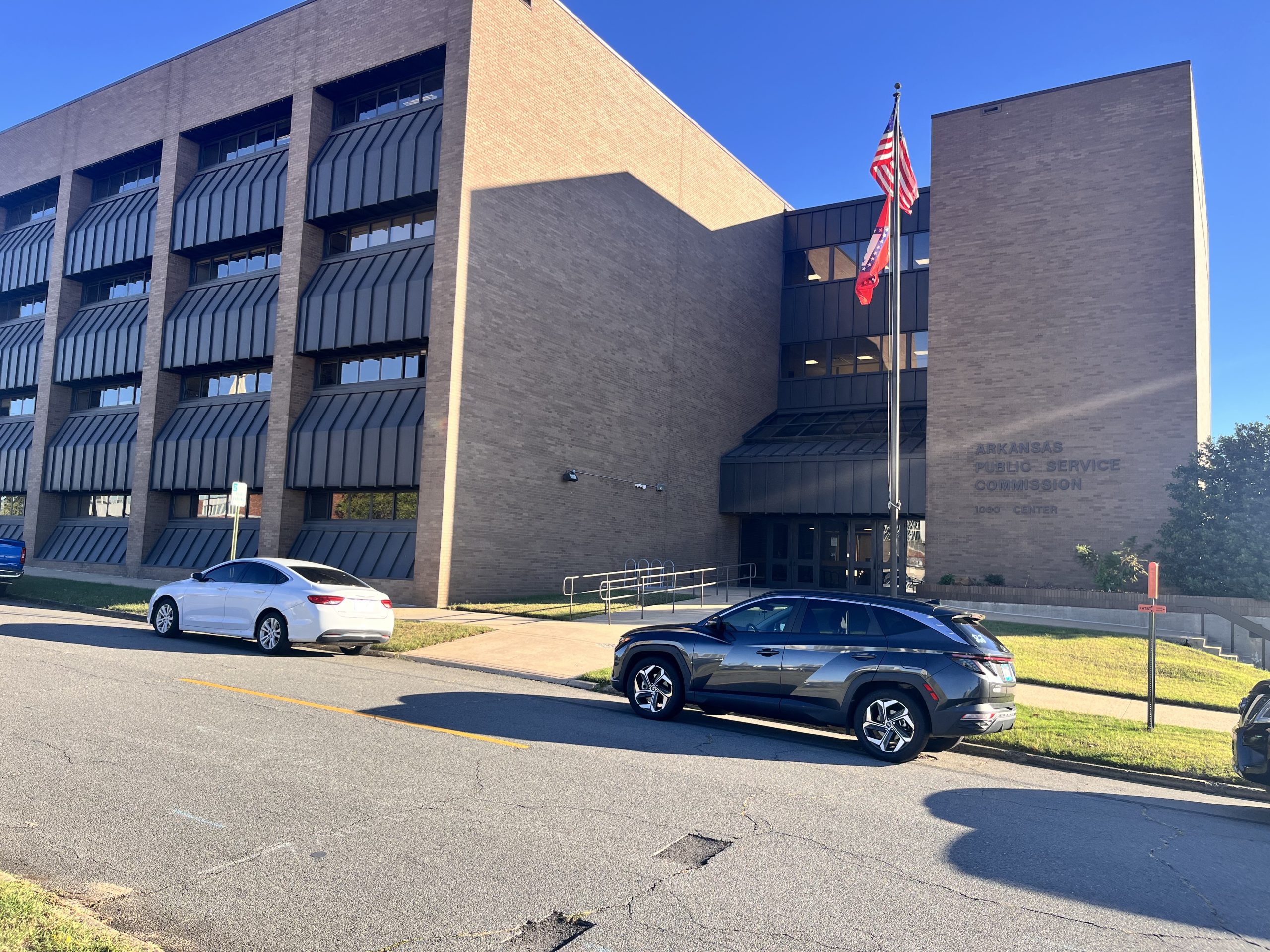
Testimony in front of the state Public Service Commission started Wednesday in the first rate case Entergy has had in 10 years. In Arkansas, a rate case is a quasi-judicial proceeding in which a utility company asks the commission to approve a change in what it charges customers.
After Entergy filed the particulars of its request this summer, about a dozen interveners lined up to comment on or oppose certain elements of the proposal. The interveners include Walmart, hospital and higher education interests, solar energy developers and trade groups that represent large electricity users, among others, all of whom have a keen interest in how much Entergy charges for electricity.
In the months since the process started, Entergy has been able to work with some of the interveners and create a proposed settlement it would like the commission to approve.
But that settlement is far from a unanimous agreement among all parties, and one of the biggest anti-settlement interveners, the Attorney General’s office, asked the commission in no uncertain terms on Wednesday to reject it.
Doralee Chandler, deputy attorney general, said Entergy started its rate increase request asking for an increase in revenue of $44.6 million. Then, during negotiations, Entergy dropped that request to $29.2 million, Chandler said. After more negotiations, Entergy reduced its request to zero.
“But given current economic conditions, even a zero rate increase is a concern for residential customers, farmers, businesses and their customers and other ratepayers,” Chandler said.
She said Entergy is quick to brag that its rates are less than those in other states, but Chandler said that assessment does not take into account the lower median income of Arkansas residents.
She said the findings of the Attorney General’s office showed that “not only was a rate increase inappropriate, resulting in unjust and unreasonable rates, but that a rate decrease was warranted.”
The Attorney General’s office said Entergy had amassed a revenue surplus of $60 million – an amount that Arkansans can’t afford and shouldn’t have to pay, Chandler told the commission. She also noted the additional revenue Entergy has been getting. Under a special rate plan, Entergy gets a near-automatic rate increase every year of 4%. Chandler said that had increased rates 42.2% for all classes of customers over the past 10 years and had “pushed ratepayers to the brink.”
She also said the Generating Arkansas Jobs Act was also plying Entergy with additional cash. The act, largely written by Entergy and passed by the Legislature in 2025, allows Entergy to start charging customers for electricity generating projects before they are completed. Before GAJA took effect, customers weren’t charged until the projects were finished.
“This is why this case is so important,” Chandler said. “A zero percent increase is unjustified, and that’s why the Attorney General urges the commission to reject this settlement.”
She concluded by saying that the fact the Attorney General’s office and other interveners have not signed onto the proposed settlement “should indicate to this commission that this is a bad deal for Arkansas ratepayers.”
In a one-two punch to Entergy, the next speaker, addressing the packed commission chambers during a public speaking segment, was Joe Mencer, a farmer from Lake Village.
Mencer is the president of the Agricultural Council of Arkansas, a trade group that represents row crop farmers. He said the state has lost hundreds of family owned farms in the past few years – the state has led the country in farm bankruptcies for going on two years in a row – because of a variety of economic headwinds – inflation, higher input costs and lower crop prices – and that even two members of his board had “stepped back” from farming.
“One just decided to sell his land and walk away,” Mencer said, noting that farmers have no ability to pass along higher costs to consumers.
Mencer thanked Chandler for her remarks, saying he agreed with everything she said, but also adding that the yearly increase from Entergy had raised his energy costs more than 50% since 2016 and that GAJA had added thousands of dollars to his bills. A friend, he said, told him that GAJA had cost him $47,000.
Mencer then compared his plight to that of data centers, which get secret deals from Entergy while he and other farmers not only get nothing from the utility, but are left with substandard electrical equipment to contend with.
He said he had to pay thousands of dollars to get electricity across part of his farmland but that Entergy has failed to make repairs to broken poles and electric lines that are so low to the ground that he can’t get his equipment in those areas.
Four farmers spoke at a recent legislative committee meeting on energy, recounting their own tales of woe in trying to keep up with the many thousands of dollars they now have to pay Entergy because of GAJA. Entergy has said GAJA saves customers money in the long run, which can be many years, but lawmakers seem more and more to be taking a dim view of GAJA, possibly with an eye toward amending or repealing it.
Jana K. Law, an attorney for Entergy, defended the proposed zero-dollar settlement, saying that some of the rate structures approved in the past have now been called into question. A reduction in revenue, she said, would impact the company’s ability to provide electricity to a wide range of customers.
“We are not asking the commission to approve rates that are higher than necessary,” she said. “We are asking the commission to approve rates that are just and reasonable and balance the interests of all customers.”
The hearing continues on Thursday.
Source link