Colorado losing in fight to clean up record number of “orphan” oil and gas wells
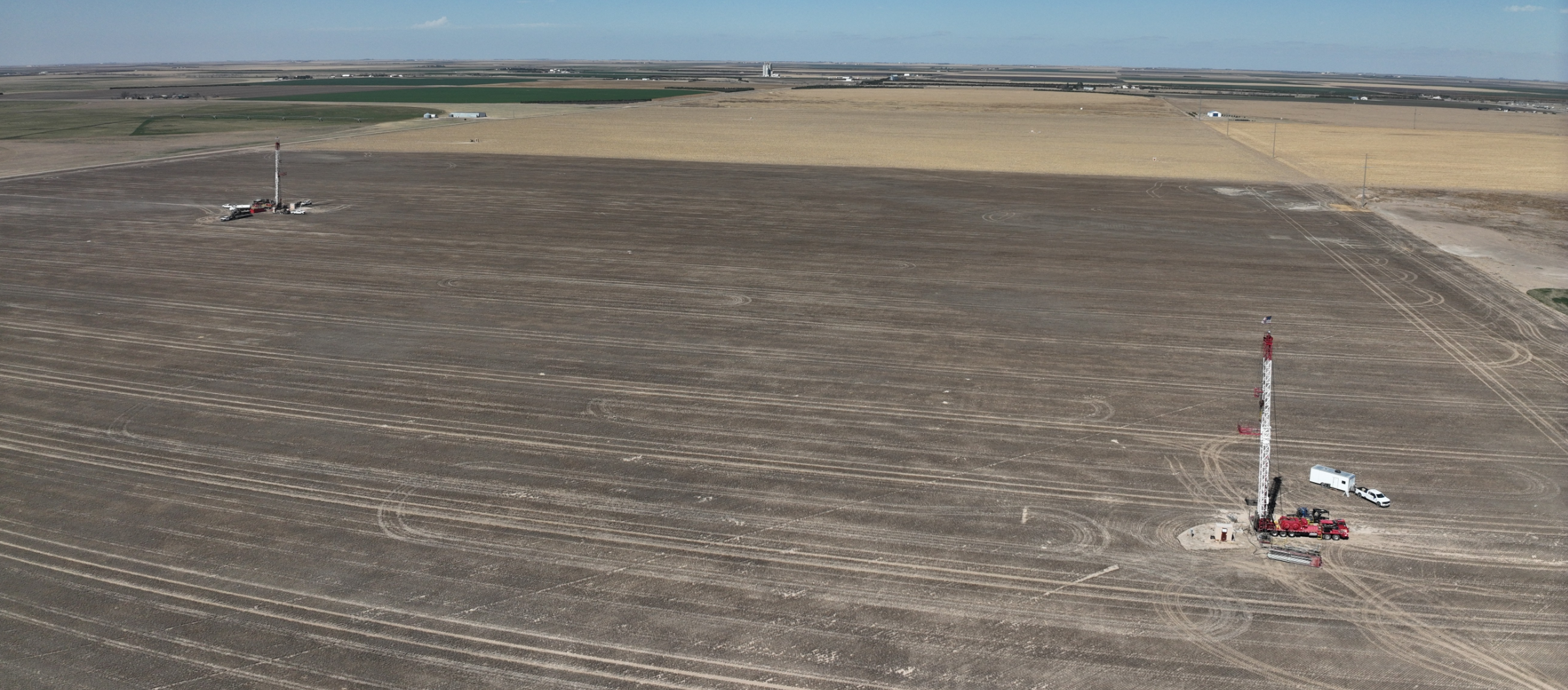
A record 161 orphan oil and gas wells were plugged in Colorado last year, but wells are being added faster than they can be sealed and state and local officials are worried about an impending surge in abandoned sites.
“The number of orphan wells stands today at 994 … the largest number of orphan wells we’ve ever had,” Jeffrey Moore, manager of Aurora’s energy and environment division, told the state commission overseeing orphan well funding in September.
“On average we’ve added 300 orphan wells per year over the past three years,” Moore said. So, while plugging jumped 69% year-over-year to 161 for fiscal 2026, the program is getting almost twice the number of new abandoned wells annually.
There are another 1,215 wells that have already been identified as likely candidates for being orphaned, according to Colorado Energy and Carbon Management Commission, or ECMC, which regulates the industry and runs the orphan well program.
“We are losing ground,” Moore said. “It is going to take more funding.”
In addition to plugging the 161 wells the program also decommissioned underground lines and equipment at 284 sites, started reclamation work at 156 sites and did weed management at 300 sites.
In 2022, legislation created the Orphan Well Mitigation Enterprise Board to set fees on operating wells in the state to raise money for the orphan well program.
In September, the board raised the annual fees 27% for high-producing wells — those yielding more than the equivalent of 15 barrels of oil and gas a day — to $285 per well. The fee for lower producing wells was raised 24% to $155.
“Does that generate sufficient income to do the required work?” Jeff Robbins, chairman of the ECMC and the enterprise board, asked.
“We do have one large operator who could potentially double out inventory in the next 12 to 18 months, so we need to be ready for that,” Dave Andrews, manager of the orphan well program, said.
The operator is the K.P. Kauffman Company, or KPK, which owns about 1,200 mainly low-producing or idle wells. The ECMC estimates 1,041 of the wells could soon be in the orphan well program.
State oil and gas regulators have been in a running battle with the company for more than five years. The ECMC has ordered KPK wells closed after it failed to clean up spills. The commission has required the company to post $133 million to guarantee the closure of its wells and fined KPK nearly $2 million.
KPK has filed lawsuits against each of the ECMC actions and has five cases pending in state and federal court. The company argues the state actions will put it out of business.
“These cases challenge a pattern of alleged constitutional and procedural violations, including denial of due process, selective prosecution and enforcement, inconsistent and discriminatory application of regulatory rules,” Chris McGowne, KPK’s attorney, said in a statement.
Initial decisions have gone against the operator. In one case the district court upheld ECMC’s order and KPK appealed. In another case both the district and appeals court upheld the commission order and KPK is appealing to the state Supreme Court.
The other cases are in early stages of their proceedings.
“KPK will vigorously pursue these cases to protect its business,” McGowne said.
Bankruptcies swell orphan well inventory
If KPK wells are orphaned, that could include 80 in Adams County, which already has 310 orphan wells, the second largest number in the state after Rio Blanco County, according to Gregory Dean, Adams County oil and gas administrator.
In 2026, Adams County was the top county for orphan well funding with $6.2 million for 50 projects. La Plata County was second with $2.6 million in orphan well spending, followed by Jackson County at $2.4 million.
Still, Dean said nearly two-thirds of the work during the past three years was just plugging wells leaving 100 miles of orphan flow lines and thousands of pieces of equipment in place “all capable of causing adverse impacts.”
About 225 of the orphan wells in Adams County came in a block in 2018 when a pipeline gathering system was shutdown stranding low-producing wells.
A similar large block of wells fell into the orphan well program in 2024 when Omimex Petroleum, Inc., went bankrupt, leaving 339 wells in Phillips and Yuma counties. WME Yates LLC also went out of business that year, dumping 212 wells in Phillips and Sedgwick counties.
Phillips and Sedgewick counties received $1.1 million in orphan well funds in 2026 for a range of actions from weed management to methane monitoring to shutting in wells.
Yuma County saw $1.5 million in orphan well activity in 2026, including plugging, sampling and analysis and decommissioning production equipment.
Adams County oil and gas inspectors have found more than 100 spills, leaks and releases coming from orphan well heads, tanks and equipment, including some spewing large volumes of methane.
A Colorado State University study found three wells in the county with massive methane emissions, the largest emitting 75 kilograms or 165 pounds of methane per hour, 142% more than the average for unplugged wells in the state.
Dean said that in addition to the KPK wells the county is at risk of becoming home to more than 100 additional orphan wells.
“The county is deeply concerned the program may become under-resourced sooner rather than later,” Dean said.
In 2026, the orphan well program spent a total of $26.5 million in 29 counties, with nearly $19 million in federal funds from the Biden administration’s 2022 Inflation Reduction Act. Over the next five years, Colorado could be in line for another $40 million in federal aid.
ECMC has a second program to reimburse operators for plugging their marginal wells using a combination of federal and state funds, generated by a separate $115 per well fee. In 2026, 76 wells were plugged under this program.
Federal funds running low
After federal funds run out in 2030, the orphan well program will have to depend upon the mitigation fees and the bonds seized from defunct operators.
To get a drilling permit, an operator has to put up a bond for plugging and remediation, but historically these have been far less than the $100,000 state average for plugging and remediating a site.
For example, Omimex had $205,000 in bonds about $604 per well. KPK has about $1.1 million in bonds for about 1,200 wells, according to ECMC records. In 2022, the commission adopted new financial assurance rules under which KPK needs $133 million in financial guarantees.
In 2026, bonds claimed by the ECMC made up just $949,000 of the program’s money.
The orphan well mitigation enterprise fund’s goal is to generate $10 million a year, but in 2026 it produced a little under $6.3 million.
The main reason was that there are fewer and fewer operating wells in Colorado to charge the per-well fee.
In 2022 there were 45,000 operating wells in the state, by 2026 that had dropped to 37,360 and the ECMC projects the well count will dip to 31,961 in 2031.
The decline in operating wells led to the increase in the per-well fees, but as federal funding runs out the total financing of the program, which aims to spend $30 million a year, will fall on the fees and bonds.
Matthew Blackmon, ECMC’s finance manager, suggested that the mitigation board consider linking future increases to the consumer price index, which would generate an estimated $26.8 million in 2031, or $838 per well, even as the number of wells declines.
“We’re starting to see a cooling off in folks that are interested in spending capital in the state, and we’ve seen a decline in the number of permits that are being submitted,” said Lynn Granger, CEO of the Colorado Oil and Gas Association, an industry trade group.
A prime reason, Granger said, is the extensive regulations that have been adopted over several years. “We’re at a crossroads,” she said. “We have the strictest regulations in the world, we need to let that work and let operators meet those standards.”
Still, Granger said there are adequate resources to do a bigger orphan well program. “The number of plugged wells could be increased,” she said. “We would like to see more of a robust program … so we don’t have a big number of (orphan) wells sitting there.”