Shahrbanoo Sadat Hits Back at Film Funding Discrimination
A lack of funding, and ignorance in the institutions that control it, keeps women at an inherent disadvantage in the film industry, Afghan director Shahrbanoo Sadat said at a Tokyo International Film Festival talk on the future of women’s cinema.
“The discrimination did not start at the festival, but it started at the development level,” said Sadat, who sat on this year’s Venice competition jury, reflecting on the lackluster ratio of films by women selected for competition.
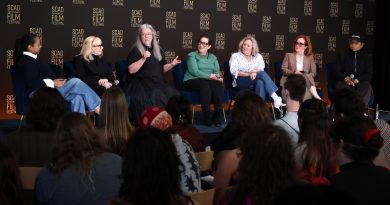
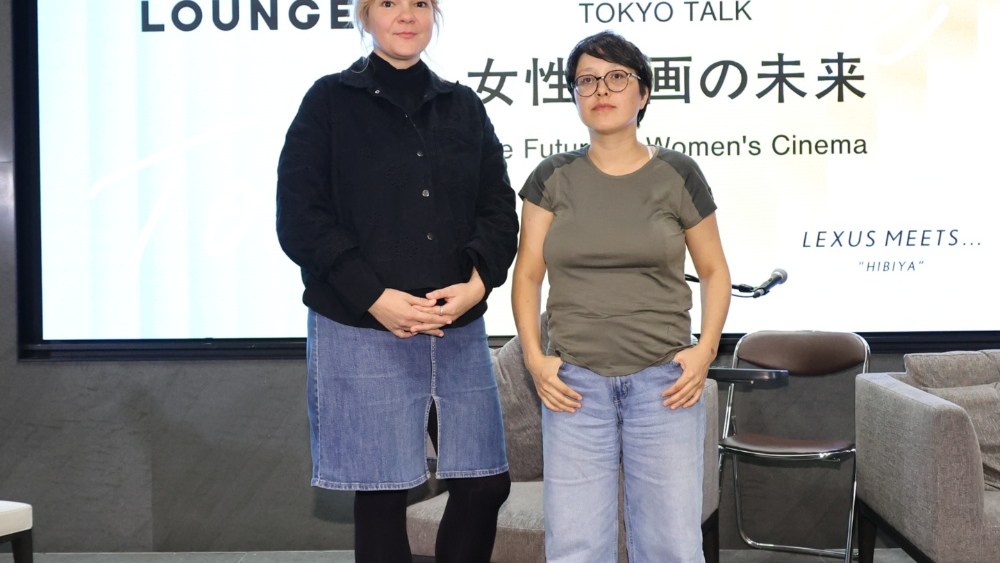
The talk, part of the festival’s Tokyo Talk sessions at the TIFF Lounge in Tokyo Midtown Hibiya, also featured Serbian director Jelena Maksimović, whose “Until the Day Ends” played in Venice’s Orizzonti section. Sadat, now based in Germany, saw her latest feature “No Good Men” open the 76th Berlinale before screening in Tokyo. Film scholar and presenter Takasaki Ikuko moderated.
The session followed other reflections on women’s careers in film at the festival, both in its Women’s Empowerment section and at an animation symposium held earlier the same day on the past, present and future of four women working as directors in the anime industry.
The panel set out to discuss how women and feminism are presented in Sadat’s and Maksimović’s films and beyond, but it turned mostly to the practical, financial barriers standing in the way of more films directed by women.
Both filmmakers said getting the means to make a film often requires a certain conformity.
“It was also like that back in Yugoslavia,” Maksimović said, “even though it was a very progressive country there were a lot more male directors […] but things started changing in the Balkans after the Yugoslav Wars… not because of that, but because we moved into more progressive times.”
There are external factors too, such as where the money for film funds comes from. Maksimović said Film Center Serbia “worked decently” for a few years, until the outgoing government cut off its funding entirely in retaliation for filmmakers’ frequent support of the student anti-corruption protests.
The student-led movement, which grew out of protests over the deadly 2024 collapse of a train station canopy in Novi Sad, won Serbia’s snap parliamentary election on Oct. 25. Aleksandar Vučić had resigned as president in September.
“Luckily, a few days ago the students won. We’re very happy at the moment, but there’s a huge fight in front of us,” Maksimović said, adding that the damage done by the previous regime would take time to repair.
“Even when the film center worked normally we had a difficult time financing our films, the amount of money for Serbian films is very small and it’s hard to find co-production countries,” she said. These weren’t definitive reasons for the scarcity of Serbian films playing in Japan, she added, but male filmmakers in the country had enjoyed a privilege that women didn’t have.
Later, Maksimović returned to the topic, saying there is a certain solidarity among filmmakers making less mainstream features, but that it’s also a “certain kind of bubble,” one separate from what she called “big funding.”
“We didn’t dare to apply to the big funding to get more money for our films because we knew we wouldn’t get the money there,” she said. She hopes the student movement’s victory gives the system a chance to be overhauled. “I’m very proud that I’m coming from Serbia today because students really showed us that it’s possible,” she said.
Sadat also spoke about the forces limiting filmmaking in Afghanistan.
“There is this cultural mafia, a bunch of old men, and you as a woman, you never can get in,” she said. Getting even a slight chance at the same privileges, she added, takes capitulation, submission and compromise.
“It’s either that to get into this network [or] community of cinema, or like what I did, get connected to another system. In my case, it was European filmmaking,” Sadat said.
That system still has its inequalities, Sadat said. “Filmmaking in Afghanistan is a crime – it’s not as extreme as that – but the discrimination is fundamental, it’s in the system,” she added of the European funds.
She said the gender gap in funding is “treated so normally,” and that a lack of proper development support and equal treatment is why there were so few films by women in competition at Venice this year. Only one of the 20 films in the Venice competition, May el-Toukhy’s “Woman Unknown,” was directed by a woman.
Toward the end of the talk, an audience member asked how to bring about material change rather than lip service, noting that there were “only about four films in the selection made by women” at the Tokyo International Film Festival. Sadat answered by returning to Venice.
“I was part of the Venice Film Festival this year in the main competition, and I was very surprised. I don’t want to comment on any specific film, but there were films that were just bad, but they are made by male directors. But women directors are not allowed to make bad [films],” she said. “The director of Venice, he commented when the press asked why there’s no films by women, he said, ‘Well, the quality of the films that female directors make are not good enough for competition.’”
Venice artistic director Alberto Barbera told Variety in July that the competition’s one film directed by a woman was “the only one we found of adequate quality to compete internationally.” “Woman Unknown” went on to win Venice’s top prize, the Golden Lion.
Sadat suggested the men did not receive the same scrutiny. Setting aside any gendered reactions, she added, filmmakers are human and there should be room for experimentation, and women are held to a higher standard where anything less than perfection is punished.
“We have to change the systems – start with the fundings, the committees,” Maksimović said. She added that she doesn’t want her films to be considered in a tokenistic way.
“I know people are trying to change things, but are they really changing? Or are they just putting things into boxes?” she said.
Asked about the future, Sadat said: “Coming from a war country, and in our country, people are absolutely in survival mode. We do not think of the future; we think about the present. Change can start from little things. I don’t think that we should wait for the bigger changes, they happen like little by little, over the course of a really long time.”