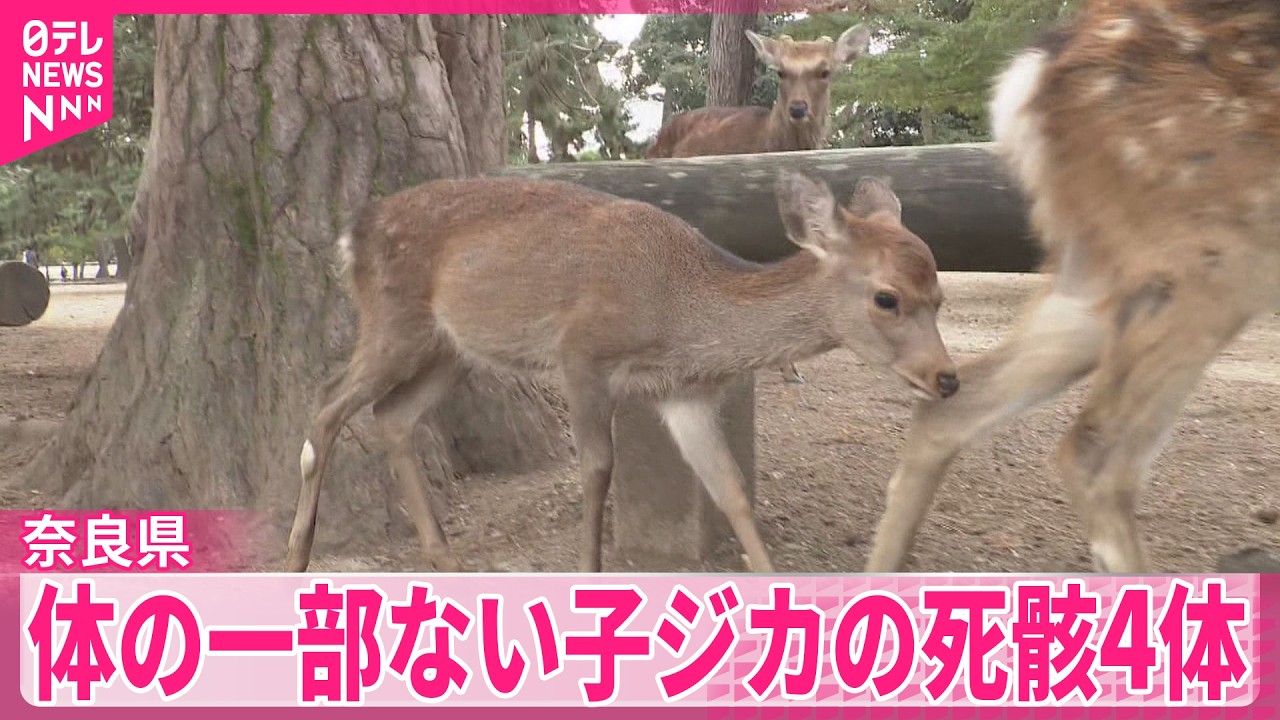
Four Mutilated Fawn Carcasses Found at Nara Temples
NARA –
Four dead fawns with missing body parts have been discovered around Kofukuji and Todaiji temples in Nara between August and October, prompting Nara Prefecture to hold an emergency press conference on October 23 after experts determined that wild animals were unlikely to have caused the injuries, raising suspicions that humans may have deliberately harmed the young deer.
According to prefectural officials, the first carcass was discovered on August 21 along the approach to Kofukuji Temple, a major historic landmark in central Nara. Three additional carcasses were subsequently found through October 1, including near the Great Buddha Hall at Todaiji Temple, bringing the total to four.
All four deer were approximately one month old, and each was missing parts of its body. The unusual condition of the carcasses prompted prefectural authorities to request an examination by a specialized institution to determine whether the injuries could have resulted from attacks or scavenging by wild animals.
The examination concluded that predation by wild animals was unlikely to explain the condition of the carcasses. Although the precise circumstances surrounding the deaths remain unclear, the findings have raised suspicions that the animals may have been deliberately harmed by humans.
Nara Prefecture has provided information to police for further investigation, seeking to establish how the fawns died and whether criminal activity was involved.
At the emergency press conference on October 23, prefectural officials urged residents and visitors to exercise caution when walking around Nara Park, particularly during nighttime hours when fewer people are present.
“We ask people to take sufficient precautions when walking alone around Nara Park at night, when there are fewer people,” an official said. “We also ask anyone who has information that could help resolve this case to come forward.”
Authorities have not identified a suspect or established a motive, and no definitive conclusion has been reached about whether the deaths were caused by deliberate human actions.
The discoveries have raised concerns because the carcasses were found within or near some of Nara’s most prominent temple grounds, including areas regularly visited by tourists and residents.
Nara’s free-roaming deer are a familiar feature of the ancient capital and are closely associated with Nara Park and its surrounding temples and shrines. The animals are traditionally regarded as sacred messengers and are protected as a nationally designated natural monument.
The discovery of four dead fawns in such prominent locations has prompted prefectural authorities to strengthen security measures in cooperation with police and deer protection organizations.
Additional patrols are being conducted around Nara Park and neighboring temple grounds as authorities seek information that could clarify the circumstances of the deaths and prevent further incidents.
Prefectural officials are continuing to urge anyone who witnessed suspicious activity or has information related to the discoveries between August 21 and October 1 to contact authorities.
Source: 日テレNEWS