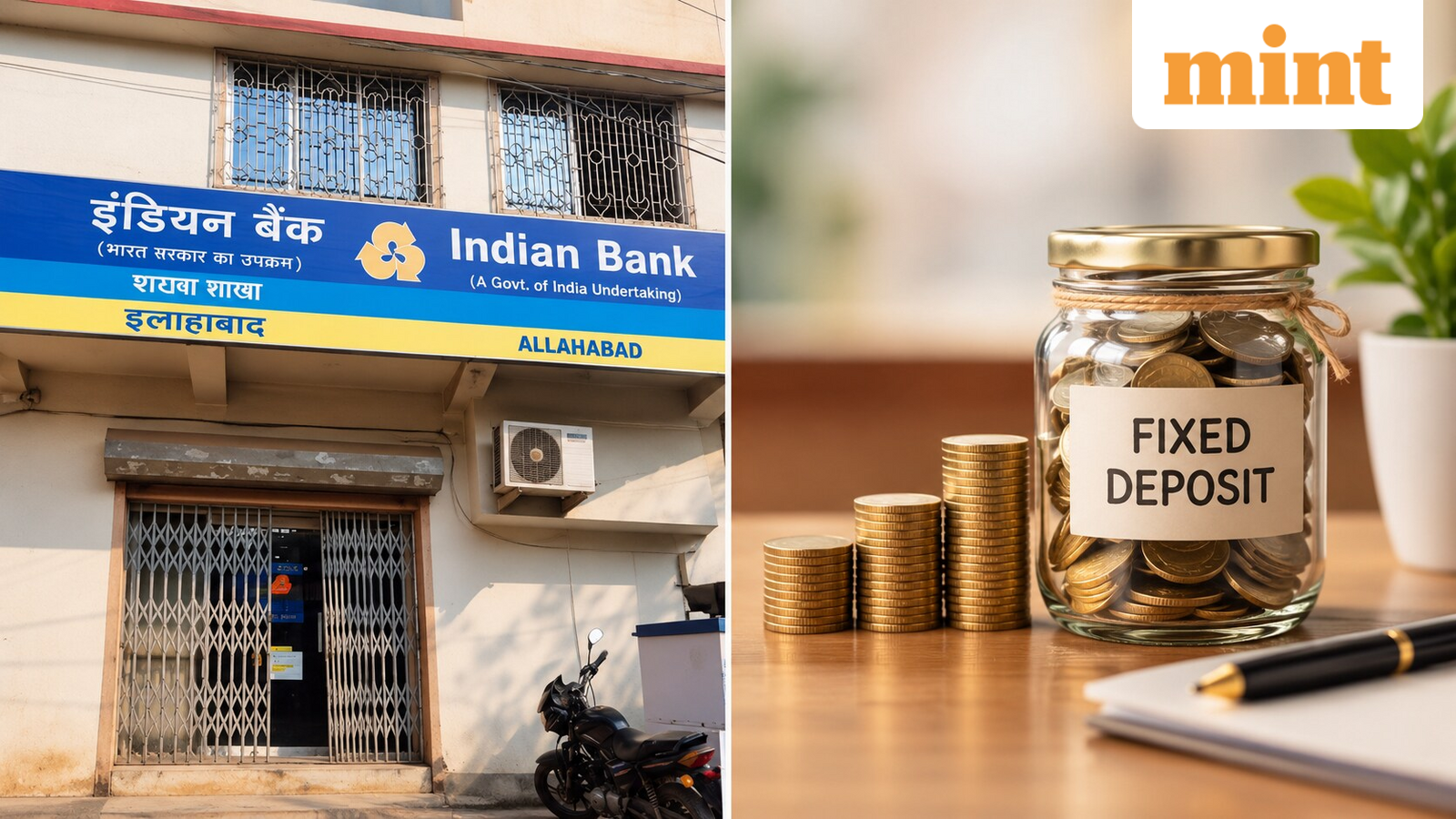
Indian Bank hikes interest rates on special-tenure fixed deposits — check how much 555-day and 777-day FDs are offering
Public-sector lender Indian Bank has increased interest rates by 15 basis points each on two of its special fixed deposit (FD) schemes, with the revised rates taking effect from Friday, October 23, 2026.
The new rates apply to its 555-day Ind Grow and 777-day Ind Prosper deposits, offering customers higher returns on their investments. Meanwhile, the bank’s offered interest rates on other listed tenures remain unchanged.
Indian Bank’s decision to raise interest rates on its fixed deposits comes after the Reserve Bank of India (RBI) on October 7, raised repo rate by 25 bps to 5.50% from 5.25%, marking the first such increase since February 2023.
Check revised Indian Bank FD rates
Following the revision, the annual interest rate on the 555-day Ind Grow deposit has been raised to 6.80% from 6.65%. Meanwhile, the annual rate on the 777-day Ind Prosper scheme has been increased to 6.75% from 6.60%.
Indian Bank offers senior citizens an additional 0.5 percentage point and super senior citizens an additional 0.75 percentage point over the applicable interest rates for general customers on these special deposits.
These additional benefits can make the special fixed deposit schemes attractive to older depositors seeking predictable returns. However, they should also consider the deposit tenure, premature withdrawal rules and tax implications.
What investors need to know
Both Ind Grow and Ind Prosper are special-tenure deposit schemes, which are meant for depositors looking to keep their money invested for a fixed period. You can choose between the two by assessing how long you can set aside your savings and whether you may require the funds before maturity.
Premature withdrawal from special-tenure FDs may be allowed if it is callable, in which the bank may apply a penalty and recalculate interest based on the period for which the deposit remained open. Meanwhile, non-callable FDs generally place stricter limits on early withdrawal.
Depositors must also remember that interest earned on fixed deposits is subject to taxation as per your applicable income tax slab. Tax may be deducted at source if the interest amount crosses the prescribed threshold of ₹50,000 per year for general citizens and ₹1,00,000 per year for senior citizens.
Before investing in a special-tenure FD, customers should check the applicable interest rate, eligibility criteria and premature withdrawal rules on Indian Bank’s official website or at a nearby branch. Comparing rates offered by public sector banks, private lenders and small finance banks can also help depositors determine whether these special schemes align with their financial goals.
How repo rate changes impact bank deposits
A repo rate hike increases the cost at which banks borrow money from the RBI and thus can influence lending and deposit rates across the financial system.
Banks and non-banking financial companies (NBFCs) may respond to the monetary policy committee’s decision by revising their rates to manage funding costs, attract deposits and remain competitive in the market.
However, the impact of a repo rate change on deposit rates is not always immediate or the same across different NBFCs or banks. The timing and extent of any revision depend on factors such as an institution’s liquidity position, funding requirements and competitive strategy.