Little Rock School Board’s tough vote to close three schools
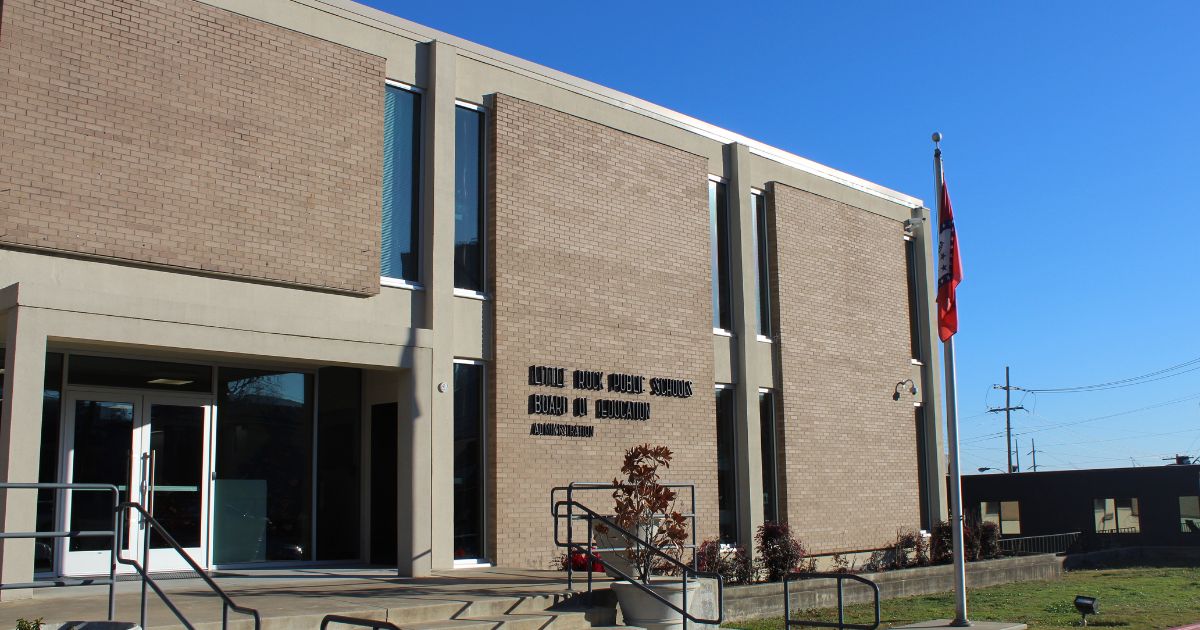
After three years of budget cuts and other efforts to reduce spending, the Little Rock School District reached a turning point Thursday night as the school board voted to close McDermott, Western Hills and Mabelvale elementary schools.
When Superintendent Jermall Wright arrived to take the helm in Little Rock in 2022, the district was spending more money than it was bringing in and needed to cut $15 million from its budget. His administration reduced $7.2 million in administrative costs, but those cuts were not enough to close the gap. The LRSD Forward Plan board members have been hashing out in recent months is the district’s next step in addressing its financial problems, consolidating buildings, expanding programs at other schools, and redirecting resources toward students with the greatest needs.
The decision to cut costs by closing three schools followed months of public meetings and board deliberations over how to address declining enrollment, underused buildings and the district’s financial challenges, all while weighing the consequences for the school communities affected by the closures.
Before turning to the LRSD Forward Plan, it is important to understand the seriousness of the district’s financial position. Moody’s, one of the nation’s leading credit-rating agencies, lowered LRSD’s financial rating from A3 to Baa1 and placed it on a negative outlook in its October 9, 2026, report. The central problem is straightforward: The district has been using its financial reserves to cover the gap between spending and revenue. LRSD is not in default, and this does not mean the sky is falling, but the district cannot continue spending more than it brings in.
Moody’s expects LRSD’s available fund balance to fall to just 2% to 3% of annual revenue, leaving only $2 to $3 in reserves for every $100 in revenue. The district’s fiscal 2027 budget projects a surplus, but the agency warns that past results have repeatedly fallen short of budget expectations. Enrollment losses add to the pressure because revenue can decline while the costs of operating buildings and providing transportation, technology, special education and other services do not automatically fall at the same rate.
The downgrade also matters for the district’s future. LRSD has approximately $556.2 million in outstanding debt, and Moody’s estimates that longterm liabilities will equal about 330% of annual revenue in fiscal 2026. The lower rating could increase borrowing costs for future construction and renovation projects, although Moody’s reports that the district has no plans to borrow in the coming year. To improve its rating, LRSD will need to demonstrate sustained operating surpluses and rebuild its available fund balance to more than 10% of annual revenue.
This is why the district’s discussion of school consolidation and closures matters. Moody’s identifies sustained spending cuts as necessary to bring the budget into balance. It did not endorse a particular school closure or establish that any one plan would solve the financial problem.
Before Thursday’s vote, Superintendent Wright sent an email to LRSD staff explaining the administration’s position on the proposed changes and the alternatives being discussed. He challenged the argument that keeping every school open would avoid harm to students and communities. Without equivalent recurring savings, he warned, maintaining the current number of schools could mean fewer academic opportunities and student supports, delayed facility improvements, eliminated programs, deeper staffing reductions, less competitive compensation, and greater pressure on the schools serving most LRSD students. Continued spending beyond recurring revenue would also erode reserves and leave future boards with fewer options.
The superintendent acknowledged that reasonable people can disagree about the recommendations and urged staff and board members to debate the decisions without questioning one another’s character or commitment to children. Supporting a closure does not mean someone lacks concern for the affected neighborhood, he argued, just as opposing a closure does not mean someone is unconcerned about the district’s financial future. He called on district leadership to weigh the full picture, including finances, enrollment, academic needs, facility conditions, operational demands, community impacts, and the consequences of both action and inaction.
Wright pointed to improvements in student outcomes over the past five years, arguing that the district had become stronger by confronting difficult realities and making decisions even when they were unpopular. He said he stood behind the current recommendations because he believed they were necessary to protect LRSD’s long-term strength. If approved, he pledged that the administration would focus on supporting students through the transition, communicating with families, treating employees fairly, preparing receiving schools, preserving meaningful programs and relationships, and reinvesting resources to expand opportunities.
Wright concluded that LRSD’s responsibility is not to preserve every building, attendance boundary, or organizational structure exactly as it exists today, but to strengthen public education in Little Rock. He framed the decision as a choice between managing a difficult transition now and allowing financial pressures to create greater disruption later, while maintaining the district’s commitment to its students and neighborhoods.
The district estimated that closing the three elementary schools would save between $4.68 million and $5.26 million annually. The schools had combined operating costs of approximately $11.69 million, and the estimate assumed that the district could eliminate about 40% to 45% of each school’s previous operating costs.
Debates over school closures and where students from the affected schools will go revealed sharply different emotional responses among board members. Director Osyrus Bolly delivered the strongest opposition, describing the plan as an “assault on our neighborhoods” and an “assault on our communities,” driven by what he called “the cold mechanics of predatory capitalism and school privatization.” He argued that schools are more than buildings and classrooms: they provide gathering places, arts opportunities, health services, safety, and a foundation for young people’s development. Repeated closures, he warned, could leave marginalized communities feeling abandoned and deepen mistrust. He said public schools should nurture critical thinking, imagination, love, and collective resistance, and concluded, “I’m not voting to close down any schools.”
Director Selandria Jackson thanked residents for their outreach and said she had listened carefully through individual meetings and community discussions. She thanked Wright and his team for responding to the board’s requests, and specifically acknowledged the staff and leadership at Mabelvale Elementary and the Western Hills community. Jackson said nobody wanted to close schools and criticized the spread of misinformation on social media, arguing that inaccurate claims hurt the community even when residents had legitimate disagreements with district decisions.
Other board members who supported the closures spoke less with enthusiasm than with sadness and a sense of obligation. Director Greg Adams described the decision as heartbreaking, contrasting it with happier votes to approve staff raises, build facilities, and hire employees. He acknowledged that the community could disagree about what it meant to be faithful to children but said he viewed the closures as a responsible decision in the broader interest of students. Recalling his father’s experience as a superintendent, he said the challenge was to make the fairest decision possible in a bad situation. The district had lost approximately 300 to 500 students annually for about a dozen years, he said, and he had not been persuaded that it could remain sustainable while maintaining the same number of facilities. He acknowledged the disruption families would face and said the district would need to support them through the transition.
Director Anna Strong said she wished fundraising and other alternatives pitched by community members seemed realistic enough to close the financial gap, but that she was confident the district could support families through their transitions to new schools. She described meeting a mother who said the closure of Brady Elementary had helped her child thrive at a new school, find friends and become excited about school.
The board approved a school closure plan that also preserves Williams Elementary as a magnet school rather than turning it into a neighborhood school, with Bolly and Jackson voting “no.”
For families, the changes will mean new attendance zones and decisions about where children attend school. Western Hills’ autism program will move to Williams, and other Western Hills families will have the option of Williams or their new neighborhood school, Bale. Students from Mabelvale will be reassigned among Otter Creek, Chicot and Watson. McDermott students will be distributed among Terry, Jefferson, Fulbright, Bale and other receiving schools according to the adopted boundaries, while Williams remains available as a magnet option. Students will have many choices.
Source link