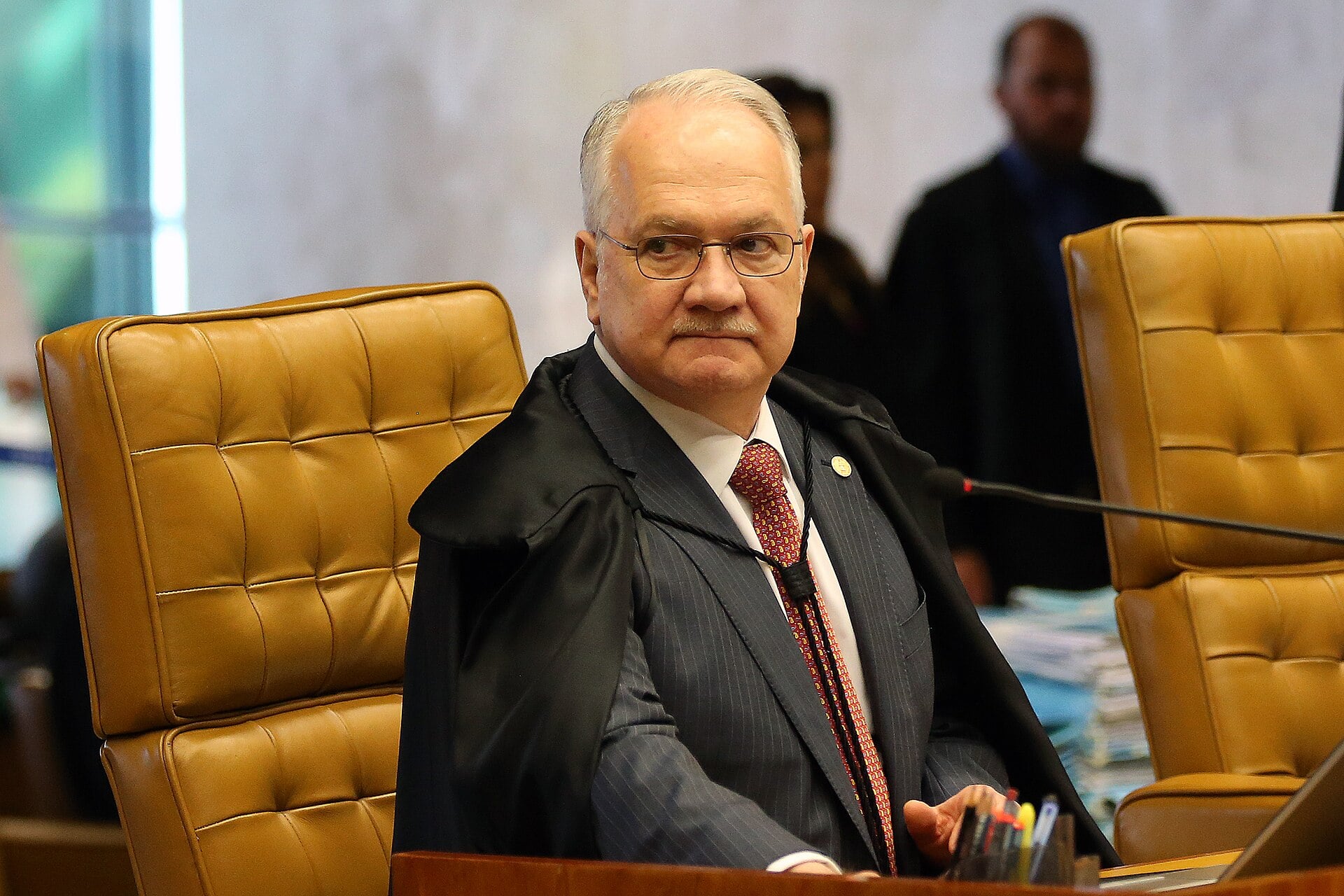
59% of Brazilians Back Supreme Court Reform
Ask Rio Times
This story and the bigger picture.
Answers are generated from Rio Times reporting only — every claim links to its source article.
BRAZIL · ELECTIONS
Published Friday, 16 October, 5:30 p.m. ET · Source: Datafolha, for Folha de S.Paulo
Key Facts
- The country Brazil, Latin America’s largest country, elects its president in a runoff on Sunday 25 October between Luiz Inácio Lula da Silva and Flávio Bolsonaro.
- What happened On Friday 16 October, Datafolha published a poll showing majority support for changes to Brazil’s Supreme Federal Court (STF).
- The numbers 59% want fixed terms for justices, 65% want an end to single-justice rulings on major issues, and 52% want trials of officials moved to lower courts.
- Both camps Most voters of both runoff candidates back each change, except fixed terms, where Flávio voters are at 65% and Lula voters at 54%.
- Margin of error The survey interviewed 2,520 voters in 153 cities on 13 and 14 October, with a margin of error of 2 points.
- Power Index Brazil ranks 1st of 14 in The Rio Times Latin America Power Index, with 75.0 points (October 2026 edition).
- Prediction markets Polymarket gives Flávio Bolsonaro a 77.4% chance of winning the 25 October runoff and Lula 22.5% (Friday 16 October, 8:25 p.m. ET). Polymarket puts Flávio Bolsonaro’s chance of winning at 77% and Kalshi at 77% (Lula: 23% and 23%), as of 16 October, 8:20 pm ET; prices are bets, not polls.
A new Datafolha poll finds that most Brazilians want changes to the Supreme Federal Court, and that most voters of both runoff candidates agree. Folha de S.Paulo published it on Friday 16 October at 5:30 p.m. ET, nine days before the Brazil election 2026 vote.
The poll covers Luiz Inácio Lula da Silva, Brazil’s president, and Flávio Bolsonaro, senator for Rio de Janeiro, who are tied in the latest Brazil election polls. A court that decides election disputes and business cases is now a campaign issue for both camps.
What the Datafolha Poll Found on Court Reform
Datafolha interviewed 2,520 voters in 153 cities on 13 and 14 October, with a margin of error of 2 points, Folha de S.Paulo reported. The survey is registered with the electoral court (TSE) as BR-00466/2026, according to Jornal de Brasília.
Fixed terms for justices have the backing of 59% of those surveyed, and 65% want major decisions by a single justice to go to the full court. Another 52% say officials with special legal privileges should be tried in lower courts.
Follow this story
Get an email when there’s news on Brazil Elections 2026
Voters of Both Candidates Back the Changes
On fixed terms, 65% of Flávio voters agree, against 54% of Lula voters, Brasil 247 reported. On ending single-justice rulings, 64% of Flávio voters and 66% of Lula voters agree.
On moving cases to lower courts, 54% of Flávio voters and 51% of Lula voters agree. Fixed terms are the only proposal where the two camps are more than a few points apart.
What the Three Proposals Mean
A single-justice ruling, known in Brazil as a monocratic decision, lets one justice rule alone before the full court votes. Special legal privileges, known as foro especial, mean that lawmakers and ministers are tried directly by the Supreme Court instead of lower courts.
Brazilian justices now serve until mandatory retirement at age 75, so a fixed term would be a new rule. Changing it would need a constitutional amendment, which requires three-fifths of both houses of Congress in two rounds of voting.
How Opinion Moved Since September
A Datafolha survey on 8 to 10 September found that 76% of Brazilians believe the Supreme Court has excessive power. The October poll asks a different question, about remedies, and shows that the appetite for change is broad.
In the same 13 and 14 October fieldwork, Datafolha put the race at a technical tie, with Flávio at 51% and Lula at 49% of valid votes, as our Brazil runoff poll report explains.
What It Means for US Readers
The Supreme Court shapes how contracts, regulation and election disputes are settled in Brazil. Investors in Brazilian assets and US-listed Brazilian firms should note that the court’s powers are now on the agenda of both campaigns.
Support is broad across camps, but reform needs Congress, so any change would take months, not days. The Brazil election odds page tracks how bettors price the 25 October vote.
What Prediction Markets Say
On Polymarket, bettors give Flávio Bolsonaro a 77.4% chance of winning the 25 October runoff and Lula da Silva 22.5% (Friday 16 October, 8:25 p.m. ET). The “Brazil Presidential Election” market has drawn about US$185.0 million in total bets.
Why we show this: prediction markets turn real-money bets into a live probability that moves within minutes of the news, which is why investors, campaigns and newsrooms in the United States now follow them closely. We show them next to polls and official results, never instead of them.
Prediction markets · who wins the runoff
Implied chance of winning Brazil’s presidency on 25 October, from traders’ prices.
Polymarket
Flávio Bolsonaro 77.4% · Lula 22.5% (US$185 million traded)
Kalshi (regulated in the US by the CFTC)
Flávio Bolsonaro 77% · Lula 23%
As of 16 October, 8:20 pm ET (01:20 Lisbon), updated every 20 minutes. Prices are bets, not polls, and can move fast.
Why we show this: prediction markets turn real-money bets into a live probability that moves within minutes of the news, which is why investors, campaigns and newsrooms in the United States now follow them closely. We show them next to polls and official results, never instead of them.
What Is Not Known
The poll does not say how strongly voters feel about each change, nor whether any of it will sway votes on 25 October. Datafolha’s earlier September survey found that most voters had not changed their choice because of the court crisis.
It is also unclear which proposals either candidate would send to Congress, and in what form. A poll measures opinion on the days of the interviews and does not forecast the result.
More: Brazil news in English, every day from The Rio Times.
Frequently Asked Questions
What does the new Datafolha poll say about Supreme Court reform?
It finds that 59% of Brazilians want fixed terms for justices, 65% want single-justice rulings on major issues ended, and 52% want trials of officials moved to lower courts. Datafolha interviewed 2,520 voters on 13 and 14 October.
Do Lula and Flávio Bolsonaro voters agree on court reform?
Most voters of both candidates back each proposal. Fixed terms split them most, with 65% of Flávio voters and 54% of Lula voters in favour.
What is a monocratic decision in Brazil?
It is a ruling by one Supreme Court justice alone, issued before the full court votes. Sixty-five percent of Brazilians want such rulings on major issues sent to the full court.
What is the margin of error of the poll?
The margin of error is 2 percentage points, on 2,520 interviews in 153 cities. The survey is registered with the electoral court as BR-00466/2026.
When is Brazil’s runoff?
Brazilians vote on Sunday 25 October. The two candidates are Luiz Inácio Lula da Silva and Flávio Bolsonaro.
Sources: Folha de S.Paulo, 16 October 2026; Jornal de Brasília, 16 October 2026; Brasil 247, 16 October 2026; Polymarket, 16 October 2026.
This article was produced by The Rio Times’ automated newsroom system. How we use AI · Report an error · Editorial responsibility: Matthias Camenzind, Editor-in-Chief
The Rio Times · Power Map
See who really holds power in Latin America
Click to open the Power Map →