Nepal floods: Why Balendra Shah wants India and China to work together in the Himalayan region
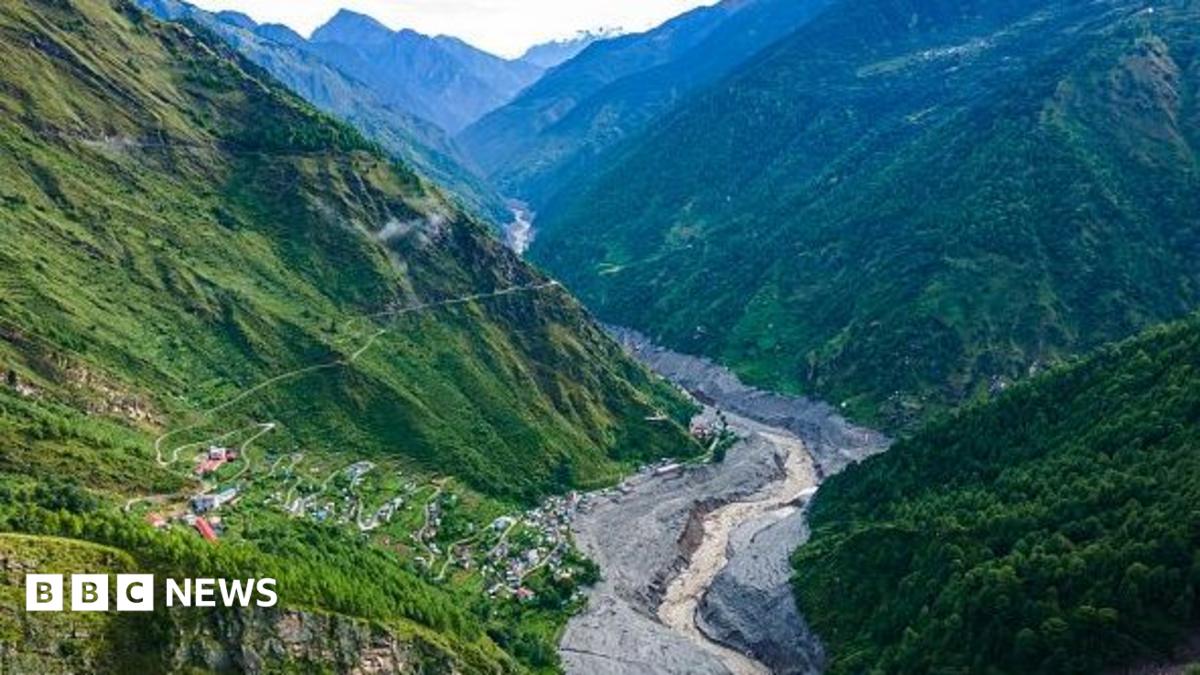
Nepal’s Prime Minister Balendra Shah used much of his speech at the recent UN General Assembly to warn of the growing threat of climate-related disasters in the Himalayas, recalling the devastating debris floods that struck his country in August.
But it was his ambitious proposal to bring together regional rivals India and China, alongside Nepal, to tackle these shared threats that drew particular attention.
Shah called for the creation of a Himalayan Climate Resilience Mechanism to strengthen cross-border disaster response and the sharing of scientific data and expertise in one of the world’s most environmentally fragile and geopolitically sensitive regions.
“Let the Himalayas become a laboratory of international co-operation rather than a frontier of fragmented information,” he said.
A senior official at Nepal’s foreign ministry, speaking on condition of anonymity, said the proposal was still at an early stage.
“The PM’s proposal has given a political direction. Our ministry is working with other relevant agencies to put forward a preliminary framework which can be the basis for building common understanding,” the official said.
Neither India nor China has formally responded to the proposal. The BBC has contacted their foreign ministries for comment.
But can Nepal really bring the two regional giants together to confront a shared climate threat in a region where they have long been locked in bitter territorial disputes?
India and China share a disputed frontier stretching roughly 3,500km (2,175 miles), much of it across the Himalayas. Their competing territorial claims have led to a war, deadly clashes and repeated military stand-offs along the Line of Actual Control (LAC), the de facto boundary separating areas under their control.
But the mountains that have long been a source of friction between the two countries are also facing an urgent climate threat.
Temperatures in the Himalayan region are rising faster than the global average, accelerating glacier retreat and permafrost thaw and contributing to growing risks of landslides, rockfalls, avalanches and glacial lake outburst floods.
Such disasters can sweep across national boundaries, threatening lives, infrastructure and livelihoods far downstream – making co-operation between the countries sharing the Himalayas increasingly important.