
S’pore starts 6-month trial to return used phones, laptops at lockers and Shopee collection points
SINGAPORE – Residents can drop off old mobile phones, tablets and laptops at Shopee collection points and lockers in residential areas under a six-month pilot aimed at making e-waste recycling more convenient.
This new initiative by ALBA E-waste Smart Recycling – which handles Singapore’s e-waste recycling scheme – will also ensure that personal data on the devices will be securely handled and destroyed, with users receiving a certificate of destruction.
Many residents still have reservations about recycling their e-waste due to concerns about convenience and data security, said Senior Minister of State for Sustainability and the Environment Janil Puthucheary, who announced the ALBA Secure-Recycle initiative at the International E-Waste Day event at Kampung Admiralty on Oct 10.
Many electronic devices contain personal and confidential information, including photographs, account details, work documents and private communications.
He said: “When we then surrender our devices for recycling, correctly, people worry.”
The pilot adds to Singapore’s existing e-waste collection options, which include nearly 1,200 e-waste bins islandwide and free doorstop collection for large appliances.
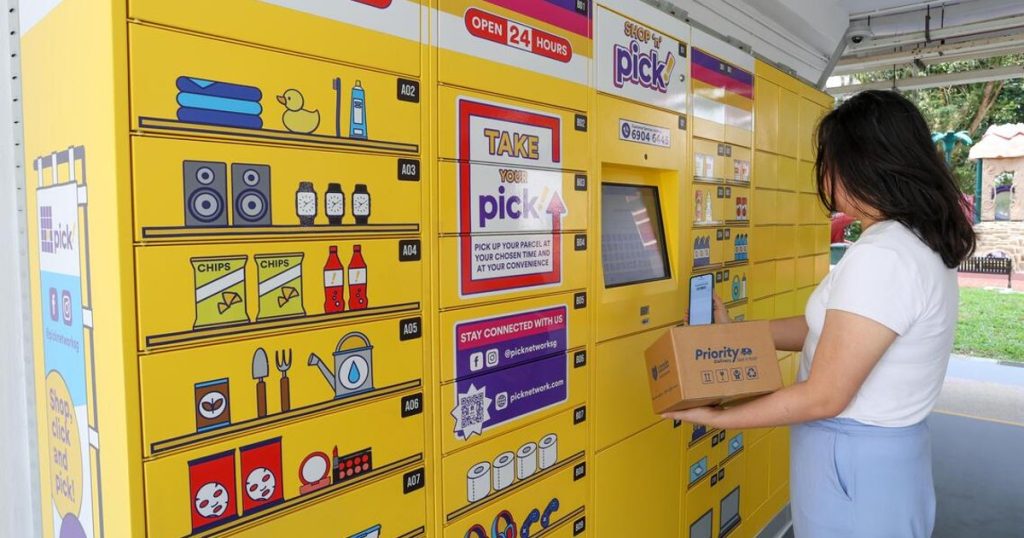
Under the new programme, members of the public can drop off their devices free of charge at about 2,000 Shopee SPX collection points – including retail shops and some HDB residential units – and the yellow Pick! lockers across Singapore.
These locations would be more familiar to residents, as they are commonly used to collect packages from online shopping.
To use the service, individuals can submit a drop-off request through the ALBA E-Waste’s website or the ALBA STEP UP app and select from participating Pick! lockers or SPX Express service points. More details are available at https://alba-ewaste.sg/alba-secure-recycle
After completing the steps, they will receive drop-off details, such as a PIN or tracking number.
More than 45,000 tonnes of e-waste have been collected over five years.
ST PHOTO: NG SOR LUAN
Once Virogreen, the appointed e-waste recycler, has destroyed the data on the devices, users will receive a certificate of data destruction, said Janil.
The devices will then be processed and recycled to recover valuable materials, like gold, copper and cobalt, which Janil said can be used to manufacture new products, reducing the need to extract new raw materials.
The six-month trial will allow ALBA E-Waste and its partners to assess public interest and review operational processes before considering a wider rollout.
To protect their privacy, users should also back up their data, log out of personal accounts, remove SIM cards and external storage media, and perform a hard reset to erase accessible records before depositing their devices, where possible.
Since Singapore’s e-waste recycling scheme started in 2021, more than 45,000 tonnes of e-waste have been collected as at end-August, said Janil. Around 11,000 tonnes were collected over the past year.
There are currently close to 1,200 e-waste bins at shopping malls, electronics stores, supermarkets and all community centres.
There are four types of bins, including one that accepts only household batteries, as well as drop-off services in supermarkets.
The ALBA Secure-Recycle initiative is not the first of its kind in Singapore. Since 2024, e-waste recycler KGS has been running a free programme called TakeBag where residents can order a green bag to place their old electronics and return them to over 1,100 Pick! lockers islandwide.
The TakeBag programme accepts a wider range of electronics, including power banks, keyboards and electric kettles. It has collected about 10 tonnes of e-waste to date. Data is similarly destroyed from devices.
At the Oct 10 event, Janil also highlighted the importance of safely disposing e-waste, especially flammable batteries.
Batteries should never be thrown into general waste or recycling bins, where they may be compressed, punctured, or damaged during collection and handling, he said.
Where possible, residents should tape the batteries’ terminals before depositing them in ALBA’s e-waste bins, which are made of fire-resistant materials.
Batteries with signs of damage or bloating, or those used in electric mobility devices, should be treated with extra care and handed over to trained personnel at collection drives, he added.