Brits flying from Spain could soon use face for passport « Euro Weekly News
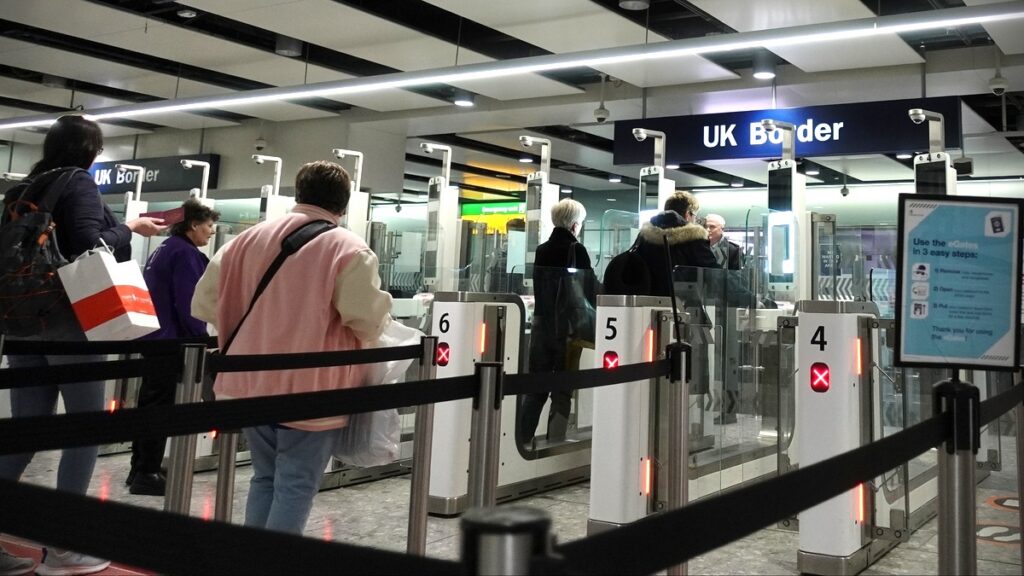
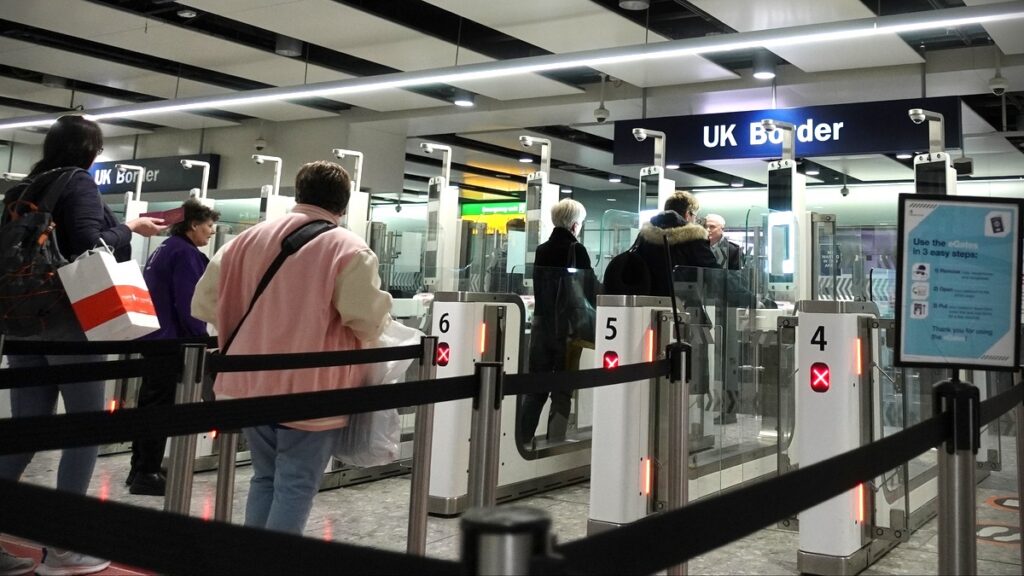
British passengers landing back in the UK may soon walk up to an e-gate, look at a camera and carry on, without placing a passport on the reader. Border Force UK is preparing so-called contactless borders at airport gates after a trial at Manchester. Basically, your face will be your passport. Anyone heading the other way, into Spain, should not pack on the strength of that. Spanish passport control is a separate system, and the booklet still has to come on the plane.
What actually changes on arrival
Phil Douglas, director general of Border Force, told The Sunday Times that upgraded gates could cut border time by up to 25 per cent. “It will mean we have a more secure border and a much faster transit through the airport. It’s quicker, it’s more modern, it’s more secure,” he said.
Right now a typical e-gate run takes about 20 to 25 seconds. Dirty chips and passports laid down the wrong way often make that longer. Under the new set-up, airlines would send Border Force a gallery of passport photos for British passengers due in that day, taken from check-in details. Officers load that gallery, and the camera matches a face against the people on those flights, not against every British passport in circulation.
Douglas put it this way: “Because we know who’s coming and can load up that gallery of who is arriving, it’s not a one in 60 million check; it’s a one in tens of thousands check.” He also said the change is being made for border security, so officers can spend less time on routine immigration and more on crime, safeguarding and drugs. “There’s something quite important still about what I call the theatre of the border, that there is a border and that you’re being checked,” he added.
Birmingham and East Midlands go first
Birmingham and East Midlands airports are expected to switch on in the coming weeks. Early next year, the same kit is due at every UK airport that already has e-gates: Birmingham, Bristol, Cardiff, East Midlands, Edinburgh, Gatwick, Glasgow, Heathrow, London City, Luton, Manchester, Newcastle and Stansted.
Manchester ran a three-week trial last October. The Home Office told The Sunday Times that passengers got through faster and rated the experience better. Britain’s gates date from 2008. This is new software on those machines, not a brand-new queue.
British passport holders are first in line. Douglas wants the same treatment later for other nationalities already allowed through UK e-gates: biometric passports from Europe, Australia, Canada, Japan, New Zealand, Singapore, South Korea and the US. Children aged eight and over, at least 120cm tall and with an adult, can already use the gates. Euro Weekly News reported that age drop in May. Douglas said the error rate for eight-year-olds was lower than for older passengers.
Do not leave the passport in the kitchen drawer just yet
Nothing in the Sunday Times report lets a Brit fly to Malaga, Alicante or anywhere else without a passport. Check-in and boarding still need the real document. If the camera does not know the face, the gate asks for a scan. If that fails, a Border Force officer at a desk takes over, same as now.
A trip home to see family is not a passport-free holiday. It is a quicker last step, if the face matches and the airport has the upgrade. Civil Aviation Authority figures cited by The Sunday Times put UK airport passengers above 61 million in the first quarter of this year, a record, which is why Border Force is chasing queue time.
Spain is a different border
Leaving Spain, or coming back for a holiday, still means Spanish and Schengen rules. Short-stay British visitors go through the EU Entry/Exit System, with a face scan and, for adults, fingerprints. Euro Weekly News has already set out the under-12s warning: no fingerprints below 12, but a facial image is still taken. Residents with a valid TIE should use the residents lane and show their passport and card at a staffed desk, not an EES e-gate. Brussels has already shown how biometric queues can blow out. Spain was not on the list of countries given extra leeway after the summer pause.
Not everyone likes the idea
Privacy campaigners have long argued that face-matching is uneven and poorly regulated, and those warnings now are looking at this rollout. Big Brother Watch has said about 80 per cent of people misidentified by police facial recognition in London in 2025 were Black, while the biometrics and surveillance camera commissioner has warned the technology is not foolproof and a wrong identification could end in a legal claim. Those figures come from street watchlist cameras, not arrival gates, but US government tests of face-matching have also found higher false-match rates for some groups, including women, older people and Black people, depending on the algorithm and the photo. A missed match at a UK e-gate should only mean a passport scan, then a staffed desk. A wrong match would be the more serious failure, because the live check starts from an airline photo gallery rather than a document the passenger presents. A 2020–21 inspection of ePassport gates also heard from charities and some Border Force staff, that fewer conversations with an officer make it harder to spot vulnerable passengers.
Official UK advice on who can use e-gates is on GOV.UK. It still describes a passport scan against the chip photo. Until Birmingham and East Midlands actually switch, that is the process passengers should expect.