A new East German identity
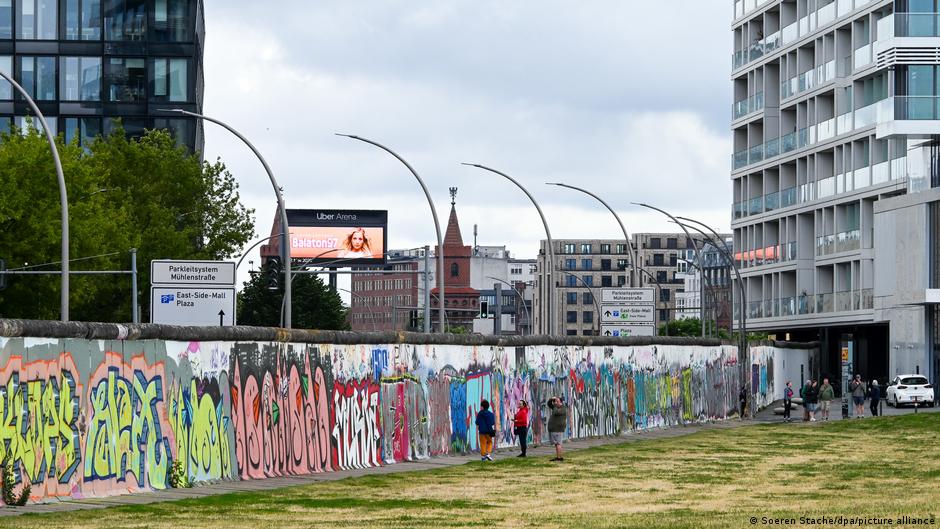
German reunification may be 36 years in the past, but when it comes to wealth, the divide between East and West Germany is far from history. East Germans still earn less on average, receive smaller pensions and own less property, according to Elisabeth Kaiser, the Federal Government Commissioner for Eastern Germany.
Kaiser, born in the state of Thuringia in the socialist German Democratic Republic (GDR) in 1987, has put the enduring wealth gap at the center of the debate. A study she presented in Berlin points to decades in which private entrepreneurship and opportunities to invest in one’s financial future were restricted in the East. That meant, Kaiser said, that “families have not been able to acquire or pass on as much wealth.” The consequences, she argues, have had a profound impact upward mobility.
How important are personal connections and social background?
But it is not only East Germans who see fewer chances of upward mobility these days. Kaiser pointed to the latest “Deutschland-Monitor,” an annual survey she commissioned to make her point. Although this year’s survey is still being analyzed, early findings reveal that about two-thirds of respondents across the country believe that financial and social mobility depend crucially on wealth, personal connections and social background.
This perception is reflected in the numbers. Even though the percentage of East German executives in the highest federal agencies has risen from 13.9% in 2022 to 16.3% today, Kaiser says, “The further up the management ladder you go, the lower the percentage of East Germans you find.”
East German leaders remain scarce across the board
Based on these findings, the Commissioner for Eastern Germany calls for greater equality in decision-making. “And that is why I would like to see East Germans sitting at the table wherever decisions are made in the country,” she said, “in the ministries, in government agencies, in business, academia, the judiciary, culture and the media.”
With just under 20%, East Germans are significantly underrepresented in all sectors relative to their share of the population. To back this up, Kaiser cited the “Elitenmonitor,” another study commissioned by her office. With over 3,000 top positions examined across twelve sectors over a long period of time, the Elitenmonitor study, conducted by the universities of Jena (Thuringia), Leipzig (Saxony), and Zittau/Görlitz (Saxony), can offer more than just a snapshot.
According to the report, the percentage of East Germans in leadership positions in both the public and private sectors only increased from 10.9% to 12.1% from 2018 to 2024. And in the business and cultural sectors, the percentage of East Germans has actually declined.
Most striking of all is that among the 100 largest German companies, all executives are from West Germany — and the same holds true for the military. East Germans are also severely underrepresented in top positions in the judiciary and the media.
New stereotypes about East Germany
The insufficient representation of East German perspectives in nearly all areas of society also appears to have consequences for how East Germans are viewed. Kaiser says that her generation, born around the fall of the Berlin Wall and German reunification, did not feel East German for a long time. It was only in school and during vocational training that she realized there were differences between East and West that would sometimes put her at a disadvantage.
This has also shaped stereotypes about East Germany, both past and present. “An East German identity is also being created politically to some extent because people are looking for some way to orient themselves, because they’re looking for a common bond,” Kaiser knows from her many experiences and conversations.
As an example, she cited the symbolic power of the Simson moped, produced in the millions during the GDR era — a symbol of mobility and freedom for many young people at that time.
Leading representatives of the Alternative for Germany (AfD), a party classified in part as far-right extremist by the domestic intelligence agency, frequently make public appearances riding on Simson mopeds. One of them is Ulrich Siegmund, the AfD candidate who recently won state elections in the eastern state of Saxony-Anhalt.
Without specifically mentioning the AfD by name, Kaiser lamented the exploitation of cultural symbols for political purposes.”It creates a very powerful emotional connection,” said Kaiser regarding the use of the Simson brand.
As for the AfD and its recent electoral successes in Mecklenburg-Western Pomerania and Berlin, Kaiser said that these elections send a dangerous signal. She believes that international investors and skilled workers will ask themselves: Should I go there or not?
Kaiser specifically mentioned sectors that have played an important role as drivers of economic growth and innovation in eastern Germany, such as the semiconductor industry, battery cell research, healthcare, biotechnology and renewable energy. Her concern is that the economic upswing in these sectors could suffer as a result.
This article was originally written in German.