Macron must tackle French fuel prices or risk populist oil fire in 2027

As fuel prices in France rise well above the levels that sparked the Gilet Jaunes movements, John Lichfield believes it’s unlikely the yellow vests will return in force, but it all boosts the chances of a populist victory in next year’s presidential election. Can the French government do anything?
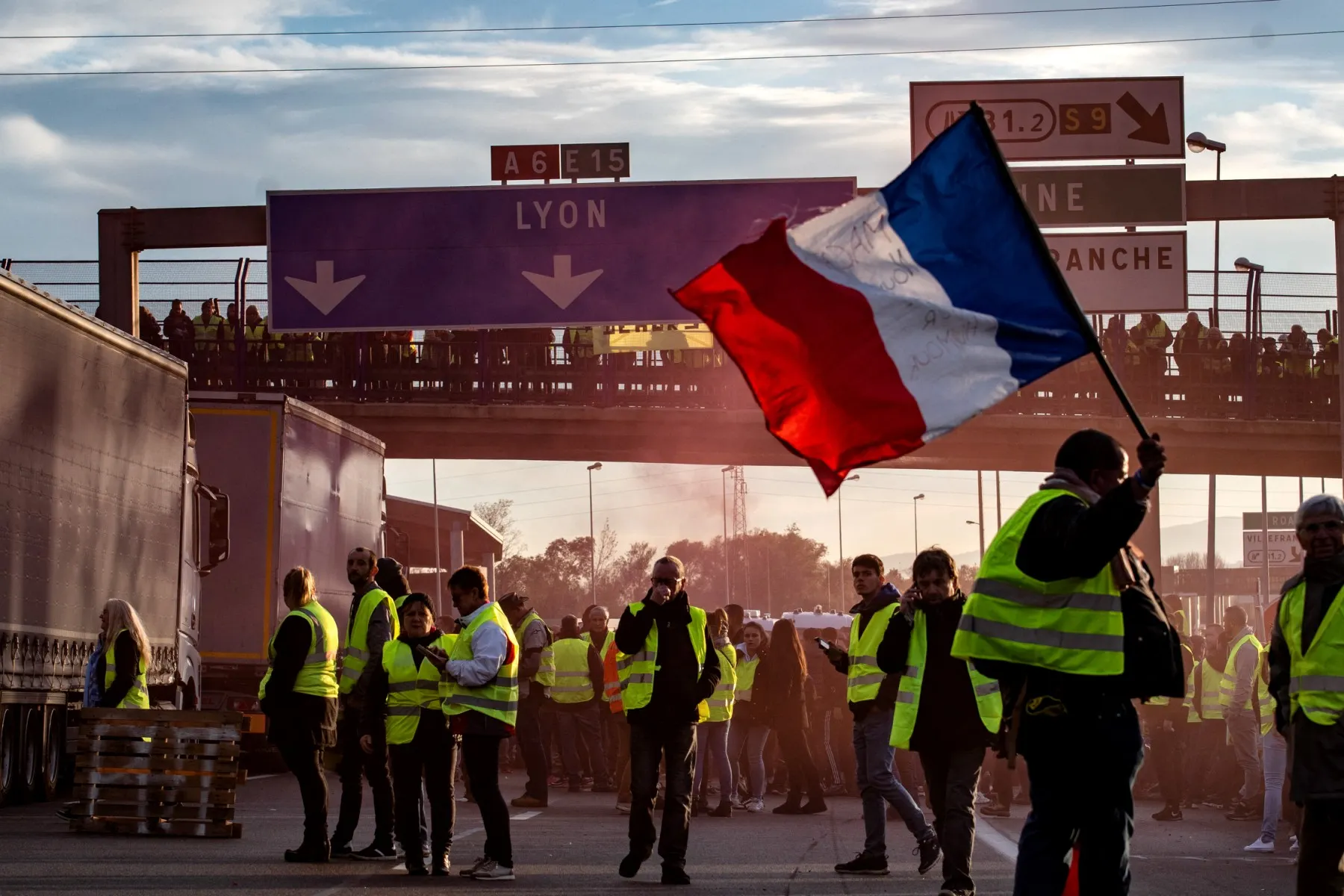
Eight years ago I stood with the first wave of Gilets Jaunes next to my local supermarket in Calvados. They pointed indignantly to a large totem which advertised diesel fuel at €1.40 a litre.
“How can we survive when diesel is €1.40 a litre,” one Yellow Vest asked? “In the big towns, people don’t understand. Here, in the countryside, the car is everything. Work, shopping, the doctor. Everything.”
I passed the same totem the other day. Diesel was €2.40 a litre.
Fuel totems in supermarket car parks are thermometers of the mood of rural or suburban France – opinion polls on poles. The higher their prices go, the more the popularity of the government sinks.
Don’t miss John Lichfield’s expert French politics analysis
Both President Emmanuel Macron and his Prime Minister Sébastien Lecornu have fallen to new lows in recent days, dragged down by something beyond their control: the high oil prices forced by the wars in the Gulf and Ukraine.
They are not the only ones to suffer.
The centrist candidates in next spring’s presidential election are also struggling in the opinion polls. The far right leader Marine Le Pen is higher than ever – at 35 percent of the vote in Round One. Other factors are in play, but the high cost of diesel and petrol is fuelling an already destructive mood towards “les élites”.
There is talk of nationwide demonstrations against fuel prices on Saturday October 17th. Will this be the return of the Gilets Jaunes? I doubt it – not quite in the same form at any rate. With the presidential election only seven months away, rural and suburban anger has other ways of expressing its fury.
But why blame Macron or the government at all? Why blame the ex-centrist Prime Minister Edouard Philippe, who is struggling (and so far failing) to establish himself as the plausible alternative to the tear-it-all-down extremes of Right and Left?
The high fuel prices are the result of wars in the Gulf and eastern Europe started by erstwhile idols of Marine Le Pen –Donald Trump and Vladimir Putin. There is nothing that France alone could do to reduce the stratospheric price of petrol and diesel on the world-market.
Maybe not, say my car-dependant neighbours. But did you know that 60 percent of what you pay for diesel and petrol goes on taxes? Did you know that the government rakes in more in taxes when the prices are high?
The first claim is true; the second is no longer true.
There are, in effect, three different taxes on pump prices in France. They first is an excise tax or “TIPP” of €0.69 a litre on petrol or €0.61 on diesel. The second is a carbon tax or “CEE” of €0.12 a litre. The third is VAT at 20 percent.
Only the VAT goes up with the price. The Lecornu government has announced a “golden rule” that every extra centime that it earns in VAT from high pump prices will be returned to the public in targeted subsidies.
The problem is that the system created for returning the cash to motorists is cumbersome and inadequate.
Last week the government announced that it would “give back” €450m to cover the last three months of the year. The number of motorists on modest incomes who benefit will increase from three million to five million. The maximum subsidy will increase from €50 to €100 over three months.
As critics pointed out, that works out at €1 per day. Only half of those eligible completed laborious procedures to claim their subsidy in the last quarter.
During the oil shock after Russia’s invasion of Ukraine in 2022, the government created a system for partially refunding price increases – not just taxes – at the point of sale. The cost was vast: €8 billion a year and a total of €100 billion over two years if you include the other measures to reduce domestic gas and electricity prices.
That splurge is one of the principal reasons why France’s state finances are in such a mess. Macron and Lecornu cannot afford to do the same thing again.
The government is being blamed for high pump prices now but it got no credit for lowering prices last time. Motorists did not notice the high prices that they were not paying.
The anger is compounded by a general collapse of purchasing power since the twin shocks of Covid and the Ukraine war – an average of a €1,200 loss for an average family in the last two years, according to a study for Le Monde this week.
The hard left La France Insoumise says that the solution is obvious. Freeze pump prices and make the oil companies absorb the high market cost of oil.
That is a false good idea. Wherever it has been tried, it has led to petrol and diesel shortages.
The far-right Rassemblement National wants to cut VAT on pump prices from 20 percent to 5.5 percent – reducing the cost of fuel by 30 centimes a litre.
That is another false good idea. It would be contrary to EU law; it would cost the French treasury €12 billion a year and increase the deficit and debt which already threaten to tip France into the fiscal quicksand. It would benefit rich and poor motorists alike.
The fact remains that the government’s present response is inadequate and poorly understood. Oil prices are likely to rise even higher in the weeks ahead. More action will be needed.
Some form of claw-back tax on the obscene profits of oil companies is being discussed in other EU capitals, Macron and Lecornu prefer to lobby the French oil giant Total to hold down the prices in their filling stations.
That cannot last.
Nor, probably, can the government’s refusal to consider touching the “60 percent of taxes” on pump prices. Macron admitted as much in his TV interview on the Ukraine and Gulf crises last week.
In the meantime, the polls on poles outside supermarkets will continue to point the way to an oil-fired, populist conflagration next spring.
Please share your own views with John on the what the French government needs to do in the comments section below.