
What will change for Brits in Spain with Burnham as new UK PM?
The new Labour leader and UK Prime Minister has already met with his Spanish counterpart Pedro Sánchez, two of the only centre-left leaders in Europe. What does it mean for British nationals in Spain, Brexit and UK-Spain relations?
The carousel of British Prime Ministers keeps turning and Andy Burnham is the latest to jump on.
Burnham, the former Labour mayor of Greater Manchester, managed to get to No.10 by presenting himself as an outsider — northern, non-Westminster bubble, someone prepared to break with decades of economic consensus — and won the Makerfield by-election before being crowned Prime Minister unopposed by the Labour party, replacing Keir Starmer.
That insurgent energy, however, comes despite him being an MP since 2001 and beginning his Ministerial career back in 2005. But nonetheless, Burnham has, presentationally or rhetorically-speaking at least, turned the page on the Starmer government and given Labour (and with it, he will hope, the UK) a new direction.
For many British nationals in Spain, therefore, they will wonder what, if any, impact a Burnham Prime Ministership could have on UK-Spain relations and their lives.
READ ALSO: Could Brits in Spain really lose their benefits if Reform UK wins power?
The Burnham and Sánchez relationship
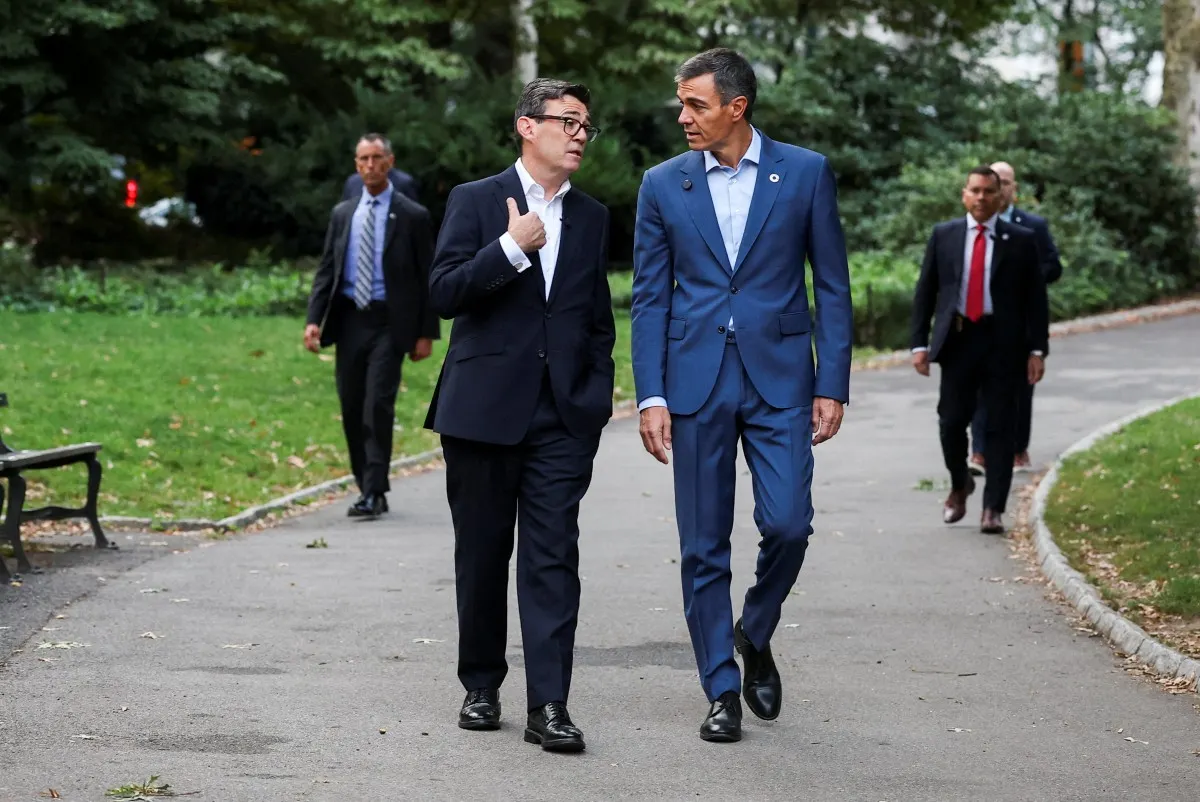
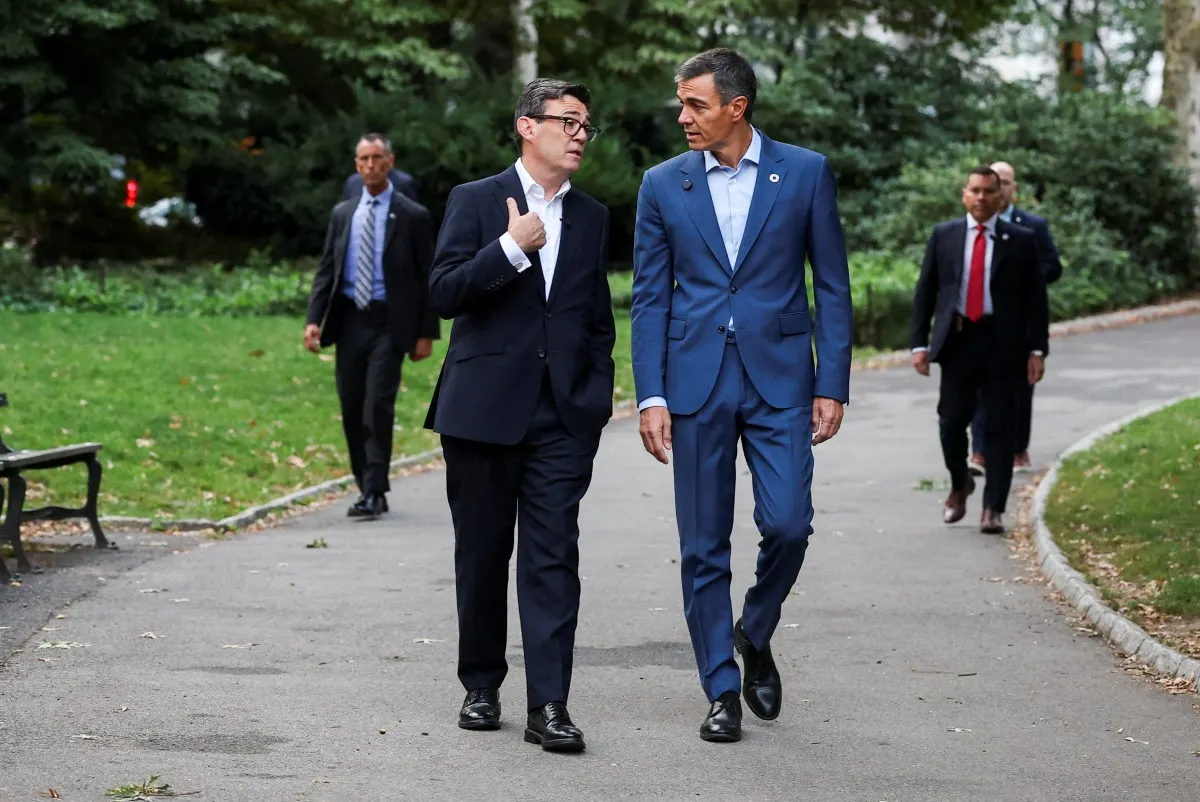
On a personal level, Burnham has already met with counterpart, Spain’s Prime Minister Pedro Sánchez.
In a July phone call soon after Burnham took over in No. 10, the Prime Minister reportedly “stressed the importance of building on this momentum to deepen cooperation between the UK and Spain.”
Promising signs for Brits abroad, maybe, but also pretty standard diplomatic language. This was recently followed up by a social media-savvy walk through Central Park when the pair were in New York recently.
Today I started my morning in New York in the best possible way: a walk through Central Park with Prime Minister @andyburnham. 🌳 pic.twitter.com/7Bwu52zzth
— Pedro Sánchez (@sanchezcastejon) September 22, 2026
That the two would find time during the UN’s High-Level Week, when New York is full of world leaders, might suggest that UK-Spain cooperation really will deepen with two centre-left leaders, or, as critics might say, it shows the media-savvy but ultimately superficial politics of both.
Get our essential newsletter for Britons living in and moving to Europe
Re-join? Or reset?
For British nationals in Spain and around Europe, the main question will be whether Burnham dares to reopen the Brexit debate. The second question would be to what extent: full re-join? Some sort of bespoke deal with single market access? A customs union only?
He will tread carefully, concerned about alienating pro-Brexit voters in Labour’s old heartlands, but Burnham recently refused to rule out including a Rejoin position in the next Labour party manifesto, a move many interpreted as leaving the door open to future negotiations, in his words, “another day”.
His government’s aim for now seems to be to continuity, namely continue the ‘reset’ of UK relations with the EU started under Starmer and his then Foreign Secretary David Lammy.
“My immediate priority is to build on the good work that Keir did in rebuilding bridges,” Burnham has said. “Because those bridges were broken in the early part of this decade. And Keir did a good job in re-establishing that relationship”.
Under the Starmer government, for example, the UK and Spain agreed on a new work visa waiver and stronger business ties.
READ ALSO: Everything we know so far about Spain’s new work visa waiver for Brits
Analysis from the Chatham House think tank states that making manifesto pledges might be a seen a sign of goodwill in Brussels: “Burnham’s influence with the EU will be stronger if his top team reaches an early decision on whether the next Labour Party manifesto will commit the UK to joining the EU customs union, the single market or the EU itself.”
But what could Burnham realistically do?
In substantive policy terms, neither the UK or Spain can unpick Brexit on their own or even bilaterally because those big structural changes would need EU-wide negotiations rather than a streamlined UK-Spain deal.
Similarly, domestically-speaking, Burnham’s Brexit tinkering will be closely watched by the Commons, right-wing media and Reform and the Conservatives, both of whom will be desperate to deploy the ‘Brexit betrayal’ narrative.
That doesn’t mean Spain-UK relations are necessarily frozen, however.
READ ALSO: 90-day rule, borders and taxes – What the Gibraltar deal means in practice
Step-by-step
By the end of the year, Chatham House says, “the UK government should aim to complete its ‘agreements to agree’ with the EU on food and animal products trade, emissions trading and youth experience.”
Easing the use of new E-gates, something that’s caused travel problems in Spanish airports, along with ensuring the new Gibraltar treaty is implemented smoothly, and perhaps even the long-heralded youth mobility scheme, could also play a role in closer UK-Spain relations.
READ ALSO: Spain’s PM says Gibraltar border removal closes ‘open wound’
Put simply, like Starmer, the Burnham approach appears to be closer cooperation with Europe, not rejoining immediately.
Those bigger constitutional questions, joining a customs-union or single-market membership, would likely require a stronger political mandate, whether via legislation, votes, or perhaps a general election.
As such, don’t expect major changes to residency rules, TIE requirements or the 90/180-day rule — despite inaccurate reporting in English-language media.
Pensions and cost of living
Although not strictly Spain-UK relations, a Burnham premiership could have second-hand consequences for many British nationals in Spain, particularly pensioners.
Like Sánchez, much of Burnham’s domestic agenda centres on alleviating the cost of living crisis and energy bills.
As so many British residents in Spain live off state or private pensions from the UK, the Burnham government’s economic direction and management, especially how it impacts interest rates, will have an effect on the strength of sterling against the Euro, something that could hurt the purchasing power of retirees all over Europe, not only in Spain.
READ ALSO: ‘It’s f**ked us’ – Brits in Spain spell out the impact of Brexit ten years on